

You’re laying out everything for a trip. Maybe it’s a fourteen-hour flight to somewhere on the other side of the planet, or three weeks of trains and buses, or a month of bouncing between guesthouses where the bathroom situation is a surprise every time. The packing pile grows. And somewhere in there is the small voice asking whether you really need to buy another travel-size shampoo, or another packet of plastic-wrapped wipes, or another disposable cup at the gate.
I asked myself that question after a 14-hour Doha layover where my carry-on shampoo bottle decided to redistribute itself across every clean shirt I owned. The cabin crew handed me a wet wipe, smiled, and offered me a complimentary bottle of water in a plastic cup. By the time I landed, I’d accumulated seven single-use items I didn’t ask for, plus one tiny travel bottle that had failed in spectacular fashion. The next trip, I started swapping things out. Not all at once, and not with the gear catalogue some of these articles seem to want you to buy. Just one or two at a time, after each trip showed me what I actually missed and what I’d been hauling around for nothing.
This is the list I wish someone had handed me back then. It covers what to swap, what’s worth the carry-on weight, what isn’t, and where the so-called plastic-free version is honestly worse than just being careful with the disposable one.
In This Article
- Why even bother, when one flight outweighs a year of shampoo bars?
- Water bottle: filtered or not?
- Shampoo and conditioner bars
- Toothbrush and toothpaste tabs
- Cutlery, chopsticks, and the straw question
- Food containers and silicone bags
- The coffee cup question
- Beeswax wraps: useful or gimmick?
- Period products: cup, disc, or underwear
- Packing cubes that aren’t new plastic
- Laundry bar
- Reef-safe sunscreen, and what that actually means
- What to skip: the bamboo-everything trap
- A realistic kit, weighed
Why even bother, when one flight outweighs a year of shampoo bars?
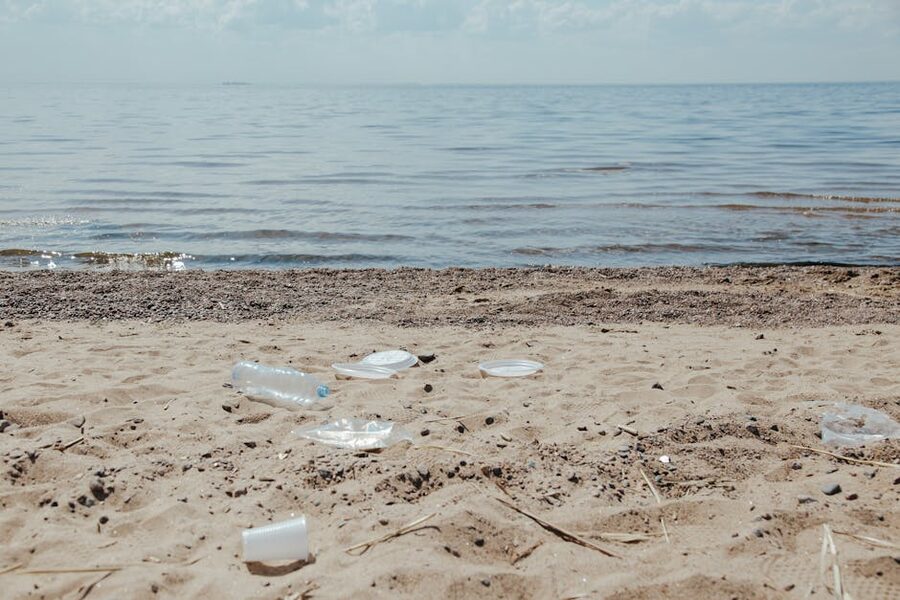
Let’s start with the awkward truth. The carbon footprint of one long-haul flight is enormous, and no amount of solid shampoo offsets it. If you’re going to fly, fly. The packing question isn’t about cancelling out the plane.
It’s about the second-order mess. Travelers go through a stunning amount of single-use plastic on the road: the airport water bottle, the takeaway coffee, the utensils, the hotel toiletry minis, the plastic-wrapped airplane meal, the souvenir bag. CNET cited a figure of around 139 million metric tons of single-use plastic produced globally in 2021, and travelers contribute disproportionately because we’re constantly buying things on the go in places where filling our own bottle isn’t habitual. The trash from one airline travel day, when one writer at Outside Online actually saved every piece, came to seven items. Multiply that by the 2.3 million people flying on a typical US day and you’re at well over ten million pieces of trash before lunch.
So the swaps are not a moral fix for flying. They’re a way to stop adding to the pile of garbage that washes up on the beaches you’ve come to see. That’s a small thing and a real thing, and it’s worth doing without making it your whole personality.
One more note before the list. Carry-on weight is finite. If you stuff your bag with twenty plastic-free gadgets, you’ve replaced the disposables with something heavier, more expensive, and more likely to be left behind in a hostel bathroom three days in. The point is to swap, not to add. For most travellers, six or seven well-chosen items cover the lot. If you want the bigger picture on what these choices add up to, the long version is in our piece on what sustainable tourism actually means.
Water bottle: filtered or not?
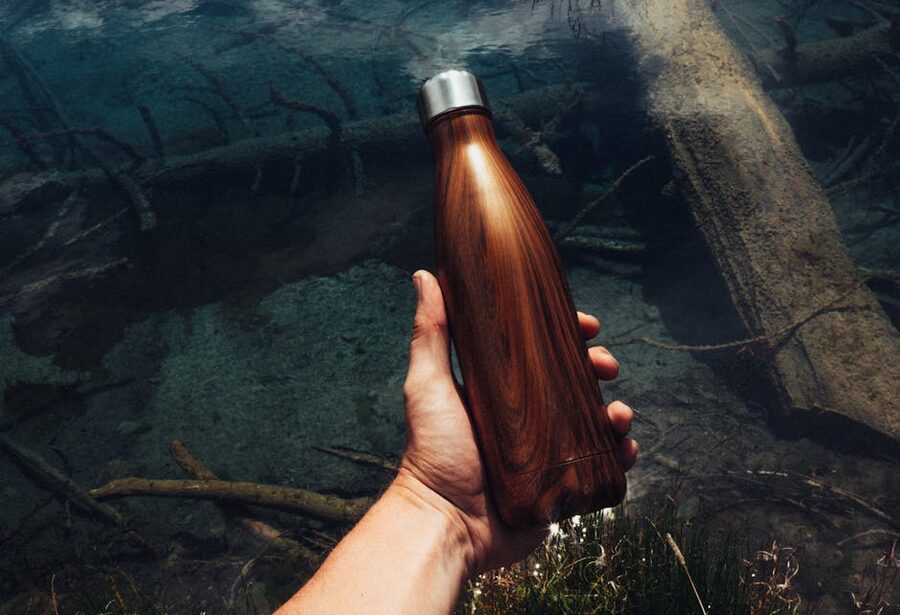
This is the one swap that actually matters for almost every traveller. Bottled water is the single biggest plastic stream most of us produce on the road, and refill points are everywhere now: airport fountains, cafes, hotel lobbies, train stations. Apps like Refill, Tap, and Find Water map them in cities you’ve never been to.
The choice comes down to three options, and the right answer depends on where you’re going.
Insulated stainless steel is the boring, durable choice. A plain steel bottle keeps cold drinks cold for the entire long-haul flight and hot drinks hot for the morning train. They don’t leak, they don’t crack, and they last for years. The downside is that they’re heavy when full and they take up space when empty. CamelBak’s MultiBev separates into a bottle and a cup, which sounds like marketing nonsense until the cabin crew offers you wine and you don’t want a plastic cup. I’ve used a 500ml insulated bottle on every trip for the last six years. It paid for itself within a month.
Filtered bottles like the ones from Grayl or LifeStraw are worth the extra weight only if you’re heading somewhere the tap water isn’t safe to drink. They’re not magic. The good ones run roughly £40 to £80 and the cartridges need replacing. But if you’re going to be in places where the alternative is buying half a dozen plastic bottles a day, the maths works out fast. You can also boil tap water in a hotel kettle, which is free and works fine, just not when you’re already out walking.
Collapsible silicone or Vapur-style anti-bottles roll up flat when empty. The Nomader is a popular one. They’re great for stuffing into a daypack you don’t want to carry an empty bottle in, and they’re light. The downside: they sweat with cold drinks, they’re not insulated, and the cap design on cheaper ones leaks. Fine as a backup. Not great as your only bottle.
One quiet rule: refusing plastic cups onboard is more impactful than the bottle itself. Ask the flight attendant to fill your reusable cup, or ask for the can or the small wine bottle and skip the plastic cup entirely. Most attendants are happy to do it. A few will be confused. Either way, you’ve kept a few cups out of the airline waste stream, which goes straight to landfill because the recyclers won’t touch it.
Shampoo and conditioner bars
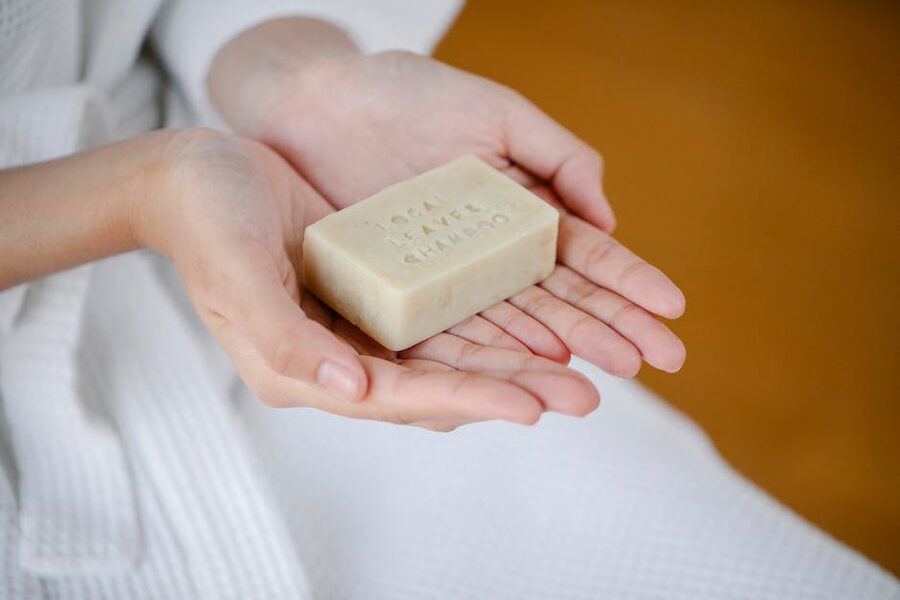
Solid shampoo bars are the swap I came around to last, and now I won’t go back. The reasons are practical, not preachy. They don’t leak. They don’t count as a liquid for cabin baggage. They last roughly twice as long as the equivalent bottle of liquid shampoo because most shampoo is water you’ve been paying to ship around the world. And you can take them on the four-day hike where there’s no shower without worrying about an exploded bottle in your bag.
Two brands worth knowing about. Ethique, a New Zealand B Corp, makes the bar I keep buying. The hair-care set runs around $22 and one shampoo bar lasts me about three months of regular travel. Lush sells solid shampoo, conditioner, and body bars and stocks tin tins to store them in (handy because a wet bar back in your toiletry bag will turn your packing cube into a fragrant disaster). The Lush bars are pricier but their high-street stores are everywhere if you run out mid-trip.
The trade-off: your hair takes a couple of weeks to adjust, especially if you live in a hard-water area. Some people never get on with bars at all. Conditioner bars are the bigger ask, and the cheap ones don’t perform well. If you’ve got long or fine hair, try the bar at home for a fortnight before you commit to it on a trip where there’s no chemist nearby.
If bars don’t work, the next best thing is refilling small silicone travel bottles with the liquid shampoo you already use. Humangear GoToob bottles are the standard: TSA-approved, food-safe silicone, much harder to crush than the squidgy cheap ones. A three-pack runs about $26. You skip the hotel minis and you control what’s in your shampoo. Less novel than a bar, still much better than buying travel sizes.
Toothbrush and toothpaste tabs
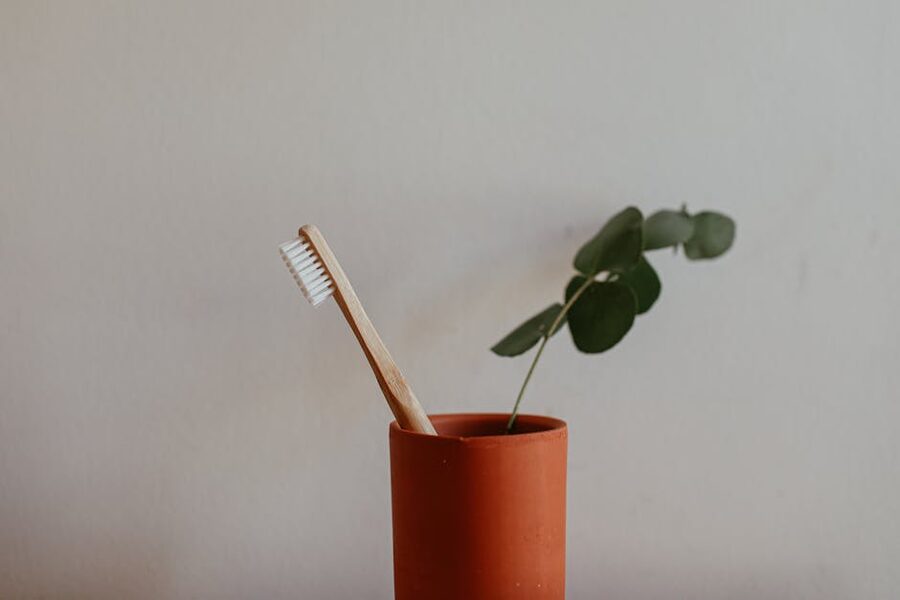
Bamboo toothbrushes are the easiest swap on this list, and also the one most likely to disappoint if you take it too literally. Yes, the handle composts. The bristles are still nylon on most of them, which means you snap the head off, compost the handle, and bin the bristles. A few brands like Brush With Bamboo claim biobased bristles, but they’re harder to find and the bristles still go in the trash.
If you’re already using a manual brush, swap it. If you use an electric one and your dentist is happy with how your gums are doing, don’t switch just to feel virtuous. A working electric brush you actually use beats a bamboo one you don’t.
Toothpaste tabs are the other half of the dental kit. You bite a tab, brush, and the foam appears like proper toothpaste. Bite and by Humankind are the two I’ve tried and stuck with. A two-pack of by Humankind tabs runs about $15 and lasts a couple of months. They come in tiny tins, they don’t count as liquids, and the airport security person never even glances at them. The first time you use them is faintly weird. By day three you stop noticing.
Floss is the harder one. Most floss is nylon coated in petroleum wax and packed in a plastic dispenser. Dental Lace sells silk floss in a refillable glass bottle. It’s about $13 and it works. If you’d rather skip the silk, look for plant-based floss in compostable packaging. Skip the bamboo dispensers with tiny plastic floss spools inside. They’re the example of what to avoid: greenwashed packaging around the same plastic product.
Cutlery, chopsticks, and the straw question
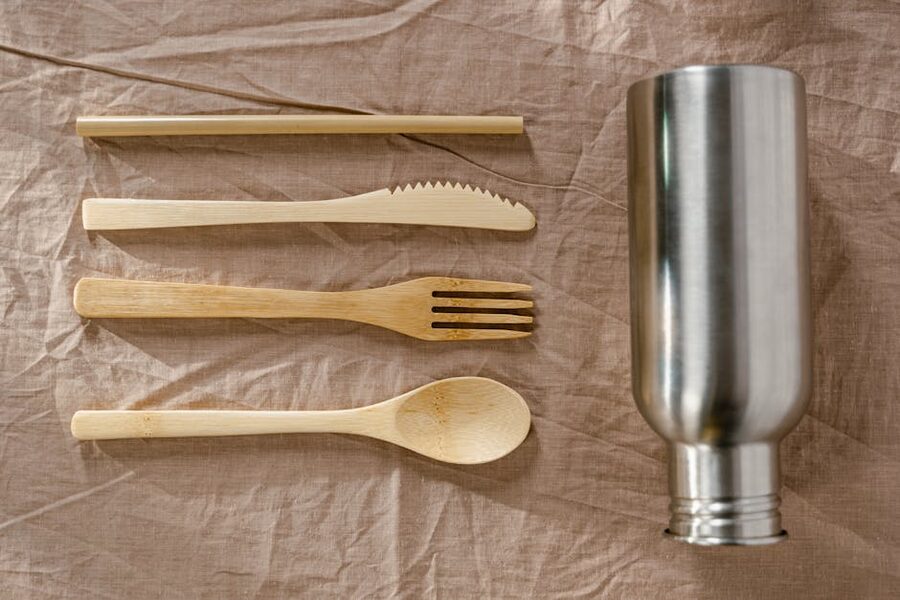
A small set of reusable cutlery is the second swap I’d put in everyone’s carry-on. The math is simple. Every plane meal, every gas station sandwich, every market lunch eaten at a bench comes with disposable forks and spoons that go straight in the bin. A fork from your kitchen drawer in a small cloth pouch costs nothing and saves a fork-shaped piece of plastic for every meal you eat on the road.
If you want a proper kit, To-Go Ware‘s bamboo set with a clip-on pouch runs about $20 and includes a fork, knife, spoon, and chopsticks. Bambaw and Sea to Summit make similar ones. Bamboo is light and survives airport security in most countries, including the US (only a butter knife will pass TSA, so leave the steak knife at home). Stainless steel cutlery is sturdier but heavier and occasionally raises eyebrows at security. If you’re flying into countries with stricter security, bamboo is the safer bet.
The straw question is honestly overblown. Plastic straws are about 0.025% of ocean plastic by weight. Banning them was always more about the visible symbolism than the volume. If you genuinely use straws often, a metal one or a glass one with a brush for cleaning is fine. If you don’t, skip it. The single best thing you can do is learn how to say “no straw, please” in the language of where you’re going. In Spanish: “Sin pajita, por favor.” In Portuguese: “Sem palha, por favor.” In Japanese: “Sutorō wa irimasen.” Most servers will look surprised and say yes.
Food containers and silicone bags
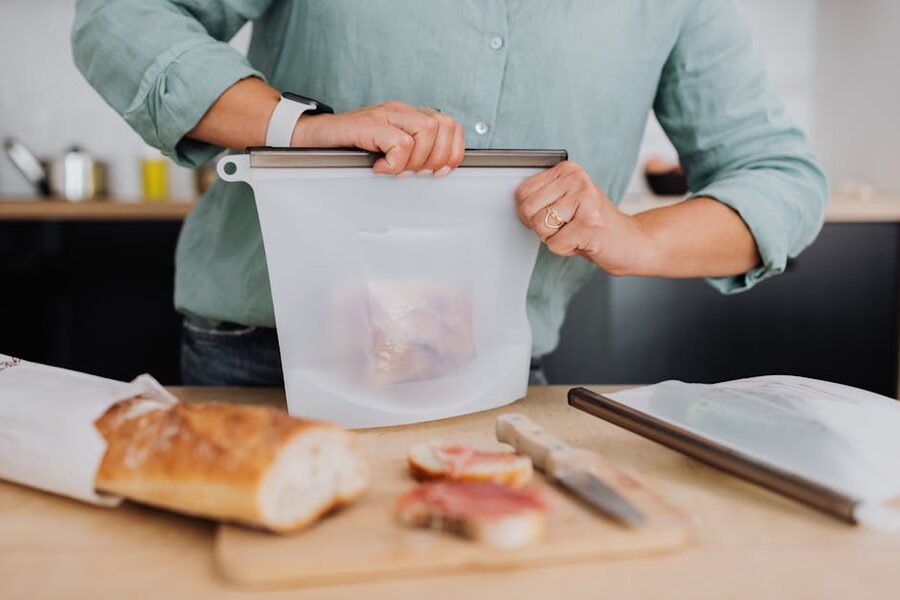
One small lidded container changes the way you eat on the road. Pack your own breakfast for an early flight. Take leftovers from dinner instead of asking for a styrofoam clamshell. Buy fruit at a market without grabbing a plastic bag. The Outside Online piece I read had a great tip from a sustainability advocate: when you want to order takeaway from a restaurant, sit down, order in, and ask them to plate it on their washable dish. When the food comes, transfer it to your own container and walk out. Saves the box, saves the cutlery, saves the napkin.
Stojo’s collapsible 24oz box folds flat to about an inch thick and pops up when you need it. It runs about $20 and clips onto a daypack. Stasher silicone bags are the other workhorse: they zip, they’re dishwasher-safe, and they fit awkward shapes (sandwich, half-cut mango, the snacks you grabbed off the breakfast buffet for the train). A medium runs around $13. They squeak slightly the first few times you use them and then you stop noticing.
The trade-off here is bulk. If you carry both a box and three silicone bags, you’re now carrying half a litre of empty container. For a long trip, that’s fine. For a four-day city break with a single carry-on, pick one. I’d pick a single Stasher. The box is more useful when you’re road-tripping or hostel-hopping and have access to a kitchen.
Skip the bamboo “lunch boxes” with a separate plastic insert. They’re the same plastic, dressed up.
The coffee cup question
Disposable coffee cups are technically paper, lined with a thin layer of plastic that makes them almost impossible to recycle. The lid is plastic. The sleeve is paper, sometimes. A 14-day trip with a morning coffee a day puts fourteen of those in the bin. Add the cup the airline gives you on the flight and you’re well over twenty.
The two cups worth carrying:
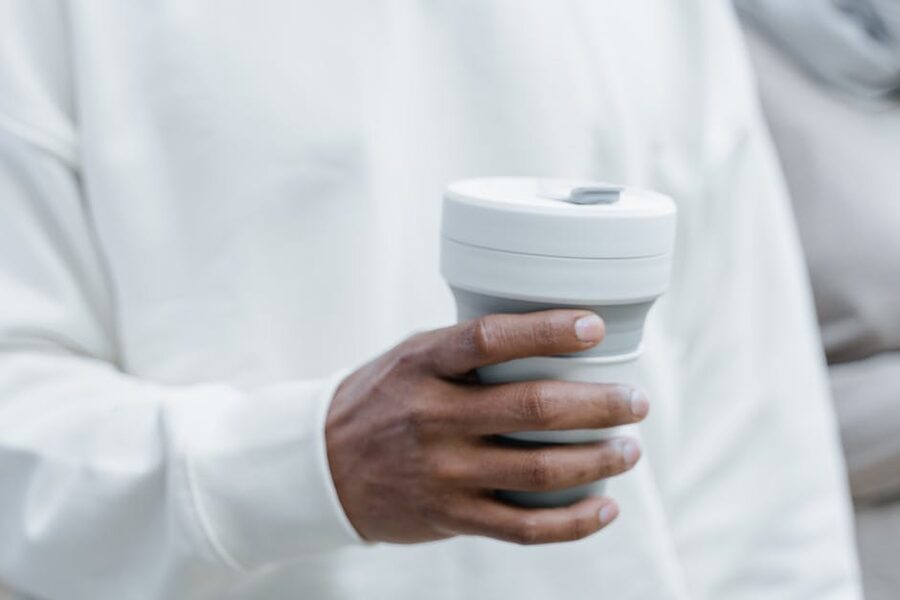
Stojo makes a collapsible silicone cup that pops down to about an inch thick when empty and back up to a normal coffee size when needed. The 16oz runs about $20. It’s the cup I take if I’m flying with cabin baggage only because it weighs almost nothing and doesn’t take up any space in the bag.
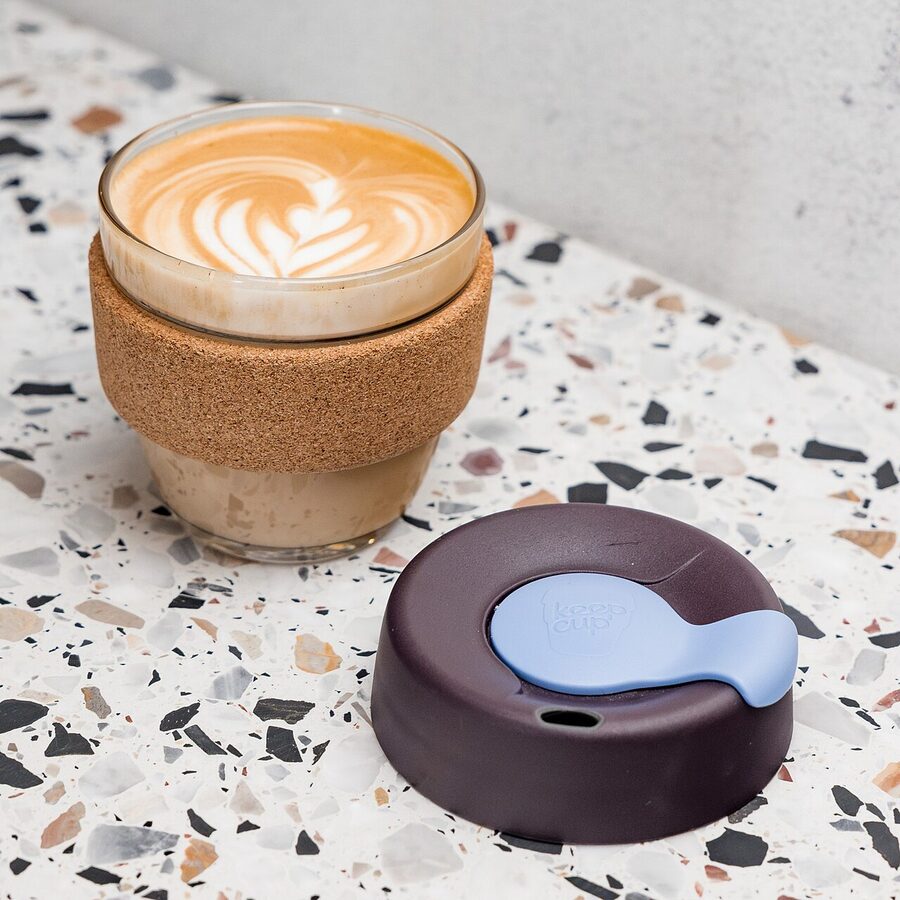
KeepCup makes a glass-and-cork version that doesn’t collapse but feels more like drinking out of a normal cup. The Brew runs around $25. If you’re not flying carry-on only and you care about the way coffee tastes (silicone has a faint rubbery edge if you’re sensitive to it), this is the one.
One thing to know: many cafes will charge you a few cents less if you bring your own cup. A few will refuse to fill it for hygiene reasons. In Portugal a very nice barista once filled my Stojo from the espresso machine while explaining why he’d rather not. The system is uneven. The free coffee discount when it works is a minor perk; the real point is the cups in the bin.
Beeswax wraps: useful or gimmick?
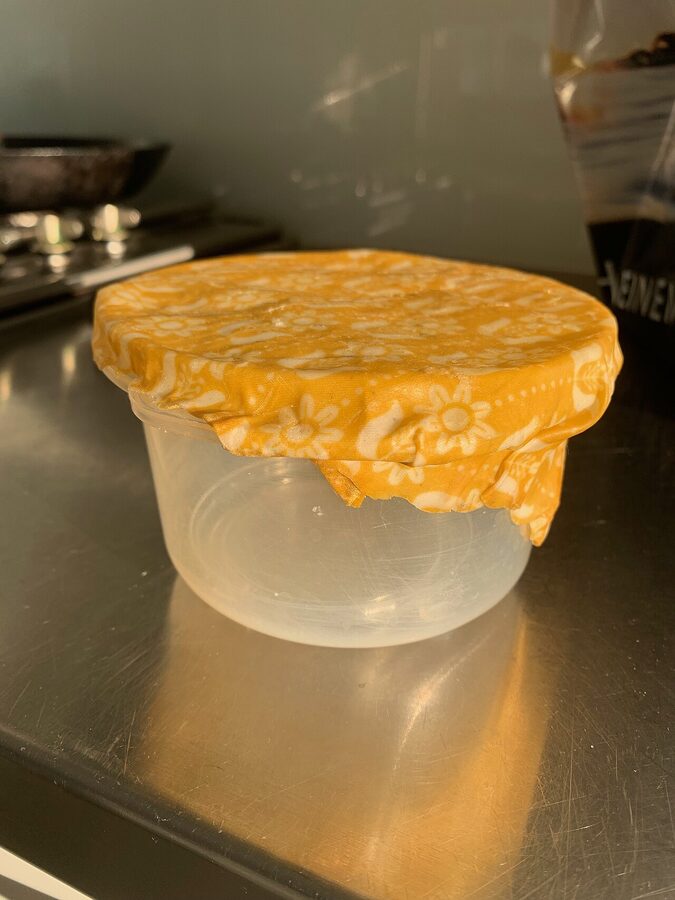
I went through a beeswax wrap phase. They’re great in theory: a piece of cotton coated in beeswax and tree resin, the warmth of your hand softens the wax to seal around a bowl or wrap a sandwich. They last about a year. They’re compostable when they wear out. And they’re genuinely useful in a hotel room where you’ve got a half-eaten apple and no fridge.
For travel, though, they’re a niche tool. They don’t seal liquids. They don’t survive a hot car or a hot beach bag (the wax melts onto whatever’s nearby). And they take up more space than a Stasher silicone bag, which does the same job for most situations.
If you live out of an apartment or housesit on the road, take one or two. They’re useful for a half-cut watermelon. For a normal trip, the Stasher does it better. This is one swap I’d skip unless you specifically need it.
Period products: cup, disc, or underwear
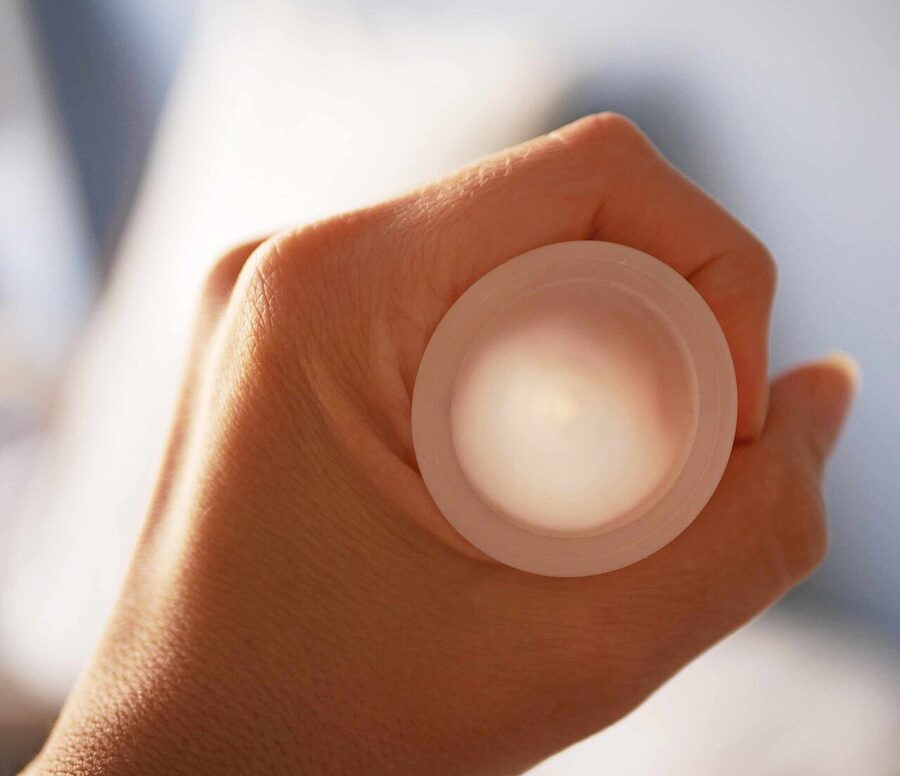
If you menstruate and you travel, switching from disposable products is the swap that genuinely changes how light you can pack. A box of tampons takes up real space. A cup or disc takes up almost none, and you don’t have to find a chemist in a country where the brands look unfamiliar and the labels are in a language you can’t read.
Cups like Saalt, DivaCup, and Mooncup sit in the vaginal canal and collect rather than absorb. They run roughly $25 to $40 and last up to ten years if you look after them. The learning curve is real: most people need two or three cycles before they get the fold and placement right. Don’t try one for the first time on the morning of a flight. Try it at home for a couple of months first.
Discs like Hello Disc and Saalt Disc sit higher up at the vaginal fornix. They hold more, and a lot of people find them more comfortable for high-flow days, swimming, and sleep. They’re slightly trickier to place. Worth trying if a cup didn’t work for you.
Some travellers prefer period underwear (Thinx, Modibodi, WUKA). They’re not a swap so much as a backup, and they’re heavier in the wash bag than a cup. For long trips with limited laundry access, they get awkward fast. For a long-haul flight day, they’re brilliant.
One practical note: in countries with limited water for cleaning, a cup is harder to manage. A bottle of water and a cubicle is enough, but it requires a rhythm. If you’re going somewhere remote, take a cup plus a small backup of disposable products for the days when the bathroom situation is rough. Practical beats pure.
Packing cubes that aren’t new plastic
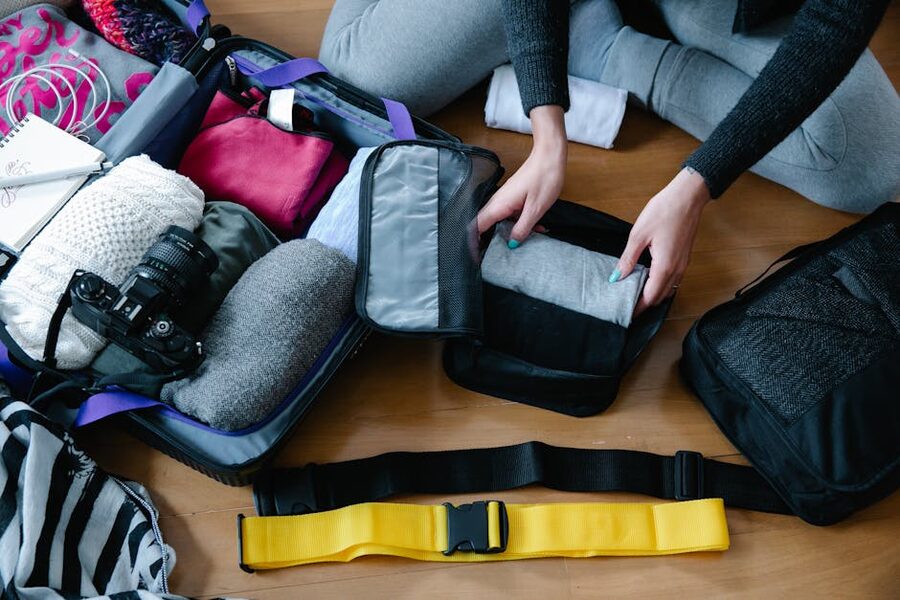
Packing cubes change how a suitcase works. They squeeze your clothes into smaller blocks, they keep clean separated from dirty, and they let you pull out the one item you need without unpacking everything. They are also, almost universally, made of new polyester. Buying brand-new plastic cubes to “be more sustainable” is a small irony that’s worth pausing on.
The better options:
Patagonia’s Black Hole packing cubes are made from recycled polyester ripstop and they’re built to last. A set runs about $30 to $50 depending on size. They aren’t cheap. They will outlive the suitcase you put them in.
Tentree sells a three-pack of cubes made from recycled polyester for around $30. They sell out often, which is probably a sign.
The third option: don’t buy them. A clean cotton tote bag rolled around your clothes works almost as well. So does a pillowcase. So do the cubes from your last suitcase that came free with the bag. The most sustainable packing cube is the one you already own.
The trap to avoid: anything described as “eco-friendly” with no specifics. If a brand can’t tell you what the fabric is made of and what percent of it is recycled, the sustainability claim is marketing.
Laundry bar
This is a small thing that earns its space. A small laundry bar (Marseille soap, a slice of a Lush bar, or any plain hard soap) lets you hand-wash a shirt or a pair of socks in a hotel sink without buying a packet of detergent sachets every few days. It also doubles as body soap if you forget yours. A small one weighs about 30g and lasts a couple of weeks of trip-style washing.
Skip the powder sachets sold for travel laundry. They’re unbelievably expensive per wash and they come in non-recyclable foil. A bar in a small tin does the same job for a fraction of the cost.
One note: don’t pour grey water from your hand-washing into a stream or a river, especially in popular hiking areas. Use the sink, and let the city’s water treatment deal with it.
Reef-safe sunscreen, and what that actually means
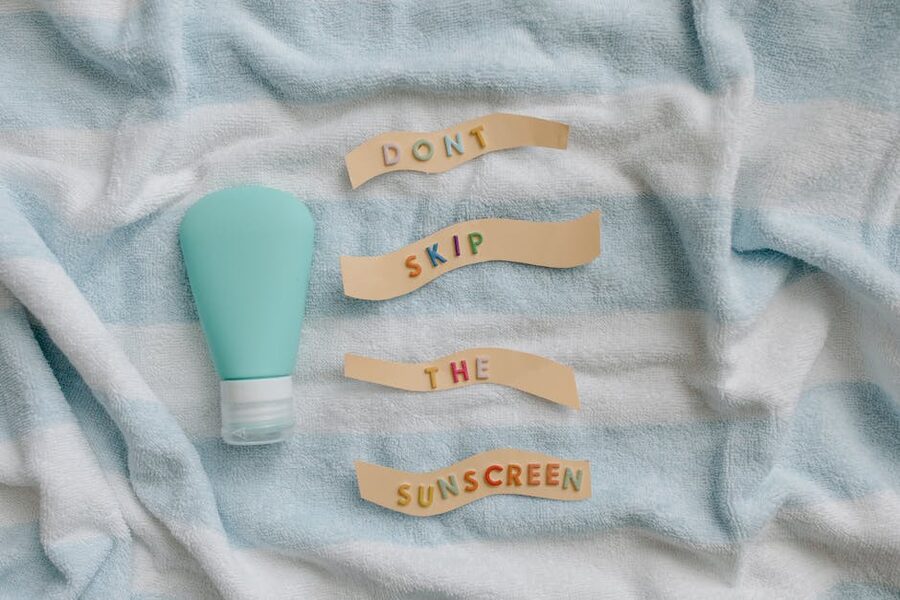
This is the swap where the marketing is worse than usual. “Reef-safe” has no legal definition. Some sunscreens labelled reef-safe still contain ingredients that bleach coral. The two ingredients you actually want to avoid, especially if you’re swimming over reefs, are oxybenzone and octinoxate. Both have been shown to damage coral at very low concentrations, and Hawaii, Palau, and parts of Mexico have banned them outright.
What to look for instead: a mineral sunscreen with non-nano zinc oxide or titanium dioxide as the active ingredient. The “non-nano” matters because nanoparticles can still be absorbed by marine life. The brands worth looking at:
Stream2Sea is one of the few brands that actually tested its sunscreen on coral and posts the results. It runs about $20 a tube. Thinksport SPF 50 is widely available in the US and runs around $13. Raw Elements is another, sold in metal tins so the packaging is recyclable. Tropic in the UK does a non-nano mineral version too. Avoid sprays. They blow into the air, into the sand, and into the water at a much higher rate than rub-on creams.
Two practical notes. First, mineral sunscreens leave a white cast on darker skin. Newer formulas are better but they’re not invisible. Plan accordingly if you’re attending a wedding on the beach. Second, the most reef-safe thing you can do isn’t switching brands, it’s wearing a long-sleeve rash vest in the water and using sunscreen only on the bits that aren’t covered. Less product, less rinse-off, less to repack.
What to skip: the bamboo-everything trap
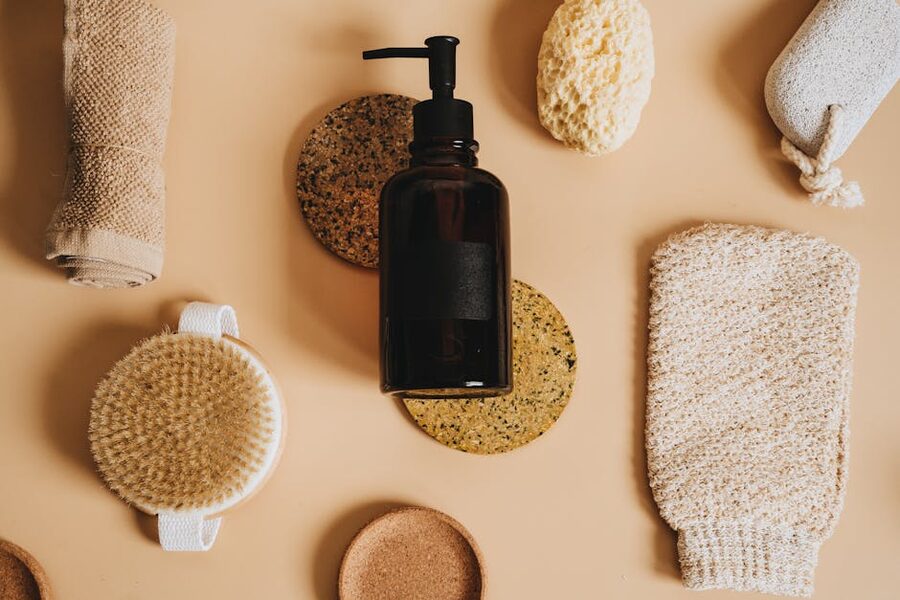
Once you start looking at “sustainable travel gear” guides, the gimmicks pile up. A few that I’ve bought, regretted, and now refuse to repackage as advice:
Solar phone chargers. Unless you’re trekking off-grid in consistent sunshine, they don’t work. They charge slower than the solar panel on a calculator. A small power bank charged from a wall socket weighs less, costs less, and actually works. The Eluxe Magazine writer who hauled a solar charger around Costa Rica and never managed to power her phone with it once was telling the truth.
Bamboo “everything” gadgets. The bamboo phone case, the bamboo razor, the bamboo lunchbox with a plastic insert, the bamboo dustpan. Most of these are plastic with a bamboo veneer or bamboo wrapped around plastic. They feel green; they aren’t. If the product would still work without the bamboo, the bamboo is decoration.
Disposable razors marketed as “eco” because the handle is made from corn starch. The blade is still a tiny piece of steel and plastic. A double-edge safety razor with a real blade is the swap that matters. It costs about $30 once and you replace the blade for about 20 cents every few weeks. Yes, you have to learn to use it. It takes about three shaves.
Single-use “eco wipes”. They’re either viscose (which is technically biodegradable but takes months and clogs septic systems) or bamboo (same issue). A small wash cloth and a bar of soap does the job and lives in your wash bag for years.
Reusable cotton rounds you bought new. They use a lot of water to grow, and most people lose them in the wash. If you actually use makeup remover pads, fine. If you just want to feel virtuous, a flannel from the linen cupboard does the same job.
The general rule: if a sustainable product is something you didn’t have before, ask whether you actually need it. If a sustainable product replaces something you were definitely going to use anyway, swap it. If you’re not sure, leave it at home for one trip and see if you missed it.
A realistic kit, weighed
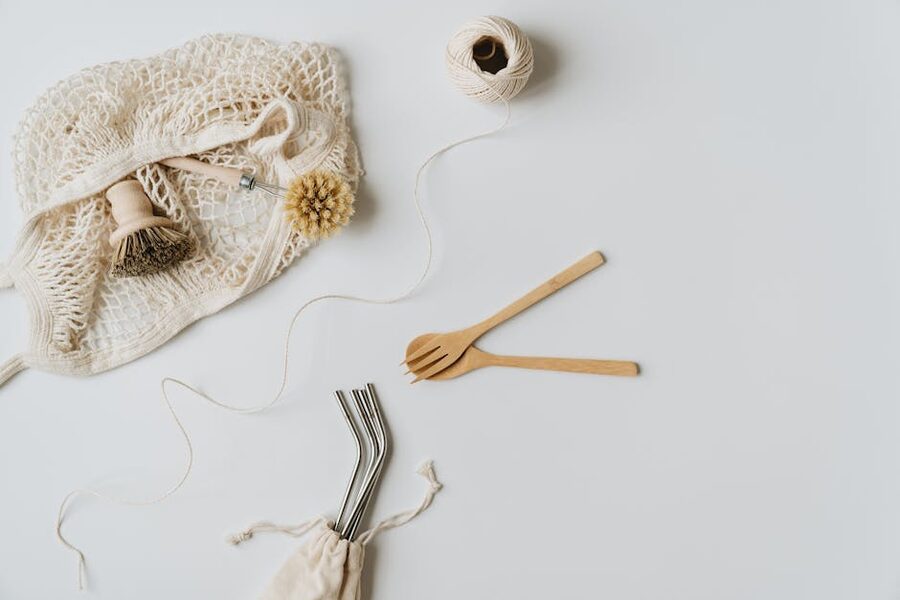
For most trips, the kit I actually carry comes in at about 350g and fits in the front pocket of a daypack:
- 500ml insulated stainless bottle (240g)
- Stojo collapsible cup (90g, lives clipped to the bag)
- One Stasher silicone bag, medium (40g)
- Bamboo cutlery set in a cotton pouch (60g)
- Solid shampoo bar in a tin, plus a small laundry bar (80g)
- Toothbrush, by Humankind tabs in a tin (30g)
- Saalt cup or disc (around 25g)
- Mineral sunscreen tube, small (60g)
That’s it. No beeswax wraps, no solar charger, no bamboo razor, no second water bottle for hot drinks because the insulated steel one does both. The total is well under a kilo and replaces something like fifty disposable items per trip. Once it’s packed, you don’t think about it again.
The trap to keep an eye on: the kit will try to grow. Every “must-have” sustainable travel article will suggest one more thing. After about a year of trips, you’ll figure out which two or three items you actually use and which ones live forgotten at the bottom of the bag. Be willing to take stuff out.
And one closing thought, because the actual, practical impact of this is small in the way that most individual choices are small. The point is not to fix the plastic problem one shampoo bar at a time. The point is that the swaps make your trip lighter, cheaper, and less anxious about leaks and spills, while also putting fewer disposables in the bin. That’s the deal. The bigger lifts (flying less, staying longer in fewer places, supporting local businesses, choosing thoughtfully when you do shop) live alongside the small ones. If you want the next half of the trip-day version, where the same thinking applies to what you actually buy on the road, the long version is in our piece on ethical souvenir shopping. And the principles behind both swaps and shopping are laid out in what sustainable tourism actually means.
Pack the bottle. Pack the cup. Skip the rest until you’ve travelled with the basics for a few months and worked out what you’d actually use. The lighter version of your packing list is almost always better.