You typed “what is sustainable tourism” into Google because you’re tired of the marketing version. Every hotel chain has a green leaf icon now. Every airline has a “fly responsibly” page buried in their footer. Every other tour operator promises something life-changing and low-impact, often in the same sentence. Somewhere underneath all of that, there is an actual definition. A real one, with a history and a body of research behind it, that does not depend on the words “ethical” or “regenerative” doing all the heavy lifting. That is what I want to give you here.
I have been travelling and writing about travel for years, paying for my own trips, making most of the same mistakes everyone else makes the first time around, and slowly working out which sustainability claims are real and which ones are decoration. So this is not a manifesto. It is the explainer I wish someone had handed me before my first long-haul flight.
In This Article
- A Real Definition (Without the Marketing Speak)
- The Three-Pillar Frame: Environmental, Economic, Sociocultural
- Sustainable, Responsible, Ethical, Eco, Regenerative: The Words People Mix Up
- Where Tourism Actually Goes Wrong
- Overtourism Is Not the Same as a Lot of Tourists
- What’s the Traveller’s Job, and What’s the Operator’s Job
- How to Vet an Operator (Without Falling for Greenwashing)
- Sustainable Tourism in Practice: A Few Examples That Actually Work
- Bhutan: a country-scale policy, not a slogan
- Machu Picchu and the slow rebuild of the Sacred Valley
- The community lodges of Latin America and East Africa
- The Honest Bottom Line
A Real Definition (Without the Marketing Speak)

The cleanest definition comes from the United Nations Environment Programme and what is now UN Tourism (the body most people still know as the UNWTO). They describe sustainable tourism as “tourism that takes full account of its current and future economic, social and environmental impacts, addressing the needs of visitors, the industry, the environment and host communities.”
That sentence does a lot of work, so let me unpack it the way I wish someone had unpacked it for me.
The phrase “takes full account of” is the important bit. It is not saying tourism has to be carbon neutral, leave zero footprint, or be morally pure. It is saying you have to do the maths. Honestly. Including the parts that are inconvenient. The job losses if a community shifts from fishing to running boat tours. The water a hotel uses in a place where the water is already running short. The cultural cost of a sleepy village turning into a backdrop for someone else’s holiday photos. You weigh all of that against the jobs created, the conservation funded, the cultural traditions kept alive because tourists want to see them. And then you try to design something where the books actually balance, not just over a season but over decades.
The second key phrase is “current and future.” Sustainable tourism is not just about today’s traveller and today’s host. It is about whether your great-niece will be able to visit the same coral reef in 2070, and whether the people who live next to that reef will still recognise their own town. That long horizon is the hardest part to hold onto when you are choosing between two flights on a Tuesday afternoon, but it is the thing that makes the whole concept different from “ecotourism” or “green travel” as a marketing category.
The third phrase, the one that gets quietly forgotten, is “host communities.” Sustainable tourism, as defined by the people who coined the term, is not just about the planet. It is about the people whose home you are walking through. A tour that runs on solar panels and produces zero waste but pays its local guides poorly is not sustainable. A “green” hotel built on land that locals were quietly displaced from is not sustainable. You can hit every environmental marker and still fail the definition entirely if the human side does not work.
The Three-Pillar Frame: Environmental, Economic, Sociocultural

If you read enough about this and your eyes start glazing over, this is the framework to anchor on. The same UN guidance from 2005 that gave us the working definition spelled out three pillars, and almost every sustainable-tourism standard you’ll meet since (the GSTC Criteria, the SDG-linked targets, certification schemes like Biosphere) rests on the same three:
Environmental. The carbon, the water, the waste, the wildlife, the ecosystems. The stuff most people picture when they hear “sustainable.” This pillar covers everything from the energy a hotel runs on to whether your snorkelling trip is breaking up coral. It also includes transport, which gets less airtime than it should. According to peer-reviewed estimates compiled in the academic literature, transportation accounts for roughly 72% of tourism’s CO2 emissions, with accommodations at 24% and on-the-ground activities at just 4%. Aviation alone makes up more than half of that transport share, and once you factor in contrails and the cirrus clouds they seed, flying may account for up to three-quarters of tourism’s total climate impact. The plane is the elephant in the lobby. Every honest conversation about sustainable tourism eventually has to acknowledge that.
Economic. Where the money goes. Tourism is one of the world’s largest industries. The World Travel and Tourism Council put it at 10.3% of global GDP in 2019, with around 1.5 billion international arrivals. The UN World Tourism Organization has long pointed out that tourism creates roughly one in every eleven jobs worldwide, and in more than forty countries it accounts for over 15% of total employment. None of that means a thing if the money flows straight back out. The economist’s term is “leakage,” and it describes the exact moment a foreign-owned all-inclusive resort pays an offshore parent company, sources its food from imports, and routes its profits through a tax haven, leaving the host country with low-wage cleaning jobs and the bill for the road that gets the buses to the gate. Sustainable tourism, on the economic pillar, asks a simple question: how much of every dollar a traveller spends ends up in local hands, and how long does it stay there before it leaves?
Sociocultural. The hardest pillar to measure and the one that breaks first when nobody’s watching. This is whether a place still feels like itself. Whether the festival you came to see is being performed for the village or for the tour buses. Whether the kids in the photos got their parents’ permission. Whether the language is being used or being made into a souvenir. The Maasai displacement around the Ngorongoro Conservation Area in Tanzania is one of the textbook examples in the academic literature, and it is a case study in how a project can be sold as “conservation” while reshaping the lives of the people who lived on the land first. Sociocultural sustainability means the place is not a stage set.
You do not have to keep all three pillars in your head every time you book a hotel. But once you have the frame, you start spotting where claims fall apart. A “carbon-neutral resort” that locals can’t afford to work at fails the economic pillar. A community-run homestay that dumps its grey water into the river fails the environmental pillar. A national park that runs on solar but bars the people who used to live there fails the sociocultural pillar. Get all three on the table and most marketing collapses on its own.
Sustainable, Responsible, Ethical, Eco, Regenerative: The Words People Mix Up
Here is the part where most articles try to solve the vocabulary problem with a list. I want to do it differently, because the words actually mean different things and the differences matter once you start making real choices.
Sustainable tourism is the umbrella concept. The Global Sustainable Tourism Council, which is the body most certifying schemes look to, describes it as an aspiration about the impacts of tourism rather than a specific kind of trip. Any form of travel, in theory, can be done better than the version that came before it. A cruise can leak less carbon and more revenue than the next cruise. A backpacker’s flight to Lisbon can be packed more thoughtfully than another backpacker’s flight to Lisbon. It is a direction, not a destination.
Responsible travel is what you do, the traveller. It is the personal-behaviour layer. The same GSTC definitions describe responsible travel as the behaviour of individual travellers who are trying to make choices in line with sustainable practices. Reusing your hotel towel is responsible travel. The hotel installing greywater recycling so that towel washing uses 60% less water is sustainable tourism. They are connected, but they live at different scales.
Ecotourism is the smallest and most specific term of the bunch. It refers to nature-based travel that contributes to conservation and to the well-being of local people. The classic academic definition, from David Fennell’s 1999 book on the topic, calls it “a sustainable form of natural resource-based tourism that focuses primarily on experiencing and learning about nature, and which is ethically managed to be low-impact, non-consumptive, and locally-oriented.” Birdwatching trips with local guides, low-impact rainforest lodges, scientific safaris that fund anti-poaching work. That is ecotourism. A beach resort with a recycling programme is not, however many leaves it puts on its logo.
Regenerative tourism is the newer term, and it tries to address what people felt was missing from “sustainable.” Sustainability, in the strictest sense, is about not making things worse. The Travel Foundation, which has been working on this stuff for over twenty years, describes regenerative tourism as travel that actively restores and improves the environment, the culture, and the economy of a destination, leaving it better than it was found. Planting mangroves rather than just protecting them. Restoring a coral nursery rather than just not damaging the reef. It is sustainability with the dial turned a notch further.
Ethical travel is the loosest of the lot, and that’s why I’m wary of it as a label. Most of the time it is doing the work of “responsible” with a more moralising tone. When somebody calls a tour “ethical” without explaining what that means, ask which pillar they’re actually addressing. If they cannot answer, you have your answer.
None of this is a quiz. The point is that when you see “sustainable” splashed across a brochure, you can read past the word to what the operator is actually claiming. They might mean “we hire locally” (economic). They might mean “we use less plastic” (environmental). They might mean “we centre indigenous voices” (sociocultural). They might mean nothing in particular and just like the look of the word, which is more common than I would like.
Where Tourism Actually Goes Wrong
You can’t define sustainable tourism without naming what it is sustaining you against. There is a researcher in North Carolina, Whitney Knollenberg, who has a line I’ve kept coming back to: tourism is like fire. It can cook your dinner or it can burn your house down. Same force, very different outcomes depending on how it is managed. The field of sustainable tourism essentially exists because for a century or so, we have been very good at letting the fire do the latter.
The textbook problems show up in clusters. Environmentally, you get the obvious things: water tables drained by hotel pools in already-dry regions, reefs bleached and broken by snorkel operators with no carrying-capacity rules, and the carbon footprint of all those long-haul flights piling up. The Maldives, which depends on tourism for over a quarter of its GDP, is also one of the lowest-lying places on Earth. The same industry funding the airport runway is also raising the sea that will eventually drown it. That contradiction is built into the model.
Economically, the problems are less visual but no less real. Income from tourism is famously unstable. Visitors abandon a destination overnight after a security scare or a pandemic, and the entire local economy that pivoted toward them in the previous boom gets stranded. International chains absorb most of the high-margin business while local operators stay in the gig-economy layer. The all-inclusive resort model, where guests rarely leave the gate, is brutal on independent restaurants and shops outside the wall.
Socioculturally, the problems are slow and harder to measure. A neighbourhood becomes a backdrop. Long-term tenants get priced out so apartments can become short-term rentals. Cultural performances get compressed into the slot between dinner and the bus back to the hotel. Sacred sites get treated as content. The Maasai story I mentioned earlier is the dramatic version, but every popular destination has a quieter local example: the bakery that closed, the café that lost its regulars, the kids who don’t speak the dialect their grandparents did because all the work is in the visitor industry now.
Sustainable tourism is the working name for the attempt to keep the fire useful and stop it doing all of the above.
Overtourism Is Not the Same as a Lot of Tourists
Here is a distinction the news cycle tends to flatten: overtourism is not “too many people,” at least not in the simple sense. It is “more people than this place is set up to absorb without the experience and the place itself starting to degrade.” Carrying capacity, in the technical literature, is the formal term. It includes physical capacity (how many bodies fit on the trail before erosion takes over), ecological capacity (how many divers a reef can host before the coral suffers), social capacity (how many strangers a neighbourhood can welcome before the residents start avoiding their own front street), and economic capacity (how much revenue the place can absorb without inflating local rents past local wages).
Carrying capacity is not fixed. A trail can be reinforced. A reef can be roped off into rotation zones. A city can spread visitor flows across more neighbourhoods, more months, more times of day. Sustainable tourism, at the destination scale, is largely about figuring out the carrying capacity for each pillar and then designing the visit around it.
Bhutan is the example that gets cited so often it is almost a cliché, but the cliché is earned. The country runs what they call a “high-value, low-volume” tourism policy. Visitors pay a daily Sustainable Development Fee on top of their costs, the number of foreign arrivals is deliberately constrained, and the revenue funds free healthcare, free education, and conservation work that has helped the country stay net carbon-negative. You can argue with the model. You can argue it prices ordinary travellers out and makes Bhutan a destination for the wealthy. Both are fair criticisms. But it is one of the few national policies that takes carrying capacity seriously as a design constraint rather than an inconvenient fact, and the data on forest cover and emissions is hard to dismiss. The Global Sustainable Tourism Council publishes its standards, and Bhutan’s approach is one of the few that maps cleanly to all three pillars at once.
At the other end of the scale, places like Venice, Barcelona, Dubrovnik, and Kyoto have spent the past few years scrambling to retrofit visitor caps onto cities that were never designed for the volume they now receive. Cruise ships banned from the lagoon. Day-tripper fees. Resident-only days at popular sites. None of these are perfect, all of them are reactive, and that reactiveness is the giveaway. Sustainable tourism is supposed to be designed in at the start.
What’s the Traveller’s Job, and What’s the Operator’s Job
This is the part of the conversation that gets lost most often. Most “sustainable travel” articles aimed at consumers put the entire weight on the individual: bring a reusable bottle, take fewer flights, learn the language, eat local. All true, all good, all enormously important when added up across millions of travellers. But the truth I want to be honest about is that the bulk of the impact is decided by the people designing the trip, not the people taking it.
Here is the rough division.
Decided by the operator (or the destination): the energy mix the hotel runs on, the wages the staff earn, whether the food in the restaurant is sourced locally, whether the boat tour follows wildlife distance rules, whether the cultural performance pays the performers fairly, whether the airport exists at all, whether there is a train option as well as the flight, whether the national park has a carrying-capacity plan, whether the local government taxes overnight stays in a way that funds infrastructure, and whether tourism revenue actually reaches the people whose place is the attraction. Almost all the big levers live here.
Decided by you, the traveller: who you book with (which is the single biggest one), how often and how far you fly, whether you stay long enough for your spend to mean something, whether you pack to avoid disposables (the kind of thinking covered in our companion piece on single-use swaps for plastic-free packing), whether you spend at small local businesses or at the international chain inside the resort, whether you behave like a guest or like a customer, whether you read about the place before you arrive, and whether you’re willing to learn a few words and make a few mistakes in front of strangers. None of these is small. Combined, they shape what gets rewarded by the market and what doesn’t.
The trick is not to let the individual responsibility framing make you forget the operator side. If you spend two weeks agonising over your reusable bottle and then book a tour run by a company that pays its guides badly and dumps its sewage offshore, the bottle is the wrong fight. The choice of operator is doing more work than every personal habit you adopt. Pick the right operator first. Then sweat the small stuff.
How to Vet an Operator (Without Falling for Greenwashing)
Greenwashing is its own subject and deserves its own piece, which is coming in a future article on this site. For now, here is the short version of what I check when I’m vetting a hotel, lodge, tour operator, or platform.
Look for specifics, not adjectives. “We are committed to sustainability” is a press release. “We source 80% of our produce within a 50km radius and our energy mix is 60% solar” is a real claim you can hold them to. If a website cannot give you any number on any practice, the practice probably doesn’t exist.
Check who actually owns the place. Foreign-owned all-inclusives tend to leak more revenue than locally owned guesthouses. This is not a moral judgement, it is just where the money goes. If you want your spend to stay in the local economy, look at the ownership structure. Small, locally owned operators almost always send more of your dollar to the place you came to see.
Look at certifications carefully. The GSTC-recognised standards (Travelife, EarthCheck, Green Globe, Biosphere) are independent and take real work to qualify for. Hotel chains’ in-house “eco” labels are mostly marketing. If a “certification” was issued by the same company being certified, it doesn’t count.
Read the wages question between the lines. A lodge that talks proudly about its staff, names them, and shows them in long-term roles is usually a sign of a healthy employment situation. A property that only ever talks about its guests is a tell. Ask, on email, what proportion of staff are local and what the average length of employment is. The ones with good answers will give them gladly.
Check what they do with their food and water. Local sourcing keeps money in the regional economy and cuts transport emissions. On-site water treatment matters in dry regions. Food waste reduction matters everywhere. These three numbers are easy to ask for, and the answers separate the genuinely-trying from the cosmetic.
Look at what they don’t sell. Operators that have ruled out captive-dolphin shows, elephant rides where the animals have been broken to take riders, photo-ops with sedated tigers, and shopping stops at endangered-species markets are doing real work. Most of the worst wildlife tourism is still legal in many countries, which means the operator’s choice not to offer it is the only filter between you and a bad encounter. The same applies on the souvenir side, which I write about in a separate guide on ethical souvenir shopping: a tour operator that cheerfully drops you at a coral-and-shell market is telling you what they care about.
None of these is a single test. They’re patterns. After a few years of looking, you start picking the good operators out fast, the way you start spotting fake reviews on Booking.com.
Sustainable Tourism in Practice: A Few Examples That Actually Work
Definitions are easier to hold onto when you can attach them to a real place. Here are three that I think genuinely earn the label, with what they do and what their critics say.
Bhutan: a country-scale policy, not a slogan

I mentioned Bhutan earlier. The model is the most often-cited national example because it is the rare case of a government building sustainability into its tourism policy from the top down. The Sustainable Development Fee, the visitor caps in protected areas, the constitutional requirement to keep at least 60% forest cover (it’s currently over 70%), and the country’s net-negative carbon status all point in the same direction. Critics argue, fairly, that the price tag excludes most ordinary travellers, that the daily fee functions as a wealth filter, and that the system delivers less to ordinary Bhutanese workers than the headline numbers suggest. All of which is true. It is still the example most policymakers are studying when they want to know what a national-scale sustainable-tourism strategy looks like in practice.
Machu Picchu and the slow rebuild of the Sacred Valley
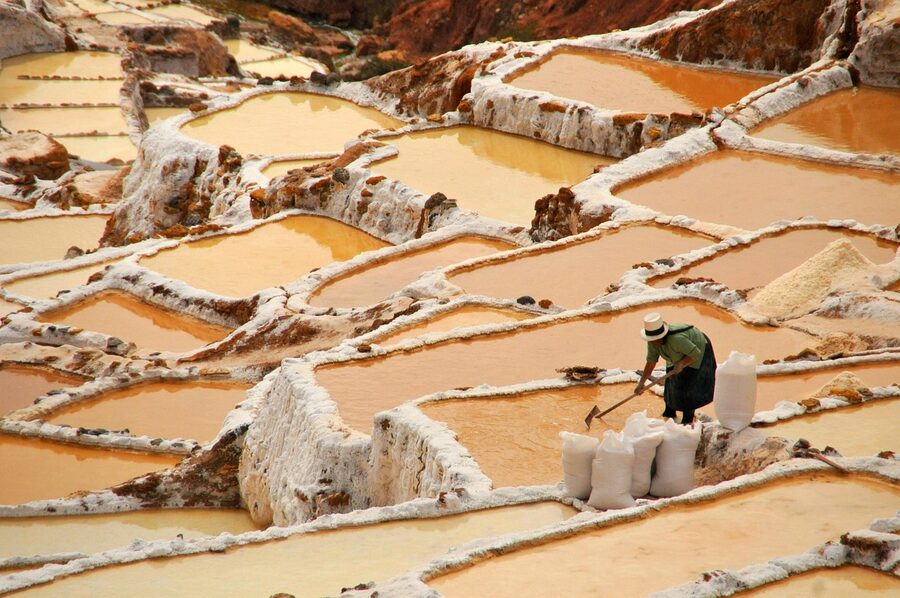
Machu Picchu was recognised in 2019 as Latin America’s first 100% sustainable city through its waste management programme, in partnership with private sector logistics. That is a narrow, technical achievement. What’s more interesting is what’s happening underneath it: Peru has been progressively tightening visitor caps at the citadel itself (currently around 4,500 per day, with timed entry, mandatory guides, and one-way circuits), the Inca Trail is permit-only with annual closure for restoration, and a long, patient effort is under way to spread visitors into the wider Sacred Valley so the pressure doesn’t all land on one ridgeline. It is a slow rebuild rather than a single policy, and the tension between revenue and preservation is not resolved. But the direction of travel is right.
The community lodges of Latin America and East Africa

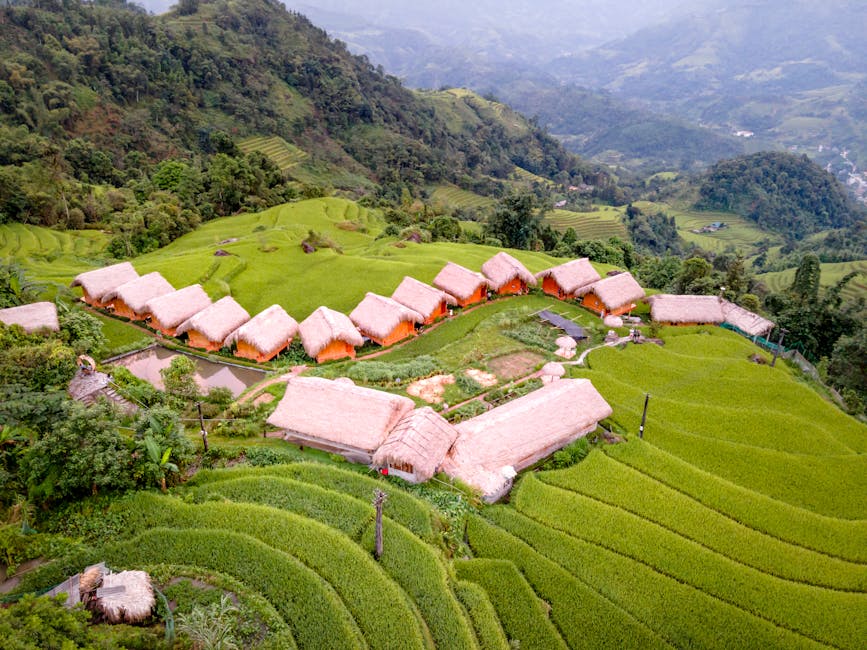
The model that interests me most isn’t a country, it’s a category. A growing number of community-run lodges, particularly in places like the Peruvian Amazon, the Ecuadorian highlands, and parts of Kenya and Tanzania, are owned by indigenous communities or local cooperatives, employ residents at every level rather than only as cleaning staff, return profits to community funds for schools and clinics, and design their visitor experiences around local knowledge rather than imported expectations. They are imperfect. Some are remote enough that getting there involves a flight and a long drive, which clips the environmental column. Some are seasonal and economically precarious. But they are the closest thing I’ve seen to a model where all three pillars are pointing the same way at once. If you want to support something tangible with your booking, this category is where I’d look first.
And one to be honest about: there are a lot of “eco-resorts” that fall short of all of this. A bamboo screen in front of a concrete building, a jar of complimentary aluminium tins, a turtle-rescue side trip on Sunday afternoons. The marketing language is identical to the genuine projects. This is why specifics matter and adjectives don’t.
The Honest Bottom Line
Sustainable tourism is not a product you buy and it is not a virtue you wear. It is a way of asking three questions, in order, every time you plan a trip.
Who lives here, and does this trip make their life better or worse? What ecosystem do I depend on for this trip to be possible at all, and is my visit helping or hurting it? Where does my money go, and how long does it stay there?
You will not get clean answers all the time. Some trips will trade off badly on one pillar to do well on another. A community-run lodge in the Amazon is brilliant on the economic and sociocultural pillars and weak on the carbon ledger because of the flight to get there. A train holiday across Europe is brilliant on carbon and weak on local economic impact if you stay in international chains the whole way. The point is not to find the perfect trip. The point is to know which trade-offs you are making and not to pretend you aren’t making any.
The category-archive pages on this site (Responsible Tourism and Conservation) are where you can drill into specific topics next: how to spot greenwashing, what to do about wildlife tourism, how to think about flying when you do have to fly, what fair-trade actually means at the cash register. This piece was the foundation. The rest of the site is the application.
Travel is not going to stop. The question sustainable tourism is trying to answer is whether it can grow up. Whether the industry, and the people inside it (the operators, the guides, the policymakers, and yes, you and me), can stop treating destinations as inventory and start treating them as the homes they actually are. That work is unfinished, often messy, and worth doing anyway.
Featured image: Machu Picchu, Perú by Diego Delso, CC BY-SA 4.0, via Wikimedia Commons.