Here is the working assumption I want you to start with. The words “eco”, “green”, “sustainable”, and “responsible”, on a hotel website or a tour brochure, mean almost nothing on their own. They are decorative. A leaf icon, a soft green palette, a stock photo of a forest canopy, a paragraph headed “Our Commitment to the Planet”. None of that is evidence. It is mood lighting.
I was reminded of this on a trip a couple of years ago. The hotel I had picked called itself an eco-hotel. The website had the word “pristine” twice, the word “mindful” once, and several photos of nearby trees. When I got there, the bins were not separated, every shower came with a single-use plastic shampoo bottle, and the only staff member I spoke to about it shrugged and said the word eco was something the owner liked. That was the substance behind the label. A liked word.
So this guide is a reading exercise more than a moral one. I will walk through the patterns of greenwashing that dominate the travel industry, the questions that reliably surface real practice from polished marketing, the certifications that genuinely mean something (with the caveats), how to read a sustainability report without being snowed by the numbers, and the bigger trade-off that nobody likes to talk about: the closer-to-home holiday with worse paperwork is often greener than the certified eco-lodge eight thousand miles away.
For the principles that greenwashing exploits in the first place, the question of what real sustainable tourism actually means and what it does not, start with the pillar piece on what sustainable tourism is and why it matters. This article is the companion: how to avoid being lied to about it.
In This Article
- The Eight Greenwashing Patterns You Will See Everywhere
- The Eco-Resort That Flies Everything In
- The “Carbon-Neutral” Cruise or Flight
- The “Community-Run” Operator That Is Not
- The Towel Card
- The Single-Issue Halo
- The Burden-Shift
- The Manufactured “Authentic” Cultural Experience
- The Made-Up Certification
- The Questions That Cut Through Marketing
- Ownership and Money Flow
- Energy and Water
- Waste
- Hiring and Pay
- Certification Specifics
- Certifications That Actually Mean Something
- GSTC (Global Sustainable Tourism Council)
- B Corp
- Travelife
- Rainforest Alliance
- EarthCheck
- Others Worth Knowing
- How to Read a Sustainability Report Without Being Snowed
- Greenhouse Gas Accounting
- Offsets Versus Reductions
- Targets Versus Plans
- The Distance Versus Intensity Trade-Off
- What Marketing Language Actually Tells You
- What I Do When Booking
- The Wider Problem With Tourism Marketing
- What “Eco-Friendly Sanctuaries” Tend to Get Wrong
- A Closing Test
The Eight Greenwashing Patterns You Will See Everywhere

Once you know what to look for, the patterns repeat. The same handful of moves get used by an Indonesian dive resort, a US airline, a French ski operator, and a Caribbean cruise line. Different uniforms, same playbook.
The Eco-Resort That Flies Everything In
The classic. A resort built in a national park, often with a thatched roof, sometimes with a sign explaining the local hardwood used for the bar. The website talks about harmony with nature. What the website does not mention is that the staff fly in on small aircraft, the food is trucked or flown from the nearest city, the diesel generator runs all night because there is no grid connection, the wastewater is pumped into a soakaway pit a few hundred metres back from your villa, and the hardwood bar came from forest cleared for the resort itself.
The tell is usually the location. If a resort is genuinely off-grid in a fragile ecosystem and writes confidently about being “eco”, I want to see the energy balance. How much of its power comes from solar versus diesel? Where does its food come from? How is grey water treated? If those questions get answered with adjectives instead of numbers, the answer is no.
The “Carbon-Neutral” Cruise or Flight

Aviation and cruise are the two industries where the gap between marketing and reality is widest, and the regulators are catching up. In late 2024 a European court ruled that Austrian Airlines had misled customers with claims of carbon-neutral flights powered by 100 percent sustainable aviation fuel. The UK’s Advertising Standards Authority has banned ads from Air France, Lufthansa, Etihad, and Ryanair on similar grounds in the past few years. The pattern: a banner claim (“fly more sustainably”, “100% green”, “CO2 zero”) sitting on top of an actual fuel mix where SAF is a fraction of a percent of total uplift, and the rest is offset.
Cruise lines run a parallel script. The newer the ship, the louder the talk about LNG, scrubbers, and shore power. The cruise itself, per passenger per night, still emits roughly three to four times the carbon of an equivalent land holiday before you count the flights to and from the port. There is no version of a cruise that is currently low-carbon. There are versions that are slightly less catastrophic. The honest brochure would say so.
The “Community-Run” Operator That Is Not
This is the one that frustrates me most because the marketing is genuinely affecting. You read about a “community-owned” lodge in the Andes, a “locally-run” homestay programme in northern Thailand, a “tribal-led” safari camp. The photos are of local guides smiling. The text is about empowerment. Then you trace the actual ownership and the company is registered in Singapore or California, the manager flies in from abroad, and the local “owners” are wage staff with a small profit-share dressed up as equity.
It is not always a scam. Some operators do split profits with the village in a real way. But “community-run” as a phrase is not regulated, and a foreign-owned operator can use it without breaking any law. The verification is in the structure: who is on the deed, who signs the bank statements, what percentage of net profit goes to the community, and is that audited externally. Hard questions, and the answer being slow or vague is itself the answer.
The Towel Card

Reusing your towel is a fine gesture. It is not a sustainability programme. The card on the rail asking you to drop it on the floor only if you want it laundered is the original greenwashing object, called out in the 1980s by environmentalist Jay Westerveld when he noticed hotels were branding the cost-saving as eco. Forty years later it is still the most common single piece of “sustainability messaging” in hotels worldwide.
The reason it matters is not the towel. It is what the towel signals: this hotel has put no other system in place. If the only visible green initiative is the towel card, you are looking at a hotel that has decided sustainability is a marketing line. Real practice looks like solar arrays you can see, refillable bulk dispensers in the bathroom, food sourcing notes on the breakfast buffet, written waste segregation behind the kitchen, and at least one number on the website that is not an adjective.
The Single-Issue Halo
Most greenwashing operators pick one specific initiative, push it hard in marketing, and let you assume the rest follows. An airline that promotes a small recycling programme but does not address its fleet emissions. A hotel that has eliminated plastic straws while still wrapping every amenity in shrink film. A safari operator that has banned single-use water bottles in the lodge while running diesel game vehicles five times a day.
The single-issue halo works because human pattern-matching is generous. You see one piece of evidence and you fill in the rest. The corrective is to look for the unsexy stuff. Energy mix, water source, waste disposal, hiring policy, supply chain. If a company can only talk about straws or recycling, those are the only places it has done any work.
The Burden-Shift
The category I find most cynical. The hotel asks you to skip your room cleaning. The airline asks you to pay extra to offset your seat’s emissions at checkout. The cruise lets you choose to plant a mangrove. All of these things are good. None of them is the company’s responsibility being met. They are the company’s responsibility being moved onto the customer.
Real corporate responsibility means the company offsets every emission of every trip out of its own budget, builds the cost into the ticket price, and discloses it. Asking you to opt in is a way to claim a sustainability programme exists while making sure it costs the operator nothing.
The Manufactured “Authentic” Cultural Experience
This one is heavier. Many tour operators sell “authentic” cultural experiences that are commercial productions made for tourists and badged as tradition. The Kecak fire dance in Bali was originally choreographed in the 1930s as a tourist spectacle, not a religious ritual, and the locals know it. Some “Mayan ceremonies” sold out of resort lobbies on the Yucatán are theatre. Some “shaman blessings” in Amazonia are forty-minute condensations of sacred practice for traveller schedules, and other communities openly object.
This is where the line between greenwashing and culture-washing blurs, because the same trick applies. A claim of authenticity, a green-tinted photo set, no verifiable structure underneath. The fix, where you can manage it, is to ask who designed the experience, whether the community as a whole agreed to its commercialisation, and where the money goes. The same homework as the eco-resort question, just different vocabulary. For more on this trap as it shows up in markets and gift shops, see the guide to ethical souvenir shopping.
The Made-Up Certification
Some operators do not bother with real certifications. They design their own. A logo, a leaf, a tasteful shade of forest green, a Latin-sounding badge name, a “Verified Eco-Partner” tagline, and a self-published page explaining the criteria they invented. There is no third-party oversight, no audit, no list of disqualifying conditions, sometimes no entity behind the badge at all.
You can spot these in seconds once you start looking. Click the logo. If it links to a press release or a vague “about” page on the operator’s own site rather than to an independent organisation with a public methodology, it is invented. We will get to the real ones later.
The Questions That Cut Through Marketing

Here is a working set of questions you can email any operator before booking. Not all of them apply to every business, but enough of them apply that the pattern of replies is itself diagnostic. Vague replies, replies that take a long time, replies that pivot to a different topic, are all signal.
Ownership and Money Flow
Who legally owns the business and where is it registered? What percentage of net profit stays in the country where the operation runs, and what percentage of net profit goes to the local community as direct payment, profit-share, or community fund contribution? Is that figure audited externally, and by whom?
If the answer to the first question is offshore and the answer to the third question is “we don’t audit that”, you have learned what you needed to learn. There is nothing wrong with foreign ownership in itself. The combination of foreign ownership, a “local” or “community” marketing claim, and no audit is the issue.
Energy and Water
What percentage of your electricity comes from on-site renewables versus the grid versus diesel? What is the total annual water consumption per guest night, and how does that compare to the local average household? How is wastewater treated before discharge?
The honest answers will sometimes be embarrassing. A remote lodge that runs on diesel will say so, and then explain why solar with battery storage is impractical for their site. That is fine. What you do not want is a description of “renewable solutions” without numbers. A solar panel running the reception lights is a solar panel running the reception lights, not the building.
Waste
What waste streams are separated and where do they actually go? Many destinations do not have the infrastructure to process recyclable or compostable waste even if a hotel sorts it diligently, so an honest hotel will tell you that and describe what they do instead. That is a much better answer than a hotel that talks about its three-bin system and lets you assume the bins reach a recycling facility that does not exist locally.
Hiring and Pay
What percentage of your staff are local hires from the surrounding community? What is the entry-level wage, and how does it compare to the local minimum wage and the local cost of a basic family budget? Is there a written training and progression policy, or do senior roles only go to expatriate hires?
Heather Jasper, who has been writing about sustainable tourism in South America for years, points out that “all employees are locally hired” is a common claim that quietly excludes a lot. The more remote a property is, the harder a fully local hiring policy is to deliver, because it requires sustained investment in cooking schools and tourism training. Without that pipeline, the claim is usually exaggerated or outright untrue. Two operators who do this well, in her experience, are Pristine Camps in Argentina and Posada Lodge in the Peruvian rainforest. The point is not that you should book those specifically, it is that the standard exists and is verifiable when it is real.
Certification Specifics
If a property displays a certification badge, ask: which scheme, which year was the most recent audit, and is the audit report public? Most legitimate certifications publish at least a summary. If the operator cannot tell you when they were last audited or by whom, the badge on the website is decoration.
Certifications That Actually Mean Something
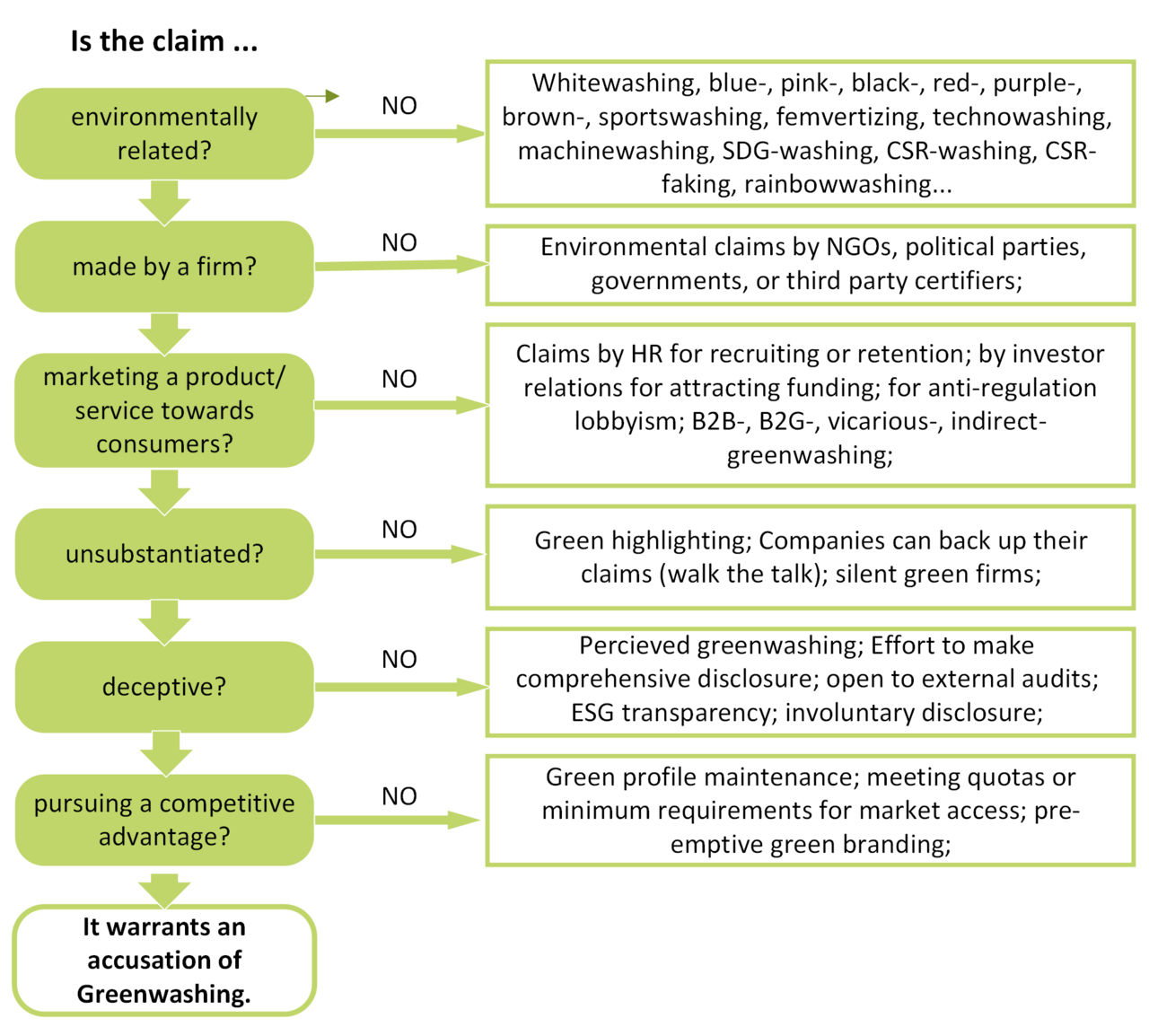
There are real certification schemes worth trusting. Each has limits, and I will name them honestly. The shorthand is that certification by a third party that publishes its criteria, audits independently, and discloses results is much better than self-declaration. It is not a guarantee.
GSTC (Global Sustainable Tourism Council)
The closest the industry has to a standard-setter. GSTC does not directly certify hotels and tour operators. It accredits other certifying bodies against a set of criteria covering environmental management, social and economic impact on local communities, and cultural heritage protection. When you see “GSTC-recognised”, that means the certifier itself has been vetted, which is meaningful.
The caveat: GSTC criteria are a floor, not a ceiling. A property can meet them and still not be especially impressive. The certificate proves an absence of obvious failures rather than a presence of standout practice.
B Corp
B Corp, run by the non-profit B Lab, certifies whole companies, not individual properties or trips. The assessment looks at governance, workers, customers, community impact, and environmental performance, with a minimum score required across the lot. The certification is renewed every three years and is publicly searchable.
What I like about B Corp: the score breakdown is transparent. You can see exactly where a company is strong and where it is weak. Intrepid Travel is a well-known travel-industry B Corp, scoring particularly well on community impact. What B Corp does not do is verify any individual trip or hotel within a portfolio, so a B Corp tour operator running a tour through a non-certified hotel is normal and does not invalidate the certification.
Travelife

Travelife is widely used in Europe, particularly for accommodation providers selling through tour operators. There are two tiers. Travelife Engaged is essentially a beginner level showing a property has a sustainability action plan. Travelife Certified is the audited version, valid for two years, and requires evidence of meeting roughly 150 criteria.
I trust Travelife Certified. I do not draw conclusions from Travelife Engaged on its own, because it is genuinely possible to register and not progress.
Rainforest Alliance
Rainforest Alliance is best known for agriculture and forestry certifications, and they apply the same model to tourism. The certification covers environmental, social, and economic criteria with annual audits. It is rigorous where it operates, mostly Latin America and parts of Southeast Asia.
The caveat is geographic: outside the Rainforest Alliance’s operating regions, it is not relevant, and operators sometimes display a Rainforest Alliance frog logo for a tangential supply-chain reason that has nothing to do with the trip itself. Confirm the certification covers the property or tour you are booking, not just an ingredient in the breakfast.
EarthCheck
An Australian-headquartered scheme used heavily across Asia-Pacific and increasingly in the Middle East. EarthCheck Certified properties report annually on benchmarks across energy, water, waste, and emissions, audited every two years. Their database is searchable and the criteria are public.
Honest assessment: EarthCheck has been criticised for being paid for by the very operators it certifies, which is true of every certification scheme but worth keeping in mind. The certification is real. The auditor is paid by the audited. Read the public data, not just the badge.
Others Worth Knowing
Green Key (international, focused on accommodation), Green Globe (general tourism), Biosphere (linked to UNESCO), Blue Flag (beaches and marinas specifically), Green Fins (dive operators), and Green Tourism (UK-focused) are all third-party schemes with public criteria. The pattern is the same: more credible than self-declaration, less credible than direct evidence, useful as a filter.
What you should never trust: a logo that does not link to an independent organisation, a “verified” tag on a booking platform with no public methodology, an operator’s own internal scoring system, a certificate from a body whose entire member list is the certified company plus its subsidiaries.
How to Read a Sustainability Report Without Being Snowed

Bigger travel companies publish annual sustainability or ESG reports. Most of them are slick documents with infographics, photos of children in school uniforms, and a foreword from the CEO. The actual numbers are usually buried in an appendix near the back. That is where you go.
Greenhouse Gas Accounting
The first thing to find is the company’s reported greenhouse gas emissions, broken down by scope. Scope 1 is direct emissions from things the company owns or controls (its vehicles, its boilers, its diesel generators). Scope 2 is emissions from purchased electricity, heating, and cooling. Scope 3 is everything else along the value chain: supplier emissions, employee commuting, business travel, the emissions of guests in their hotels, and crucially for travel companies, the emissions of the trips they sell.
For an airline, scope 1 is most of the story. For a tour operator that does not own its planes or hotels, scope 3 is most of the story, and scope 3 is the scope companies are most likely to under-report. A tour operator publishing only scope 1 and 2 emissions is leaving out the trips, which is the point. If you cannot find scope 3 in the report, you have learned something. If you find it and the number is unconvincingly low, check whether they are calculating per-guest, per-trip, or per-revenue, and whether they include the flights they sell. The methodology footnote is where the truth hides.
Offsets Versus Reductions
The next thing to find is whether the company is reducing emissions at source or relying on offsets. A reputable report will show absolute emissions year on year (the actual tonnage of CO2 going into the atmosphere) alongside intensity (CO2 per guest night, or per passenger kilometre). Both should be falling. If absolute emissions are rising and the company claims to be on track for net zero, it is offsetting the growth, and the question becomes how good the offsets are.
Offsets vary wildly. Verified Carbon Standard, Gold Standard, Plan Vivo, the UN Clean Development Mechanism, Climate Action Reserve, and American Carbon Registry are the recognised standards. Within those, some project types are more credible than others: forest protection projects have been controversial because of measurement difficulties and reversal risk, while engineered carbon removal (direct air capture, mineralisation) is more durable but very expensive and barely available at scale. A company that buys cheap forest offsets and calls itself carbon-neutral is doing the absolute minimum.
Targets Versus Plans
“Net zero by 2050” is not a plan, it is an aspiration. Look for interim targets (a 2030 milestone is now standard) and a pathway describing how the targets will be met: efficiency upgrades, fleet renewal, fuel switches, supply-chain engagement. If the report shows a graph going down with no methodology footnote, it is decoration.
The Distance Versus Intensity Trade-Off

Here is the most uncomfortable truth in this niche, and the one most travel marketing carefully avoids. The biggest single variable in your trip’s footprint is how far you travelled and how you got there. The hotel matters. The hotel matters much, much less than the flight.
The numbers are unflattering. A long-haul return flight from London to Bali generates somewhere in the order of three to four tonnes of CO2 per passenger in economy. The average UK household produces about eight tonnes a year for everything: food, heating, electricity, commuting, all consumption combined. So a single Bali flight is roughly half a year of household emissions. Choosing a Travelife Certified hotel at the destination versus a non-certified one might shave a few hundred kilos off the trip total. That is a real saving, and on a four-tonne base it is small.
The implication is that an “eco-resort on the other side of the world” is, in carbon terms, almost always worse than a budget hotel two hours from your home. Not always. There are cases where a destination’s tourism revenue funds genuine conservation that would not otherwise happen, and the marginal flight is the price of that funding. But the casual assumption that a sustainable property in a faraway place equals a sustainable trip is wrong, and a lot of greenwashing relies on that assumption.
What this looks like in practice: I am much more sceptical of long-haul “eco” trips than I am of nearby trips that make no green claims at all. A weekend in a non-certified hotel ninety minutes from home is a smaller footprint than a week in a Travelife Certified eco-lodge requiring a twelve-hour flight. Both are valid choices. Pretending the second is the greener one because it has the badge is the lie.
What Marketing Language Actually Tells You

Once you have read enough travel marketing, certain phrases become diagnostic. They do not prove anything, but they tell you where the operator is putting its effort.
“Eco-friendly”, “green”, “sustainable”, “environmentally conscious”, used without numbers, these are vibes. They are not lies, exactly, because they are too vague to be falsified. That is the design.
“Carbon-neutral” without methodology is a claim, not a fact. Ask: measured how, offset by whom, certified by which standard, and what fraction of total emissions is offset versus reduced. If those answers are not on the page, the claim is decorative.
“Pristine”, “untouched”, “secluded paradise” are descriptions of the place, not of the operator’s practice. A pristine reef can sit next to a hotel with terrible wastewater management. The aesthetic of nature does not transfer to the operator.
“Local” and “community” are meaningful only when the structure is described. Local hires, local food, locally-owned, community-funded, community-governed are different things. Operators who do this seriously will tell you which one applies. Operators who do not will let “local” do all the work.
“Tried and tested”, “carefully selected”, “handpicked” are synonyms for “we made a choice”, which every business does. They are filler.
“Mindful”, “transformative”, “regenerative” are the new generation of words, replacing “sustainable” as that word has become discredited. The same scrutiny applies. Regenerative tourism is a real concept (designs that leave a place better than the operator found it). It is also a marketing word now. Same questions, same answers.
What I Do When Booking

A short version of my own process, for what it is worth. Take or leave it.
I treat any “eco” or “green” claim on a website as a starting point that needs evidence, not as evidence itself. I look for numbers (energy mix, water use, waste percentages, profit-share to community) and treat their absence as a no.
I check certifications by clicking the badge through to the certifying body’s database to confirm the property or operator is actually listed there and the certification is current. About one in five badges I click, the link is broken or the property is not in the database. Those are useful results.
I read TripAdvisor reviews specifically searching for the words “plastic”, “sustainable”, “eco”, “wasted”, and “staff”. Travellers will often mention the gap between marketing and reality in passing, and that gap is informative.
I email two or three direct questions to the operator before I book. The questions are about ownership and money flow, energy mix, and waste. Operators who respond promptly and concretely are the ones I book with. Operators who deflect or take a week to send a vague paragraph are the ones I move past. The conversation itself is the test.
I make peace with the imperfection. There is no truly low-impact long-haul holiday. There are choices that are better than other choices, and there are claims that are honest. The combination of those two things is the goal. A trip that is honestly imperfect beats a trip that is dishonestly perfect, and most premium “eco” trips fall into the second category.
The Wider Problem With Tourism Marketing
Greenwashing is not a quirk of a few bad operators. It is a structural feature of how travel is sold. The industry’s regulatory environment is light, the marketing budgets are large, the consumer-protection enforcement is patchy, and the gap between what a holiday looks like in a brochure and what it is in practice has always been wide. The introduction of “sustainable” as a category just gave the gap a new vocabulary.
Some regulation is starting to land. The EU’s Green Claims Directive will, when fully in force, require generic environmental claims (eco-friendly, carbon-neutral, climate-positive) to be substantiated and verified by independent bodies. Several jurisdictions have begun to fine airlines for misleading sustainability ads. Booking platforms have started to filter or label certifications, though not always rigorously. The Booking.com “Travel Sustainable” programme was wound back after criticism that the criteria were thin.
The point is not that sustainable travel is impossible or that the industry is uniformly cynical. Some operators are genuinely doing good work, and you can find them. The point is that the burden of telling the difference still mostly sits with you, and “eco” or “green” on a webpage does not transfer that burden anywhere else. It is a starting point for questions, not an ending point for trust.
If you want to dig into how this same pattern plays out in marine tourism specifically, where operator vetting is even more important because the damage is harder to see, the guide to ocean conservation for travellers covers that ground in detail.
What “Eco-Friendly Sanctuaries” Tend to Get Wrong

One specific case worth flagging because it is so common. Animal “sanctuaries” and “eco-tours” are a hotbed of greenwashing, particularly in Southeast Asia. Many places marketed as elephant sanctuaries are converted trekking camps where the elephants are still chained at night, separated from their mothers as calves, and trained with bullhooks. Some are genuinely better, but not all. The marketing language is identical across both kinds.
The signals: any direct contact with the animal (riding, bathing, hand-feeding, posing for photos with cubs) is a red flag. Real sanctuary work is mostly observation, with the animal having space to refuse the encounter. Verification comes from World Animal Protection’s wildlife-friendly accommodation list, the Global Federation of Animal Sanctuaries (GFAS) accreditation, and World Cetacean Alliance for marine operators. If a venue is on those lists, the practice is likely real. If a venue claims sanctuary status without third-party recognition and offers physical interaction, the marketing is doing the work, not the welfare.
A Closing Test
If after a thorough read of an operator’s website I cannot answer five specific questions, I do not book. Where does your power come from. Where does your food come from. Who owns the company and where is it registered. What percentage of your senior staff are local hires. When were you last externally audited and by whom.
An honest operator will answer all five in detail and admit where they are still working. A dishonest operator will respond with adjectives. A non-responsive operator has answered by not answering. After a few rounds of doing this, the pattern becomes obvious, and you stop being charmed by the website’s font choice.
Travel does not have to be perfect to be worthwhile. It does have to be honest about what it is. The operators who can stand on plain language with real numbers behind it are the ones worth your money. Everything else, no matter how forest-green the website, is decoration.