
The first time I really understood that you could keep a place on its feet without going there, I was sitting at my kitchen table in Lisbon trying to write a thank-you note. The summer before, my partner and I had spent a week in a tiny village in Crete, and the woman who ran the family-style taverna at the bottom of the hill had refused to let us pay for our last meal. We’d sat with her and her son for three hours. She told us about the kids who’d left for Athens and never came back. The next year, the wildfires happened, and the road into the village burned out for most of the season. Tourists couldn’t get in. We couldn’t get in. I sat at the kitchen table in Lisbon and thought, well, that’s that. And then I thought, no, that isn’t.
You probably can’t always travel. Sometimes you’re between trips and the next one is months away. Sometimes a place you love has had a hard year, the way that Crete village did, or the way Maui did after the 2023 fires, or the way half a dozen places quietly do every year without anyone outside the region noticing. Sometimes a destination is asking, openly, for fewer visitors right now, and you want to honour that without dropping your relationship with the place. Sometimes life just got in the way.
None of those reasons mean your support has to stop. The trick, mostly, is figuring out how to spend money and attention in ways that actually reach the people you’d want it to reach. That’s the whole article. Pick two or three things off this list and go.
In This Article
- Where your money actually goes (and why this matters)
- Buy direct from the artisans you actually met
- The donation question (and the international NGOs I’d skip)
- Share content from creators who live there
- Eat from your kitchen the way you ate on your trip
- Join a CSA, even though it isn’t technically “their” community
- Learn the language now, before the next trip
- Reviews, recommendations, and the other quiet things
- Advocate for the policy that affects them
- Plan a future trip carefully, and book the parts you can early
- The diaspora and the remote-work option
- What I’d actually pick if I had an hour today
Where your money actually goes (and why this matters)
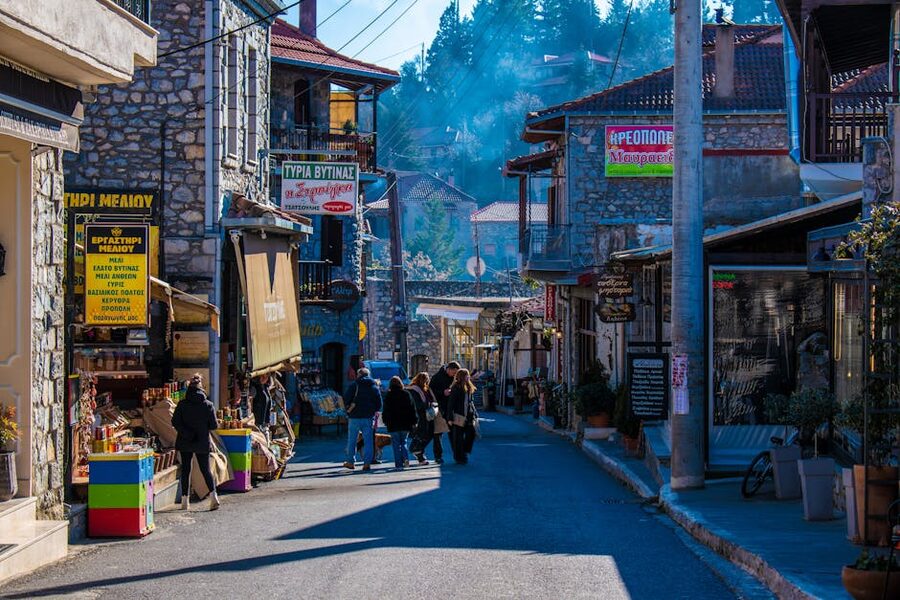
If you’ve never looked at the numbers before, here’s the uncomfortable thing the tourism industry mostly doesn’t lead with: when you book a typical resort holiday, somewhere between 40 and 80 percent of what you spend leaves the destination. That figure is from the UN’s World Tourism Organization, and it’s been quoted for years across responsible-travel circles for the simple reason that it’s roughly accurate. The biggest leaks are international hotel chains repatriating profits, foreign-owned tour operators, foreign-owned cruise lines, food and drink that’s flown in to match what tourists expect, and booking platforms that take a cut and send the rest somewhere else.
The practical question changes when you know it. It stops being “did I support locals?” and becomes “did the specific dollars I sent actually land in local hands, or did they pass through and leave?” From home, that question gets clearer. You’re not in the chain hotel by accident, not in the all-inclusive because the package was easier, not eating in the cruise-port restaurant because you only had ninety minutes off the boat. You’re choosing where to send your money in cold blood, on a laptop, in your kitchen. Which means almost everything below is some version of: send it through fewer hands.
If you want a longer read on the principles behind that, our piece on what sustainable tourism actually means covers the where-the-money-goes question in more detail.
Buy direct from the artisans you actually met
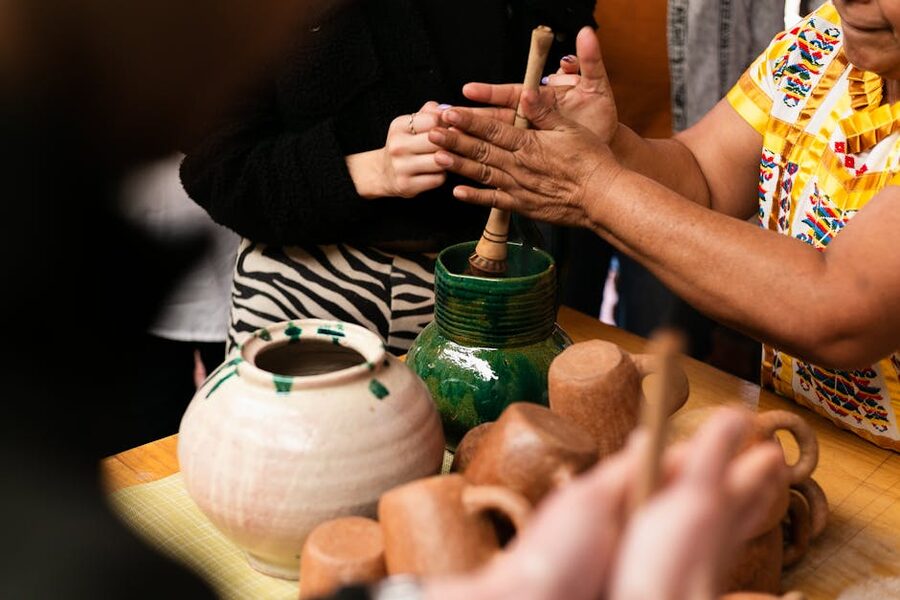
This is the easiest one, and it’s the one I’d start with if you’re new to thinking about home-based support. If you’ve ever stood in someone’s small shop or workshop, exchanged a few sentences, taken their card or their Instagram handle, and then gone home and never followed up, you have a relationship sitting fallow. Most of those people sell internationally now. They didn’t fifteen years ago, and the shift is genuinely good news.
The two things to know. First, ask them directly rather than going through a marketplace. Etsy and the bigger handicrafts platforms take fees that range from about 6.5% to 20% depending on the seller’s plan and how much promotion they’ve paid for, plus payment-processing fees on top. If a weaver in Oaxaca has a Whatsapp number and is happy to send you a piece via DHL, the cut they keep is dramatically larger than if you find them through a third-party marketplace. Second, expect shipping to be the awkward bit. Customs forms, parcel insurance, declared values, none of it is the artisan’s strength. Be patient about it, ask for tracking, and budget for a few weeks rather than expecting Amazon-fast.
If you didn’t actually meet the person, our companion piece on ethical souvenir shopping covers how to find legitimate artisan cooperatives without flying out, including the marketplaces that vet who they list and the certifications worth looking for. The short version is: cooperatives like Nar Kadin in Turkey, Quechuan textile collectives in Peru, and the women’s pottery groups in Oaxaca all ship internationally now, and the money lands in dramatically different places than if you bought a “Mexican” bowl off a generic e-commerce site.
One thing I’d avoid: dropshipping that’s marketed as “supporting artisans” but doesn’t actually let you trace the maker. If a site can’t tell you the cooperative or village the piece came from, it probably can’t tell you what the maker was paid either.
The donation question (and the international NGOs I’d skip)

This one is going to feel mildly uncomfortable, because the big international charities have brand recognition for a reason. They’re easy. You know the name, you click, the gift-aid form is set up, you get the thank-you email. Done.
The trouble is, the bigger and more international the organisation, the more of your donation pays for fundraising overhead, regional offices, head-office staff in London or New York or Geneva, and currency conversion. Some of those organisations do excellent work. Some of them are essentially marketing engines that move a small percentage of donor money to the ground. Distinguishing them from a kitchen table is hard, which is why I’d push you toward small, specific, local organisations instead.
Here’s the rough rule of thumb I use. If a place has a problem, the people closest to it usually have a community foundation, a small NGO, or a parish-level mutual-aid group already addressing it. Those are the ones to find. Search for the destination plus “community foundation” or “mutual aid” or “neighbourhood association” rather than the destination plus “donate.” After Maui’s fires, it wasn’t the Red Cross that was getting $3,000 of rent into a displaced family’s hands within a week, it was groups like the Maui Strong Fund and the Hawaii Community Foundation, both running in-state with fewer layers between donor and recipient. The pattern repeats almost everywhere. After the 2023 Turkey-Syria earthquake, AHBAP (a Turkish grassroots aid group) moved money into hands faster than any of the big international names. After the Crete fires, it was a regional church foundation, not a household-name international charity, that I ended up sending to.
The other thing about local NGOs: they have a feedback loop that’s worth your attention. You can email them. A real person usually answers. You’ll often get a one-line update months later about what specific thing your money helped pay for, which is something you almost never get from a $50 donation to a billion-dollar organisation. That feedback loop is partly why it sticks. You’re more likely to donate again next year because you actually saw what happened.
One small caveat. For acute disaster response in the first 72 hours, the big logistics-heavy international organisations sometimes are the right answer because they have warehouses and helicopters. After the immediate phase, the local ones almost always do more with each dollar.
Share content from creators who live there

This one almost nobody talks about and it’s probably the lowest-effort, highest-leverage thing on the list. If you have a social account with even a few hundred followers, you’re a media outlet on a small scale. Sharing one well-made video from a Ghanaian cocoa farmer, or a Nepali trekking guide running her own small agency, or a Zimbabwean photographer documenting the Tonga people, costs you nothing. It might net them a few hundred to a few thousand new viewers. For a creator competing with the algorithmic dominance of expat travel influencers, that’s real money over time.
How to find them, since they don’t surface in search results the way the big travel accounts do: search the destination plus “tour guide” or “photographer” or “writer” on Instagram and TikTok and look for accounts where the bio actually says “based in” rather than “traveling through.” Look at who’s tagged in posts by the small local hotels you’d stay at, rather than who pops up when you search the destination as a tourist would. Reverse-image-search photos that move you, and find out who took them. It’s slower than the algorithm wants you to be, but you find different people that way.
When you find someone whose work you actually like, follow them, comment on a few posts, share one a month. Just engage like you would with any creator whose work you like.
One thing worth flagging: if a creator has a Patreon, a Ko-fi, a “buy me a coffee,” or a YouTube membership tier, that’s where the money actually shows up. Three dollars a month to a Bolivian street-food YouTuber is roughly nothing to you, and a meaningful base income they can build on. Subscriptions are more useful than one-off donations because they let creators plan.
Eat from your kitchen the way you ate on your trip
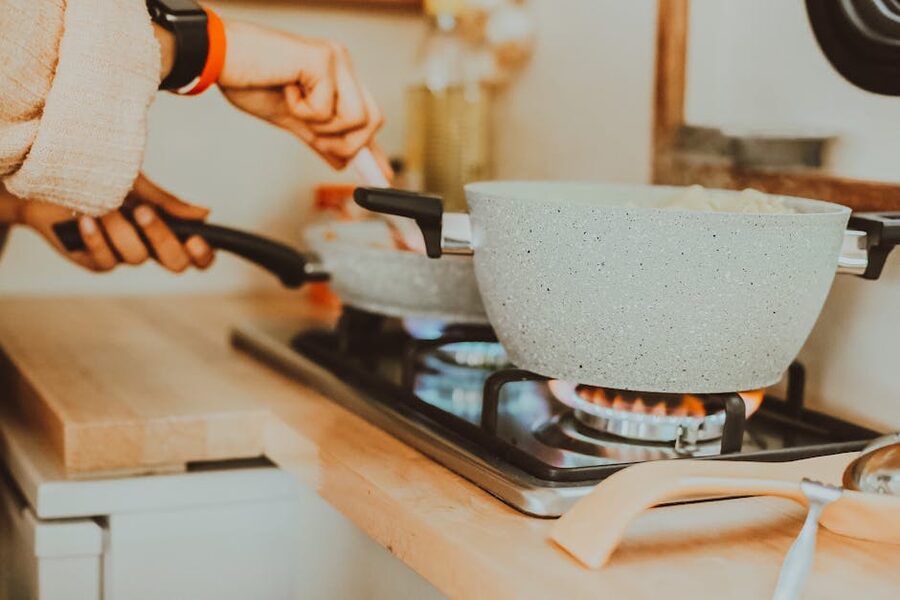
If you cook the food of a place you’ve loved, you start buying its ingredients. Those ingredients usually pass through a much shorter supply chain than tourist-trail souvenirs do. A bag of Mexican mulberry-dried chillies from a small importer who works directly with growers in Puebla sends a meaningful percentage of your money back to a farmer. Same with Sri Lankan cinnamon, Cretan olive oil from a single estate, Thai palm sugar, Ethiopian coffee from a co-op rather than a multinational. The producers exist, the importers exist, you just have to be slightly more deliberate about who you buy from than a supermarket trip allows.
The way I do this is to keep a running note on my phone of the producers I want to come back to. After our trip to Crete I had three: the olive oil from the family near Chania, the honey from a guy on the road into Sfakia who had bee boxes painted blue, and the rusks (paximadia) from a baker in Heraklion. The honey guy didn’t ship and isn’t online; the other two do, and they get my repeat orders for as long as the Lisbon kitchen needs olive oil and rusks, which is forever.
Cooking the food also keeps the place alive in your head between trips, which is the part that means you actually go back. If you stop cooking it, the trip becomes a story you tell once or twice a year, then occasionally, then a thing that happened. The kitchen is a memory device.
Join a CSA, even though it isn’t technically “their” community
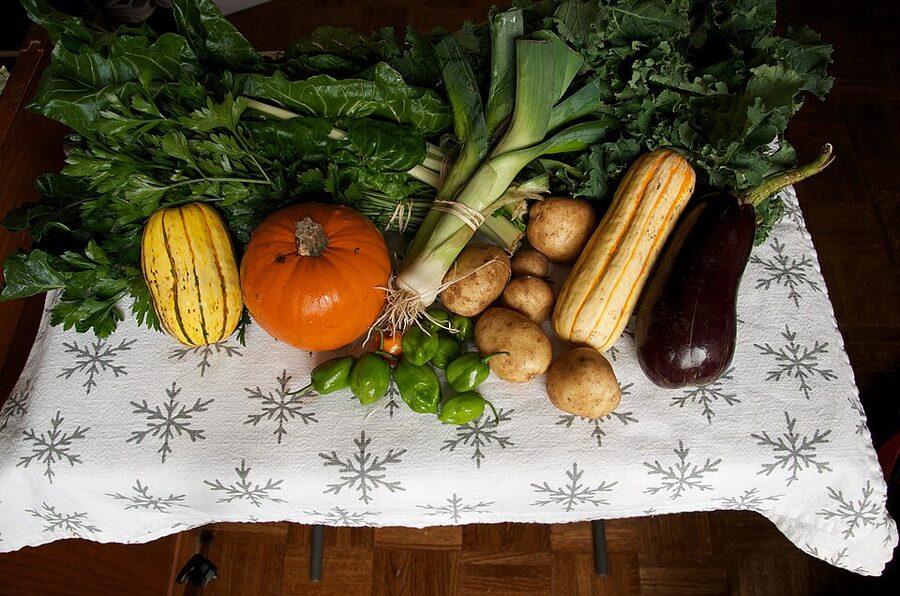
I’d push you toward a CSA in your own area for a slightly oblique reason: doing it locally teaches you what good direct-from-farm support looks like, so when you next travel and a small farm in a place you love offers a similar arrangement, you know what to ask. Most CSAs run as a season-long subscription, paid up front, where the farm gets cash flow at the start of the year and the subscriber gets a weekly box of whatever’s growing. The farmer carries less crop-failure risk because you’ve already paid; you carry slightly more, which is the trade.
The reason this is in an article about supporting locals abroad is that the same model is starting to show up in destinations you’d visit. There are small olive farms in Greece doing pre-paid annual oil subscriptions. There are coffee farms in Costa Rica selling subscription bags. There are vineyards in Chile and Slovenia doing share schemes. The structure is identical to a CSA, the cash-flow benefits are the same, and once you’ve done one in your own town you stop being intimidated by the model when you see it overseas.
One small honest thing: doing a CSA at home is also genuinely good for your own week, separate from any travel angle. The vegetables are better. You’ll cook with things you’d never have bought.
Learn the language now, before the next trip

Counting up the things you can do for a place in advance, language is the one with the biggest delta between effort and payoff. A week of casual Duolingo is a low investment. A few months of it is more, but still very little compared to the cost of the actual trip. The downstream effect on your time on the ground is enormous.
If you can hold a basic conversation, you’ll spend more of your trip in places that don’t have English menus, which by definition tend to be the smaller, family-run, locally-owned places. You’ll also tip and ask and chat differently, in a way that builds the kind of relationships that turn into ten years of repeat visits and Christmas-card-style mutual remembering. There’s a meaningful economic effect on the destination if every traveller does this. There’s a much bigger personal effect on you.
The threshold for “spoke a bit of the language” is genuinely low. Getting through “good morning, may I have, thank you, sorry, the bill please, beautiful” is enough to change the texture of every interaction you have. If your next trip is six months away, half an hour a day on a free app gets you there. Tools that work fine: Duolingo and Memrise for vocabulary, Pimsleur or LanguageTransfer for audio, italki for one-on-one tutoring with native speakers (which is also, incidentally, a way of sending money to someone in the country, often a teacher who might rent a room in their flat next time you visit). The tutor route doubles as a slow relationship.
Reviews, recommendations, and the other quiet things

“Leave a positive review” is the standard advice and it’s fine, but I want to push past the version that gets repeated everywhere. The slightly better advice is: be specific and current.
The kind of review that actually moves a small business names the room, the dish, the guide, the time of year, and the small human detail that lifts it out of generic five-stars territory. “We stayed in the corner room on the second floor in October. The hosts gave us the address of a bakery that wasn’t on any list. Coffee was the best of the trip.” That review does work. It tells the next traveller something concrete, it shows the algorithm that the review is real, and it gives the host a thing to quote on their website.
The bigger thing nobody mentions: word-of-mouth in your own life is worth more than any platform review. When a friend asks where you stayed in Crete, telling them the specific guesthouse rather than “we found something on Booking” is a meaningful redirect of money. If you have a blog or a newsletter, write the specific recommendation post. Your hundred readers might convert four bookings over three years. Four bookings is meaningful for a six-room family-run pension. Four bookings is rounding error for a chain.
Advocate for the policy that affects them
This is the section I’d skip first if I were skimming, and the section I’d urge you most not to skip. Tourism is a policy environment, and the policy is mostly written by industry lobbies whose interests don’t line up with the small operators you’d want to support.
If your country has visa or air-passenger-duty arrangements that affect a destination you care about, there are usually consultation periods where individual responses count. Tourist taxes that go to local infrastructure (Venice, Barcelona, Iceland, parts of Japan) tend to be supported by residents and opposed by hotel groups; saying you’d happily pay a higher tourist tax in a survey response is a one-email piece of advocacy. Cruise-ship caps in port cities have similar dynamics. Short-term rental regulation is a more local fight, but if you’ve ever stayed in an Airbnb in Lisbon or Athens or any city that’s losing residents to short-term let conversions, supporting the regulations that residents want is part of being a guest who comes back rather than a guest who hollows the place out.
If you want to read more about the policy side, our piece on how to be a sustainable traveler during a crisis covers what advocacy looks like specifically when the place is in trouble, which is when it counts most.
Plan a future trip carefully, and book the parts you can early
Workaway and Gocollette both end on the dreaming-and-planning point and I want to take it slightly further than they do, because the planning isn’t just psychological. It’s a transferable form of support if you do it right.
The mechanism. Small accommodations, especially family-run guesthouses and small B&Bs, run on cash flow. If they get a deposit in March for a September stay, that’s six months of breathing room when bookings are otherwise quiet. Choosing to book directly with the property six months out, rather than through a platform two weeks out, sends them the same money with two material differences: they pay no commission (typically 15-20% on platforms), and they have it earlier. For a property running on tight margins, those two things are not minor.
The other half: pre-booked tours and experiences with named operators, ideally ones a friend or a trusted creator has recommended, are dramatically better than the airport-shuttle-and-tour-desk version of the same trip. A walking tour booked direct with the guide via her email, paid in advance, is a different animal from the same walking tour booked through an aggregator that takes 30%. The aggregator version isn’t bad, exactly, but the direct version is just better, and you can do it from your kitchen months before you arrive.
One pragmatic note: pay attention to the cancellation policy. Direct bookings often have stricter cancellation terms than platform bookings. That’s a feature, from the host’s perspective, but you should pick the right balance for your own life. Travel insurance covers the gap if you have any reasonable suspicion you might need to change plans.
The diaspora and the remote-work option
Two final ones, briefly.
If you have any kind of professional skill, whether it’s design, marketing, web work, accounting, English copyediting, photography, or social media, there are small businesses, cooperatives, and NGOs in places you’ve travelled that would be transformed by ten hours of your time. Some have remote-volunteer programmes. Some don’t, but would say yes if you emailed them. What’s worked for friends of mine is to commit to a specific small thing (rebuild this one website, write this one English-language press release, run social media for one quarter) rather than open-ended help. Both sides can finish, both sides can decide whether to do another round.
And if you ever do work remotely for a season, consider going back to a place you’ve already loved instead of somewhere new. The network you build the second time is qualitatively different from the first-visit version. Workaway, Worldpackers, and similar platforms can be a starting point. Just be clear-eyed that staying long enough to be useful is harder than staying long enough to be a tourist, and worth doing anyway.
What I’d actually pick if I had an hour today

If you scrolled to the end looking for a shortlist, here’s mine. An hour today would buy you: ten minutes finding two creators from a place you love and following them properly, fifteen minutes writing a specific review for the small place you stayed last trip, twenty minutes setting up a small monthly donation to a local foundation in the destination you care most about, and the rest of the hour ordering one ingredient or piece directly from a maker you actually met.
None of those is dramatic. The drama is that you’d have done none of them otherwise. The aggregate effect of a few thousand readers doing the small versions of these is, in honest accounting, a much bigger flow of money to the right places than one big-name international charity gala. It’s also more durable. The small habits stick.
I should probably stop. The taverna in Crete reopened last spring, the road back in is repaved, and the woman who runs it remembered our names. Some of that is luck, but a small part of it is that we kept buying the rusks. The kitchen is the memory device. The memory keeps the place real. The place stays open.



_Local_Farming_Week_Seventeen_CLS_6128.jpg)