Picture the scene. You’re walking a beach with the family, the tide is on its way out, and the kid finds it. A spiral shell, palm-sized, the inside swirled like the cross-section of a cinnamon bun. They look up. “Can I keep it?” And of course you say yes, because what kind of monster says no, and into the bucket it goes.
I used to say yes without thinking. The shells went home, sat on a windowsill for two months, then quietly migrated into a drawer, then a shoebox, then a charity-shop bag. The same loop most of us run. It wasn’t until a week on Sanibel Island, watching live conches drag themselves across the sand after a red tide, that the loop broke. There’s a specific moment when you stop seeing a shell as a pretty rock and start seeing it for what it is, which is the abandoned house of an animal that lived inside it. A few of those animals were still in residence. Several were trying to find new ones. After that week, the bucket got harder to fill without thinking.
This isn’t a guide that’s going to tell you to never pick up a shell. That would be daft. Most people who comb a beach are doing something gentle and curious, and the world has bigger problems than your kid’s pocket. But there’s a version of shell collecting that’s genuinely fine and a version that does damage at scale, and the line between them is thinner than I assumed. So this is the friend-at-the-kitchen-table version of where that line sits, what’s actually illegal where, and what to do when the kid’s holding a fighting conch and looking at you with those eyes.
In This Article
- Why the Beach Doesn’t Restock as Fast as You’d Think
- Live Shells Are Not the Same as Empty Ones (and It’s Often Hard to Tell)
- Where Shell Collecting Is Actually Illegal
- The United States
- The Caribbean
- Other countries worth flagging
- Where It’s Legal but Still Off
- The Souvenir Shop Is Often Worse Than the Beach
- A Working Definition of Ethical Collecting
- The Photography Reframe
- When the Kid Wants One: The Compromise Conversation
- The Bigger System the Beach Sits In
- What to Tell People Who Roll Their Eyes
- One Shell, Two Outcomes
Why the Beach Doesn’t Restock as Fast as You’d Think
The first thing worth knowing is that a beach is not a conveyor belt. You walk along it after a storm and the sand looks paved with shells, and the brain fills in the rest: of course there are millions, of course one going home in a pocket isn’t going to dent the supply. The supply has been dented though, in places we can measure.
The cleanest study to point at is from Llarga Beach near Barcelona. Researchers ran the same survey twice, once between 1978 and 1981 and again between 2008 and 2010, and found a roughly 60% decline in shells across the same stretch of sand. The variable that changed most over those 30 years was tourism. The lead author, Michal Kowalewski at the Florida Museum, put it like this: “Humans may play a significant role in altering habitats through activities that many would perceive as mostly harmless, such as beachcombing and seashell collecting.” A separate Mauritius estimate put the local shell loss closer to 60% as well, attributed in part to tourists taking a bit of the island home.
Sixty percent is a lot. And the reason it matters isn’t sentimental, it’s structural. Shells do a list of jobs that nobody puts on a postcard.
- Hermit crabs use empty spiral shells as their bodies grow. There are over a thousand species of them, and every one needs a steady upgrade path. A crab that can’t find a bigger shell will die, either of exposure or because something with a beak finds it first.
- Algae, sponges, sea grasses, anemones and small corals use empty shells as anchor points on otherwise mobile sand or mud. No anchor, no colony.
- Octopuses and small fish use them as cover. There’s a much-shared BBC clip of a small octopus that couldn’t find a shell and was using a plastic cup instead, which is funny right up until you remember that cup is the only reason it wasn’t eaten.
- Beach-nesting birds, including the threatened piping plover on the US Atlantic coast, line their nest scrapes with bits of shell. The male plover does the construction. No shell fragments, no nest insulation.
- Calcium carbonate dissolves out of shells slowly and gets recycled back into the ocean as the building material for the next generation of shells, coral and skeletons. Take the shells out of the system and you slow that recycling.
- In tropical regions, pulverised shell isn’t decoration on the beach, it’s the actual beach. Crashing waves grind shell into sand. Less shell input over time means less new sand, which means more erosion.
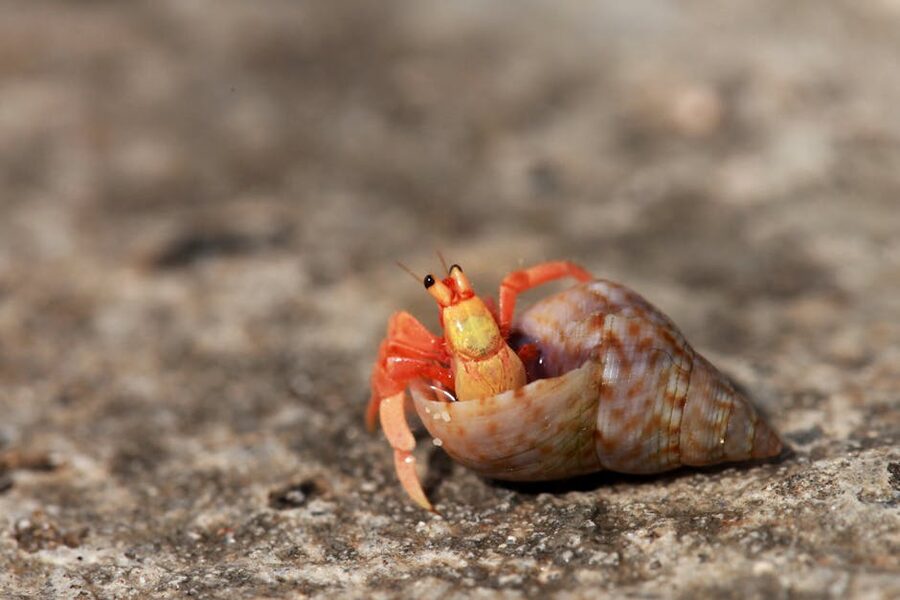
So when people say one shell doesn’t matter, they’re right at the level of one shell. They’re wrong at the level of a beach with a hundred thousand visitors a year, each of whom thinks the same thing. The maths of “I’m just one person” is the most common maths in tourism, and it’s the one that’s broken.
Live Shells Are Not the Same as Empty Ones (and It’s Often Hard to Tell)
The single biggest thing I’d flag, even if you take nothing else from this, is the live-shell question. A “shell” on the beach is not always abandoned. The animal inside might be small enough, retracted enough, or beached enough that the thing in your hand still has a tenant.
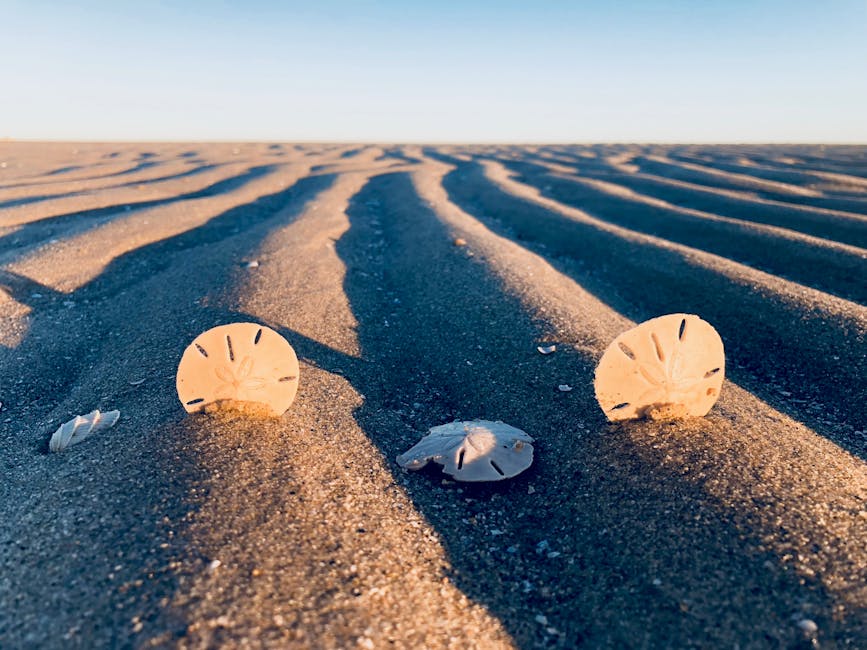
The Sanibel local sticker for this is simple: if the shell is heavier than you’d expect for its size, if there’s any wet or fleshy material visible at the opening, if the spiral has a closed door (the operculum) at its mouth, or if it smells faintly of sulphur as it warms up, that’s an animal. Sand dollars are easier in theory: live ones are darker, often a brownish purple, and their tiny spines move when you pick them up. Dead ones are bone white. Sea stars same logic.
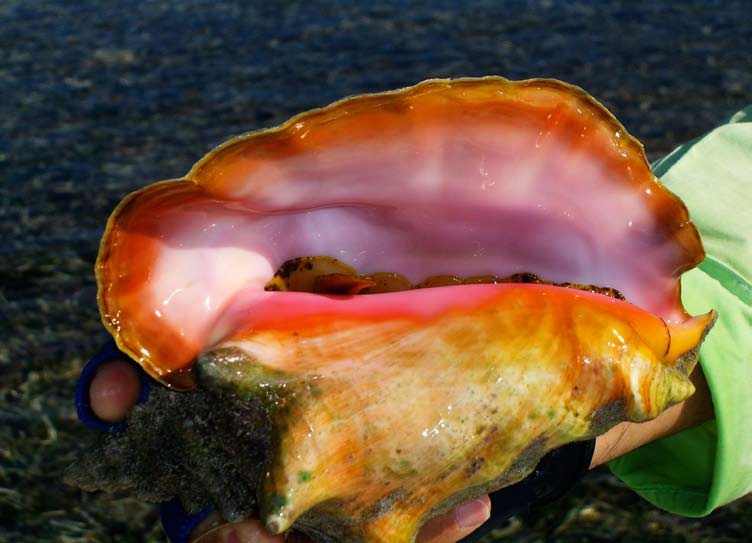
The harder cases are the spiral shells. Tiny hermit crabs love a tiny shell, and a Cerith no bigger than a pinkie nail can have a crab tucked deep inside that you’ll only notice when it tries to climb out of your bucket two hours later. The Thrillist write-up of this issue, citing Britta Baechler at Ocean Conservancy, makes the point I’d lead with: “It’s not always so obvious if a shell is occupied or vacant. Sometimes, small critters can lodge themselves into the crevices of spiral shells, which are prized by beachcombers, making it look like no one is inside.” If you take that shell home and it turns out to have a lodger, the lodger dies in your luggage and the shell starts smelling. By the time you bin it, you’ve lost the souvenir and killed the animal.
The instruction is one of the few places in this guide where I’d say it as an instruction, because it has the force of “or you’ll be sorry”: don’t take live shells. Hold them up to the light if you have to, give them a minute on flat sand to see if anything moves, drop them in a tide pool if you’re unsure. If a stranded live shell is sitting on hot sand under a pounding sun, gently pick it up and walk it back to the water as far as you can wade. Don’t lob it. The odds aren’t great either way, but a returned shell has a chance and a baking shell doesn’t.
Where Shell Collecting Is Actually Illegal
This is the part most people get wrong, including me for years. The honest summary: it varies, sometimes by country, sometimes by state, sometimes by which side of a national park boundary you happen to be standing on. Below is what I’ve been able to confirm. Treat it as a starting point and check locally for any specific beach you’re heading to.
The United States
National Parks and National Seashores are the strict ones. Under federal law, you can’t collect shells (or rocks, or driftwood, or anything else natural) for personal use inside any National Park unit. That includes places like Cape Hatteras, Cape Cod, Padre Island, Olympic, Dry Tortugas, Biscayne and Channel Islands. Rangers do enforce it.
State by state outside park boundaries, it gets more complicated. Florida is the well-known case. Across most of the state you can take a reasonable handful of empty shells, but Lee County, which contains Sanibel and Captiva, makes it explicitly illegal to harvest or possess any shells that contain a live organism, with a few specific exceptions for shellfish like oysters, hard clams (quahogs), sunray venus clams and coquinas. The queen conch is fully protected statewide and federally listed as threatened, and one woman was famously jailed for 15 days plus a $500 fine after collecting 40 shells with live queen conches inside on a beach in Key West in 2018. Hawaii has its own rules, particularly around live shells, sea urchins and parts of the reef. The Carolinas, Georgia and Texas each have their own.
If you’re collecting outside a park and you’re picking up empty shells in genuinely sustainable amounts, you’re almost certainly fine in most US states. If you’re inside any National Park, you’re not.
The Caribbean
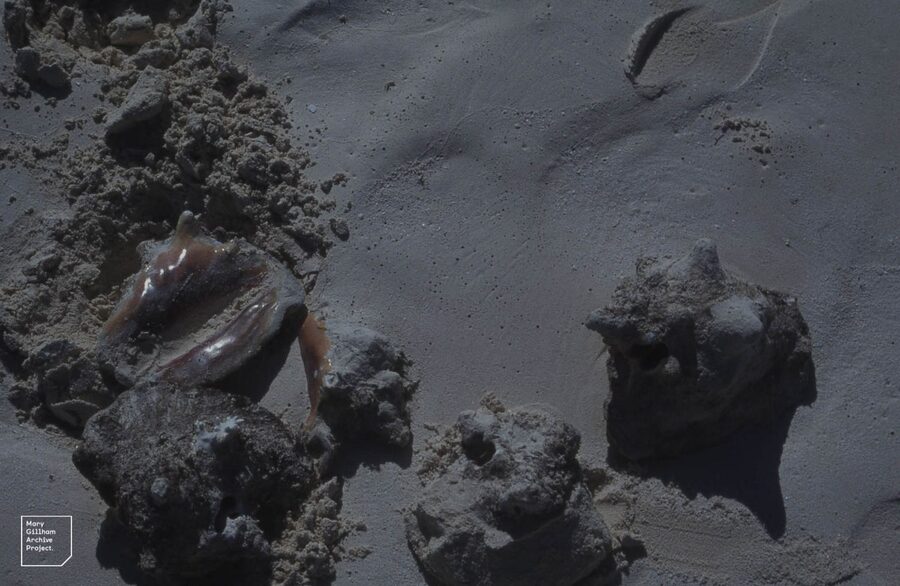
The Caribbean is the region where I’d be most careful, partly because the rules are tighter and partly because the wildlife is. The queen conch (Lobatus gigas) is on Appendix II of CITES, meaning international trade is regulated and you cannot legally take one home in a suitcase from most Caribbean nations without an export permit, which tourists do not get. The Bahamas, Jamaica, Belize, Honduras, the Cayman Islands and others have their own protections layered on top. Costa Rica prohibits the removal of any shells, full stop. The Dominican Republic restricts certain species. Cuba has a list. Some islands quietly enforce, others noisily.
The shorthand I use: in the Caribbean, assume the shell is protected unless you can confirm otherwise, and assume the customs officer at your home airport will treat that conch shell as contraband. People do get fined.
Other countries worth flagging
The UK has the Coastal Protection Act 1949, which prohibits removing natural materials from public beaches. In practice nobody is going to chase you for a couple of mussel shells from a Cornish cove, but the law is on the books. Australia has restrictions in many state and national marine parks, and the Great Barrier Reef Marine Park is strict about anything coming out of the water. The Philippines maintains a list of “forbidden shells” that includes giant clams, helmet shells and several other species, and in much of Indonesia, particular shells like nautilus and giant triton are protected. Mexico has its own rules around the Sea of Cortez. Croatia restricts noble pen shells. Chile, Tanzania, Madagascar, all worth a quick check.
The pattern, if you squint at it, is that protected places have stricter rules and that the more spectacular the shell, the more likely it’s regulated. The visually unimpressive ones, the small bivalves and the broken bits, are the legal ones almost everywhere.
Where It’s Legal but Still Off
Legal isn’t the same as fine. There are beaches where you’re not breaking any law by pocketing shells but where the local feeling about it is something between “tourist tax I have to live with” and “please stop.” This is the part of the conversation that’s harder to write rules for, because it’s about reading the room.
Indigenous coastal communities often have their own relationship with the beach, and shells aren’t always treated as inert. In some Pacific cultures specific shells (cowries, conches) carry spiritual or kinship meaning, and removing them, even legally, is the kind of thing that makes you the person who didn’t ask. If you’re on or near land that’s culturally protected, the right move is to ask, the same way you’d ask before walking into someone’s garden. If there isn’t a person to ask, and the beach is in or adjacent to an Indigenous community, the safe default is to leave it. There’s more on this in our piece on travelling mindfully through Indigenous communities, which gets into the bigger picture.
The other category is fishing communities where shells are a working byproduct. In some parts of Indonesia, Honduras and the Philippines, you’ll see large piles of empty conch or clam shells near processing sites. Walking up and helping yourself signals that the shells are decoration when locally they’re a record of a livelihood. Buying one from the family that fished it is a different transaction, with its own ethics, but I’d think twice about the “free souvenir” version even where it’s technically legal.
The Souvenir Shop Is Often Worse Than the Beach
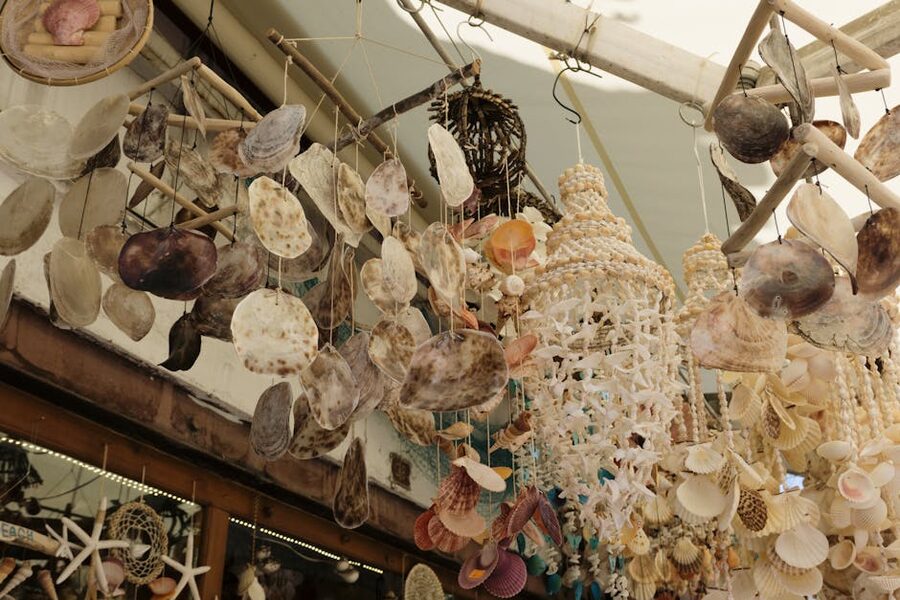
If you’ve ever stood at a souvenir stall holding a perfect glossy nautilus and thought “well, I didn’t take this one, I’m just buying it,” I have done that exact mental dance. The dance is wrong. Almost every shell in a tourist shop or beach kiosk is in mint condition for the same reason a freshly caught fish at a market looks better than one washed up on the beach: it was alive when it was harvested. The animal inside got pulled out, often after the shell was buried in sand or boiled or laid out in the sun until the inhabitant gave up, and what you’re holding is the result. That’s why the colours are still bright and the lip isn’t chipped.
This isn’t a fringe problem. Vincent Nijman, an anthropologist at Oxford Brookes, has spent years tracking the illegal trade in protected shells out of Indonesia, and his more recent papers describe “a large-scale, commercial trade where the shells are collected by active fishing (scuba diving, cages, etc.) and where entire sections of the ocean floor are emptied.” A National Geographic piece followed Amey Bansod into Kanyakumari in southern India, where he watched mountains of newly harvested mollusc shells, with the animals still inside, get sun-dried and dunked in oil and acid before being shipped to artisans for jewellery and tourist mementos. The shells looked beautiful by the time they hit the market. The path to get there was not.
The cleaner option, if you really want a shell on the shelf, is to look at the seafood industry’s own byproducts: scallop and oyster shells from a meal you ate, mussel shells from a paella in Galicia, the kind of shell that came off a plate rather than a reef. They tell a story about where you were and they don’t carry the supply chain of the gift-shop conch. Our guide on ethical souvenir shopping goes into the wider question of what makes a souvenir actually worth buying, and the same logic applies here, just narrowed down to one material.
A Working Definition of Ethical Collecting
So if you do want to pick something up, what counts? My honest answer, after a lot of reading and a week with my mother on Sanibel, is that ethical shell collecting is roughly the following.
Always empty. Hold it to the light, smell it, turn it over. If anything is alive in there, it goes back. If you’re not sure, leave it.
Above the high-tide line. The shells the tide deposits and abandons high up the beach are the most likely candidates. They’ve been bleached by sun, scoured by sand, and the resident has long since moved on. Below the high-tide line you’re picking up shells that are still actively in the calcium-recycling cycle.
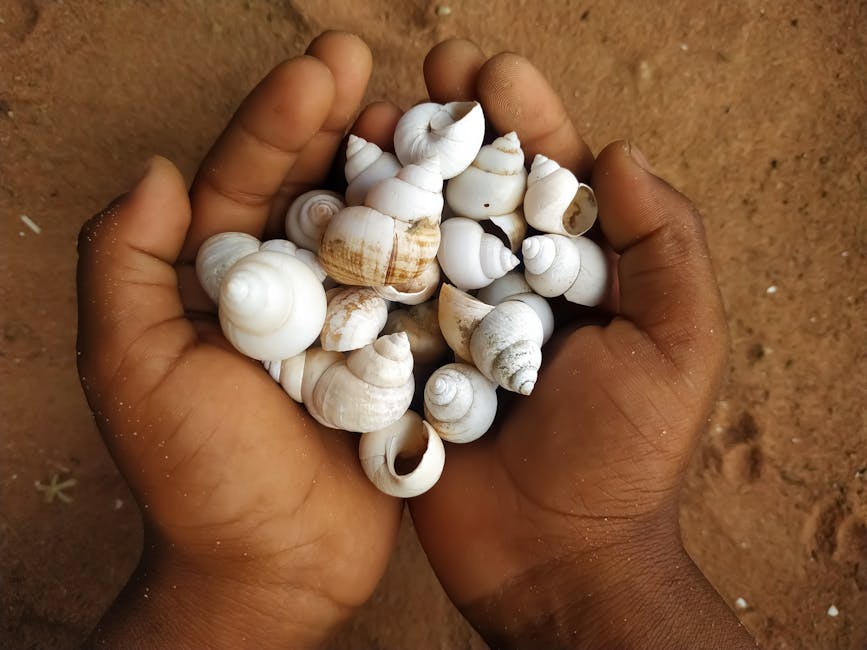
Already broken or imperfect. The fragments, the chipped lips, the worn-down spires that no scientist or conchologist would consider specimens. Collectors call these “ugly” but they’re often the most interesting because they show how the shell has been lived in. Spirals that have already been chewed, encrusted with worm tubes or used by hermit crabs are also fair game in the sense that their second life is over.
Few, not buckets. The Conchologists of America code of ethics, which has been around since 1964, makes the point well: “I will not be guilty of cleaning out a colony of shells, or of collecting every living thing I find. I will take only the live shells needed for my collection and for exchanges at the time. I realise that shells lying in a closet cannot reproduce while I am waiting for a place to send them.” That code is talking about specimen collectors, but the principle scales down to “how many do I actually want on the shelf, not how many fit in the bucket.”
Not in a National Park or marine reserve, ever. Even one. Even an obviously empty one. Beyond being illegal, the principle of leaving protected places undisturbed is what makes them protected places in the first place.
Not protected species. Queen conch, giant clam, helmet shell, nautilus, certain cowries, certain murex. If it’s a shell that even feels like the kind of thing that would be on a CITES list, assume it is until you’ve looked it up. José Leal at the Bailey-Matthews National Shell Museum gives the clean version of this rule: don’t collect shells from any protected species even if there’s no living creature inside.
Returnable. The most quietly radical idea I’ve come across is that shells you no longer want can go back. Kristen Williams, the Sarasota beachcomber profiled by Beachcombing Magazine, has made a habit of taking back the shells she’s done with. As she puts it, “It not only frees up space in my home, but it also makes me feel good knowing that I am giving back to the ocean when it has given so much to me.” A box of shells from twenty years ago can re-enter the cycle. They aren’t ruined for it.
The Photography Reframe
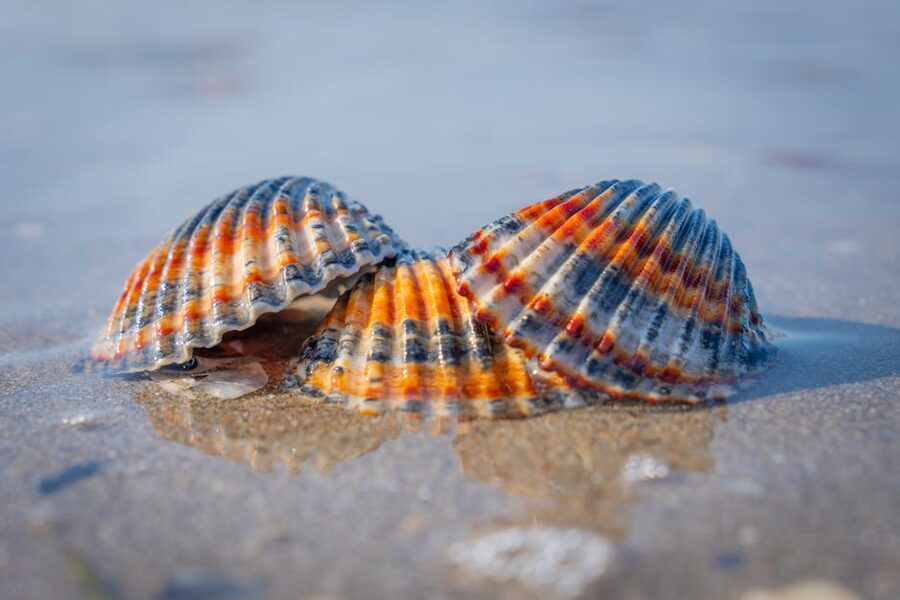
Here’s the part of the article that sounds twee on paper and that I’ve nonetheless come round to. The thing you actually want, when you crouch down on a beach and pick up a shell, is rarely the shell. It’s the sense of finding something. The little ceremony of the discovery. A photograph keeps that, with the shell in its actual context, the wet sand, the foam line, the tiny crab lurking at the edge of the frame. The shell on the bookshelf at home doesn’t keep any of that. It’s a shell, in your house, lit by an Ikea lamp.
If you’re a sheller in the technical sense, you can build a virtual collection. Hal Brindley at Travel For Wildlife (the writer behind the most-cited piece on this whole subject) maintains exactly that, an online photo gallery of every shell species he’s found on Sanibel, the living animals included. The collection grows with each trip. The shells stay where they belong. The argument for doing this isn’t moral so much as practical: you can show more shells, in better condition, in their actual habitat, to more people, with photographs than you ever could with a shoebox of bleached fragments. And nobody at the airport asks you to declare a memory card.
For kids the photography reframe is genuinely fun. A small camera or a phone in their hands turns the beach into a quest with concrete deliverables, which is the same thing the bucket was doing, but without the bucket. More on that below.
When the Kid Wants One: The Compromise Conversation
This is the conversation I get asked about most often, and the one where the rule-book stuff falls apart fast. You’re with a four-year-old who has just found their first ever spiral shell, and an article on calcium carbonate cycling is not going to land. So here’s what’s worked for me, my partner and any niece or nephew we’ve taken to the beach in the last decade.
The first move is not “no.” The first move is “let’s check it.” You sit down with them, look at the shell together, hold it up to the light, see if anything pops out. If it’s clearly empty, well above the tide line, not a protected species and you’re not in a national park, the answer is yes, one shell is fine, and the kid gets to take it home. The conversation about ecology can come later, once the immediate question is settled. They aren’t going to learn about hermit crabs from being told no.
The second move, if it’s not a yes, is to swap one ritual for another. The “no, that’s a live shell” version of the conversation works much better when there’s a “but look, we get to do this instead” attached to it. The instead can be a photograph (their photo, on their device or yours, that goes in a folder called Beach Day), a quick drawing in a notebook, a count of how many shell types you can spot on a hundred-metre stretch, or the gentle return-it-to-the-tide-pool game, where every live shell you find gets a guided trip back to the water. Kids love the trip-back part. Adults find it tedious and important.
The third move is the trade. If you’re somewhere where collecting is fine and the kid wants three, the deal is one. They pick. You leave the rest. This produces the curiously useful side effect that they then actually look at the shell they kept, because they had to choose it over the others. The kid who gets twenty shells doesn’t remember any of them.
The fourth, much later, is the conversation. There’s a moment, usually around six or seven, when “why do we leave the shells” becomes a real question and the answer can be the actual answer: because hermit crabs need them, because some are still alive, because the beach is a system with a lot of jobs we don’t see. They’ll get it. They might even tell their grandparents off about it on a subsequent trip, which is enjoyable to watch.
The Bigger System the Beach Sits In
One of the things I find easiest to forget is that shell collecting is downstream of a much wider conversation about how we treat coasts. Reef-safe sunscreen, plastic on the beach, the boats we book for snorkelling, the development that sits behind the resort: all of these are part of the same system that produces the shells we then pick up. I’ve gone deeper on the broader picture in our ocean conservation guide, which is the obvious sibling read for this piece if you want the longer view.
The sunscreen point is worth a sentence on its own, because it’s the one most people miss. Several of the chemical UV filters in standard sunscreens (oxybenzone, octinoxate) are toxic to coral and to molluscs. The reef-safe brands, the mineral ones using zinc oxide and titanium dioxide, are a real improvement, and most of the “reef-safe” labelling on chemical sunscreens is marketing rather than chemistry. We’ve broken down what to actually pack in our plastic-free packing piece, sunscreen included. The molluscs you decide not to pick up will live longer if you’ve also stopped poisoning the water they live in.
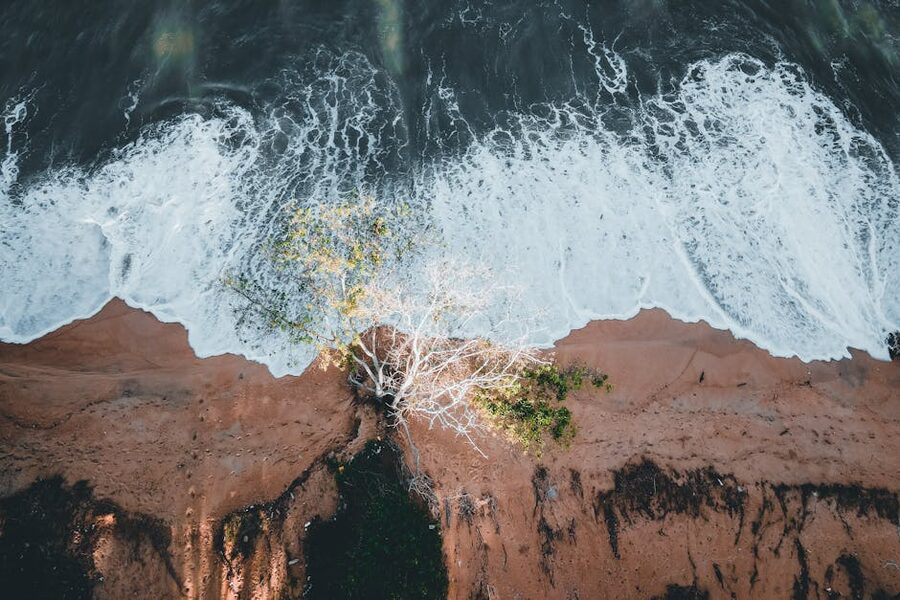
And the third strand, which is much less obvious until you start watching for it, is whether the beach you’re on has been groomed. Many resort beaches in the Caribbean, southern Europe and parts of Florida are dragged with mechanised rakes overnight to give the morning a clean look. Those rakes don’t just pick up plastic. They pick up shells, eggs of nesting birds and turtles, sand-dwelling invertebrates and the seaweed that’s a feeding habitat for shorebirds. By the time you arrive at 9am the beach is “clean,” and the shell ecosystem is twenty percent thinner than it would be on an ungroomed adjacent stretch. If you’ve ever wondered why the wild beach next door has more shells than the resort beach, that’s why.
What to Tell People Who Roll Their Eyes
The eye-roll conversation comes up at family dinners, mostly. The grandfather generation has been collecting shells off Cape Cod or Sanibel for fifty years and finds the whole “ethical shelling” framing absurd. I’d be cautious about treating that conversation as a battle to win.
What’s helped me is to skip the lecture and just talk about what’s changed. The data on the Spanish beach is pretty hard to argue with: that wasn’t there in 1978 and it is now. The queen conch listing is a thing that happened in the last twenty years. The hermit-crab-in-a-plastic-cup video has done more for this conversation than any policy document. People who love beaches generally do care that the beach is changing, and the version of the conversation that goes “I noticed there are fewer shells than there used to be” almost always lands better than “you’re contributing to ecosystem collapse.” Same point, friendlier mouth.
I’d also stop trying to be a purist. People who pick up one shell on a vacation are not the problem. People who book a flight to Sanibel and ship a Tupperware home are starting to be the problem. People who buy a polished nautilus from a beach kiosk are part of a larger problem. Most travellers are in the first bucket and most travellers are doing more good than harm by being on the beach in the first place. The conversation is about the volume dial, not the on-off switch.
One Shell, Two Outcomes
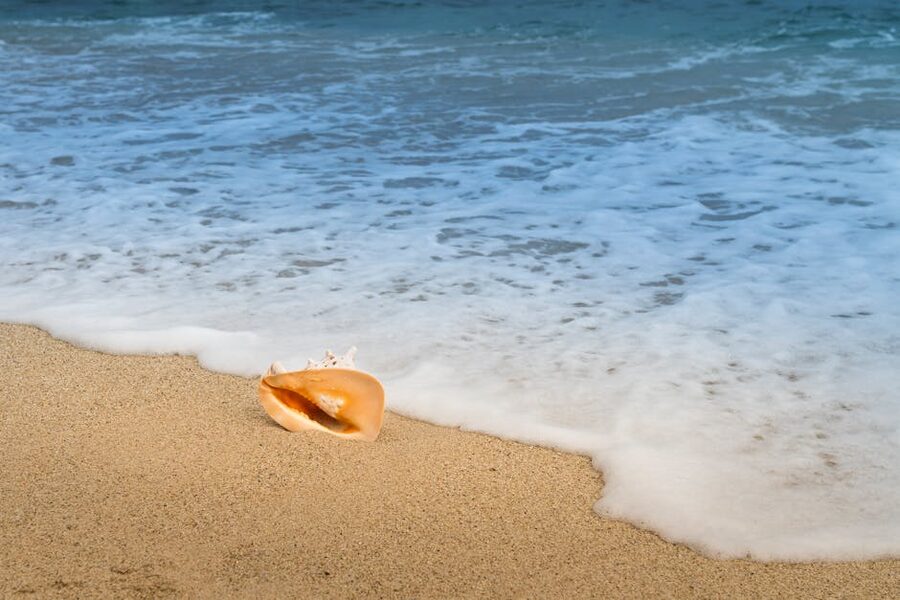
The shell at the start of the article, the one in the kid’s hand, has two reasonable futures. In the first one, it goes home. It sits on a windowsill for a year. The kid eventually loses interest, the shell migrates to a drawer, and at some point in their thirties they find it during a move and don’t remember which beach. That’s most shell-collecting outcomes. It’s not the worst thing. The shell did its job, briefly, and then quietly stopped.
In the second future, you check it together, confirm it’s empty, take a photograph of the kid holding it on the sand, and the shell stays. It gets used by a hermit crab two months later, then by an algae colony two years after that, then washes back into the calcium cycle five years after that, then becomes part of the sand on a stretch of beach somewhere. The photograph is in a folder you actually open occasionally. The kid grows up thinking of the beach as a system rather than a buffet. That’s a small adjustment that probably matters more in aggregate than any single shell.
I still pick up shells. I still have a few on a shelf, mostly fragments and broken bits with personal stories attached. I take fewer than I used to, and I take none from the Caribbean any more. My mother, the shelling enthusiast on the back of whose minivan it says GO TO SHELL, has narrowed her own collecting down to imperfect shells nobody else would want, and she has a much better photograph collection than she used to. Sanibel is still open. The fighting conches are still doing their thing. The hermit crabs have a slightly better chance at the upgrade.
If you walk away from this with one rule, it’s the live-shell rule. If you walk away with two, it’s that one and the not-from-a-shop rule. Everything else is dial-tuning, and the dial is yours to set.