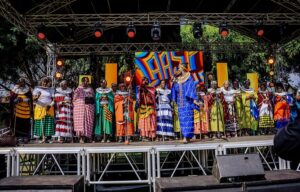
Years ago, on a long bus ride through the Atlas mountains in Morocco, I told a guide his country was “exotic.” I meant it as a compliment. He answered me politely, but the smile stayed locked at the corners of his mouth, and he said something I have thought about ever since: “Exotic to who? I live here.” I sat with that for the rest of the drive. The mountains were not exotic. They were his commute. The kasbahs were not exotic. They were his cousin’s house. I was the one who was out of place, and I had handed him a word that put him in a costume so I could feel like I was somewhere far from home.
That bus ride is where this article started. Not in a workshop on inclusive language, not in a thinkpiece on travel writing, but in the quiet realisation that words I had been handed by guidebooks and travel shows had been shaping the way I saw a place before I had even seen it. Most of the words were not malicious. Some were beautiful. A handful were the kind of phrase that, twenty years from now, will read the way “third world” reads to anyone under thirty today. I have used them all. So have you, probably, and so has almost every travel writer whose work I love. The point of this guide is not to hand you a banned-word list. It is to slow you down, and then to hand you something better in return.
In This Article
- Why a single word ends up doing so much work
- Words that erase the people already there
- Discover, explore, uncover
- Untouched, undiscovered, virgin
- Off the beaten path (used as praise of yourself)
- Words that flatten people into a type
- Locals (when it’s doing the wrong job)
- Tribe (when you mean nation)
- Primitive
- The locals are so [insert adjective]
- Words that turn unkind history into atmosphere
- Colonial charm
- Exotic
- Native (used as a noun)
- Money words that punch down
- Cheap
- Third world, developing
- Impoverished but happy
- Checklist words: how we talk about whole countries
- Doing a country
- Bucket list
- The naming question
- Greetings: when “hello” lands as care, when it lands as performance
- Land acknowledgement: what’s meaningful and what isn’t
- “Real” and “authentic”
- A short list of words and what to swap them for
- A permission slip
Why a single word ends up doing so much work

When you arrive somewhere new, you are running on whatever you’ve read. The blog post you saw last week, the magazine spread your friend showed you, the Lonely Planet introduction you skimmed on the plane. Travel writers and editors have known this for a long time. The PhD researcher Tim Hannigan has pointed out that visitors often fall back, almost unconsciously, on the last thing they read about a place when they’re trying to make sense of what’s in front of them. Which means the way a place is described isn’t background music. It’s the script you’re already mouthing along to.
Some of the words in the travel writer’s stock cupboard come from a useful place. They’re shorthand. “Authentic” was supposed to mean something specific once, and so was “discover.” But the language we have inherited, the language that sells safari packages and cruise stops and hotel descriptions, was built to a great extent by 19th-century explorers who needed their readers to feel they were seeing something the locals had not. That framing is still inside the words. Pull on the thread and out comes a worldview where some places are alive and others are waiting to be brought to life by us. The good news is that you can replace most of these words with something more accurate, more interesting, and warmer to read. The whole exchange is an upgrade, not a sacrifice.
I’ll group the words into the categories that gave me the most useful way of thinking about them. Words that erase the people already there. Words that flatten people into a type. Words that turn unkind history into atmosphere. Money words that punch down. And finally, the way we talk about places themselves: their names, their greetings, the land beneath them. None of this is meant as a finger-wag. Most of these I have used myself, and a few I still have to catch. The practice is the point.
Words that erase the people already there

Discover, explore, uncover
The travel-magazine verb of choice. “Discover the back streets of Lisbon.” “Explore Bhutan.” It sounds like permission to be curious, which is lovely. The trouble is the verb. When I “discover” a bakery in Oaxaca, I am the seventh person this hour to walk through the door, and there are already three women in the back making the bread. They were not lost. The bakery was not undiscovered. I was just new to it.
The fix here is so easy I feel sheepish writing it down. Try “I came across”, “I was shown”, “a friend pointed me to”, or “the woman at my hotel sent me to.” Each of those puts a person in the sentence who was already there. The Lonely Planet guidebook calls a beach “undiscovered” and the joke writes itself, because the photograph is taken from a fishing boat. Discovery is a relative verb. You’d discover the sun, said the writer Jihan McDonald, only if you had spent your life convinced there were only shadows.
Where this verb does still work is in inner discovery. You can absolutely discover that you like cardamom. You can discover that you can sleep on overnight trains. The grammar comes back into focus the moment the thing being discovered is actually new to the world, rather than just new to you.
Untouched, undiscovered, virgin
These three are even thinner. There are very few places on Earth that are untouched by the people who live there, and most of the ones that are have been kept that way deliberately, by communities exercising their right to say no to outsiders. A “virgin beach” implies the beach has not been used, when of course the fishermen launching at dawn would beg to differ. “Pristine” tries to sneak in the same idea wearing a nicer jacket. If a place looks unspoiled it is usually because someone has been spoiling nothing, often through hard local effort. Saying so out loud is more interesting than the airbrush.
Off the beaten path (used as praise of yourself)
I love a quiet trail. I love arriving in a town and being the only foreigner at the cafe. The phrase “off the beaten path” describes a real thing and I’m not asking anyone to retire it. What I’d gently watch for is the moment the phrase becomes a status claim. The travel writer Soraya Abdel-Hadi has written about how anything labelled “off the beaten path” is, by the labelling, no longer that, and the same overcrowding that bothered the writer in the first place is what they have just summoned. There’s also a quieter problem with the phrase, which is that the path most people walk is usually the path the local economy is built around. Calling somewhere “real” because it sits off that path implies the rest is fake, when actually the rest is where someone earns rent.
If it were me, I’d describe the trail. The dirt road, the way the cicadas got louder around the third bend, the place where the path turned to gravel. The detail does the work the phrase was reaching for. And if a writer at a kitchen table reads it, they will know exactly where you mean.
Words that flatten people into a type
Locals (when it’s doing the wrong job)
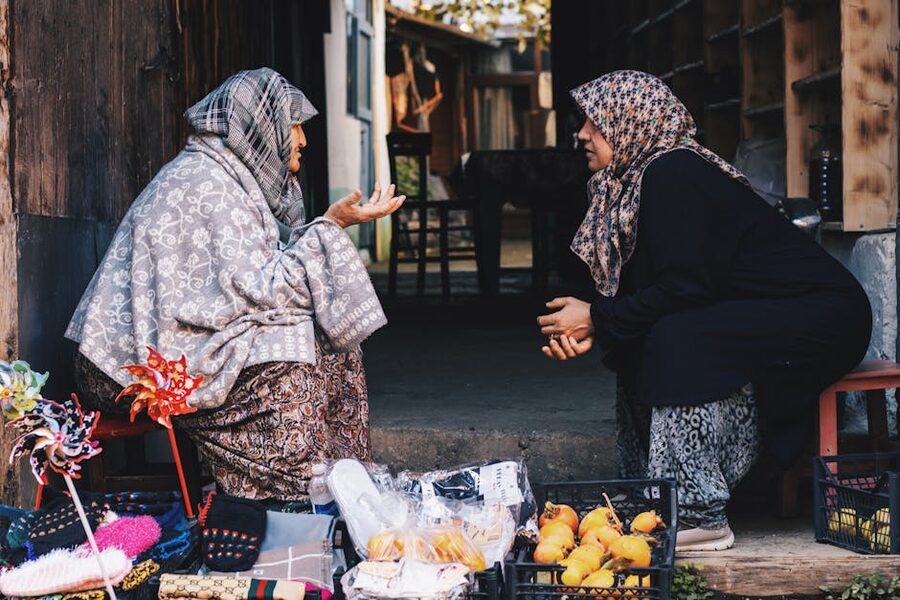
“Locals” is not banned. I use it. The travel-eater Johanna Read has put this beautifully: in practice, “locals” tends to come out when we’re talking about people in places less wealthy than our own. We say “the locals” in Cambodia and “Parisians” in Paris. We say “I asked a local” in Lima and “I asked a New Yorker” in New York. Notice how the word does the same thing as a museum label. It generalises a person into an exhibit.
The simplest fix is the most respectful one. Use the actual demonym. The people who live in Mexico City are Chilangos and they will love that you know. The people who live in Antigua are Antiguans, the people who live in Recife are Recifenses, the people who live in Hanoi are Hanoians. If you don’t know the demonym, the noun “residents” or “people who live here” carries less freight. And in cases where you’re describing one specific person, give them the smallest sketch of who they are. “The man who runs the kiosk near my hostel” is a sentence. “The locals” is a label.
Tribe (when you mean nation)
This one I get wrong almost every time I open my mouth, so I’m writing it down to make myself remember. The novelist and travel writer Sandra Jackson-Opoku has been clear: a tribe, in its precise sense, is a small, kin-based community group. The Yoruba are not a tribe. They are roughly forty-five million people, spread across Nigeria, Benin, and Togo. Calling them a tribe makes them sound like a footnote, when they are a nation embedded in a state. The same is true of the Maasai, the Hmong, the Berber, the Sami, the Mapuche. The right word, in almost every case, is “people” or “nation,” sometimes “ethnic group.” If you would not call the French a tribe, do not call the Igbo one.
For Indigenous communities in the Americas and Australia, follow what the community calls itself. The Diné prefer Diné to Navajo. Many Sioux nations prefer Lakota or Dakota. Aboriginal Australians often prefer the specific nation, like Wiradjuri or Yolngu, over the catch-all. Look it up before you write the sentence. There is almost always a clear answer on the community’s own website.
Primitive
This one has aged out of polite English in most contexts and yet I still hear it on cruise excursions and read it in copy. There is no neutral version of “primitive” in this context. What’s usually meant is “different from how I live.” The clearer version is to describe the difference. A shared kitchen, a hand-carved fishing boat, a kapok-fibre roof. Each of those is interesting on its own terms. None of them needs ranking against a dishwasher.
The locals are so [insert adjective]
“The Italians are so warm.” “The Japanese are so polite.” Even the friendly versions of this sentence are doing something a bit awkward. They squash a country of millions into a single mood. The travel writer Ella Dyson-Lewis has pointed out that even the warm generalisations end up costing the people they describe. She has family who work as guides in Tanzania, and they get phoned at 2 a.m. by clients who’ve heard the locals are “so kind” and feel free to ask anything. The kindness costs them sleep.
The version of this that travels well is the specific one. “The woman at the bus station kept finding me a plastic stool every time the bus was late.” That sentence is warm without flattening anyone. It also sounds like something a friend would say.
Words that turn unkind history into atmosphere
Colonial charm
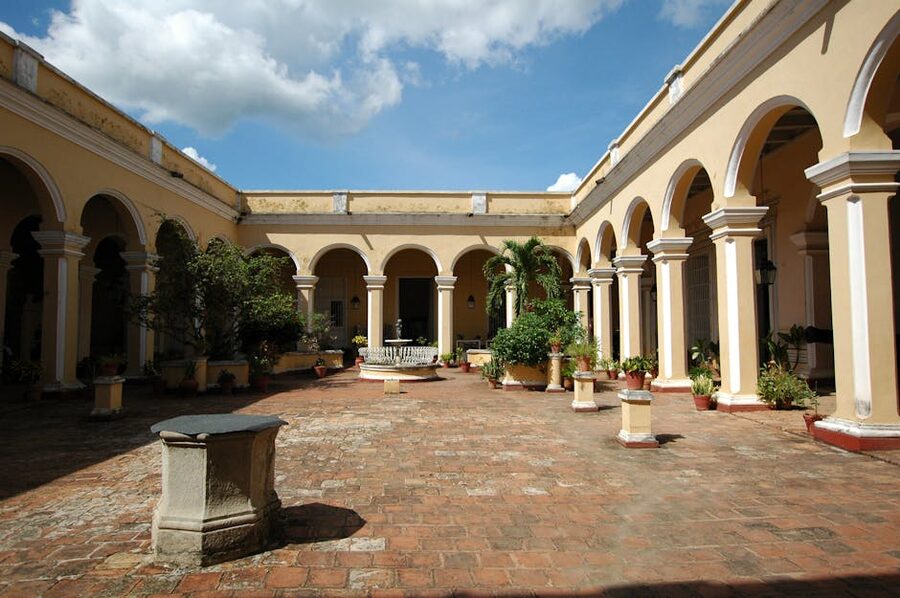
This one is doing a lot of damage. “Colonial charm” is shorthand for a balcony with bougainvillea and a courtyard with a fountain, but the architecture it describes was almost always built by forced labour or expropriated land. The journalist Meera Dattani has put it sharper than I can: the railway you’re admiring in Sri Lanka was not built so the Sri Lankan people could get to work, it was built to move tea to the port. Calling that “charming” is a bit like calling a museum of weapons “elegant.” The objects can be beautiful and the history can still be ugly.
I am not asking anyone to refuse a fountain in San Cristóbal de las Casas. I am asking that we name what built it. “Spanish baroque from the 1730s, when the silver was being extracted from Zacatecas” is a sentence that is more interesting than “colonial charm,” and that gives the building back its actual history. If you want a model for this, read the way Mexican writers describe Mexican cities. The architecture is described, the period is named, the labour is acknowledged, and somehow the reader still ends up wanting a coffee in the courtyard.
Exotic
I started this article with this word and it deserves another paragraph. “Exotic” comes from the Greek for “from outside,” which is fine when you’re describing a houseplant. The trouble is that travel writing uses it almost exclusively for places, foods, and people whose only consistent feature is that they are non-Western. The author Alex Temblador has noted that “exotic,” used this way, doesn’t actually describe anything. It only signals that the writer thinks the reader cannot relate. It produces strangers. And strangers, over time, are easier to mistreat than neighbours.
The fix is a one-liner: describe the thing. The fruit was sweet and a little tangy, the size of a small fist, with a soft pink rind. That sentence is a thousand times more useful than “an exotic local fruit.” It also tells me the writer was actually there.
Native (used as a noun)
“Going native.” “Eating like a native.” Even on its best behaviour, “native” used as a noun for “person from there” carries the weight of how it was used in 1850. As an adjective, the word still earns its keep (“native plants,” “the native name for this dish is…”) because it specifies an origin. As a noun, it tends to flatten and exoticise. Try “the people who live here,” “the residents,” or, again, the actual name.
Money words that punch down
Cheap
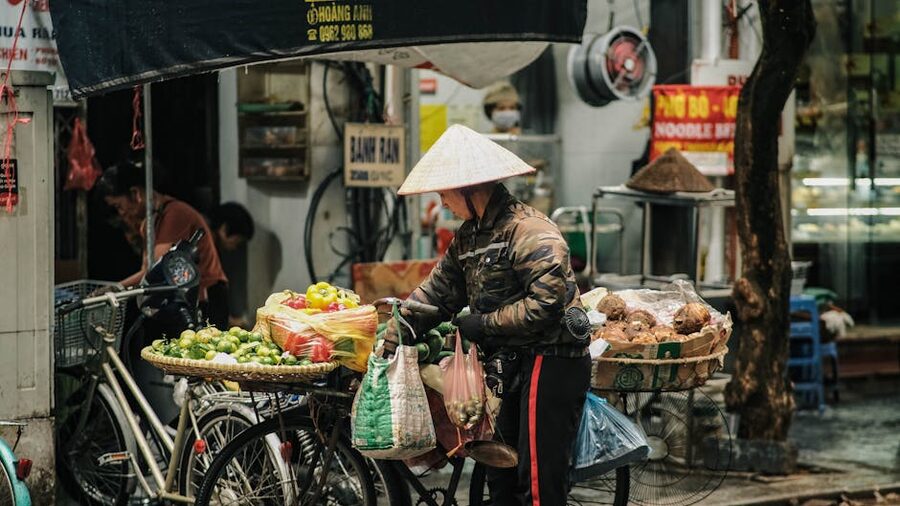
“Vietnam is so cheap.” “Mexico is still cheap.” I have written variations on this sentence and I cringe at every one of them. The blogger Kay Kingsman, writing for Fodor’s, made the case better than I will: “cheap” implies low quality, low effort, low value. We say a knock-off bag is cheap. We do not mean to apply that connotation to an entire country, but the word brings it along anyway. There is also the practical problem. Calling a place “cheap” tells the reader nothing about whether it is affordable for them, since a bowl of pho in Hanoi at eighty cents is cheap to a Londoner and a comfortable lunch to a Hanoian.
The replacement is to be specific. A guesthouse for forty thousand dong a night, lunch under five euros, a metro ticket equivalent to a coffee. Numbers tell the truth. They also avoid the unintentional sneer. And there’s a sustainability angle worth flagging here: when foreign visitors describe a neighbourhood as “cheap,” they often turn it that way. Landlords notice. Rents climb. The locals (in this case, the demonym would be Lisboetas or Berliners or Mexico City Chilangos) get priced out of the corner shop. The word does damage even when the speaker means none.
Third world, developing
“Third world” came from Cold War alignment maps, where the First World was the United States and its allies, the Second World was the Soviet bloc, and the Third World was everybody else. The Cold War ended decades ago. The phrase, however, still gets used to mean “poor” or “broken,” which is unfair to the original term and unfair to the countries it has been pinned to. Costa Rica is not a Cold War straggler. Vietnam has the seventh-fastest economic growth in the world.
“Developing country” is the second-best version of the same problem. Developing toward what, by whose ruler? It implies a destination, and that destination is a sort of suburban North America. Most of the countries on the receiving end of the word would dispute that this is the goal at all. The cleanest replacement is to say what you actually mean. “Lower-income countries” is more accurate when income is the topic. “Caribbean countries,” “West African countries,” “South American countries” works when you mean a region. And if you mean “places where my dollar buys more,” just say so.
Impoverished but happy
“They have nothing and yet they’re so happy.” I cannot count the times I’ve read this sentence on an Instagram caption from a medical mission trip. There are two problems baked into it. First, you almost never know what someone has, just by looking at them. Second, the formula treats happiness as the thing the photograph was for, and the person as the prop. The writer Marinel de Jesus, who runs Brown Gal Trekker, has written about how this framing rewards a kind of poverty tourism that makes the visitor feel useful and gives the resident nothing. The cleanest replacement is to leave the framing out. Describe the person, the conversation, the food they shared, what made you laugh together. That’s the thing your camera was reaching for anyway.
Checklist words: how we talk about whole countries
Doing a country
“I did Vietnam in eight days.” “We’re doing Africa next year.” There is a kind of itinerary tourism baked into the verb “do” here. The country becomes a task, the visit becomes a discharge of duty. There’s also the obvious mismatch of scale: Africa is fifty-four countries, twelve of them larger than France. You cannot do that. You probably can’t do Lisbon in eight days, never mind a continent. The replacement is to lower the verb. “We spent ten days in Morocco.” “We’re going to Tanzania.” Or, more openly, “we’re flying into Cape Town and we’ll see what we can fit in.” That sentence has the shape of how the trip will actually feel.
Bucket list
The bucket list itself is a delightful thing. The trouble starts when the bucket-list framing turns someone else’s home into your achievement. It also tends to come paired with a list of “must-sees” that the resident of the country in question would never put on the same trip. Machu Picchu is wonderful, but if you are Peruvian and you live in Cusco, you have probably been there once when you were eight, and you would describe the must-sees of your country in a way that involves more food, more music, and fewer queues.
The fix is to keep the bucket list private. Tell people where you went, what you ate, who you sat next to. Skip the verb of acquisition.
The naming question
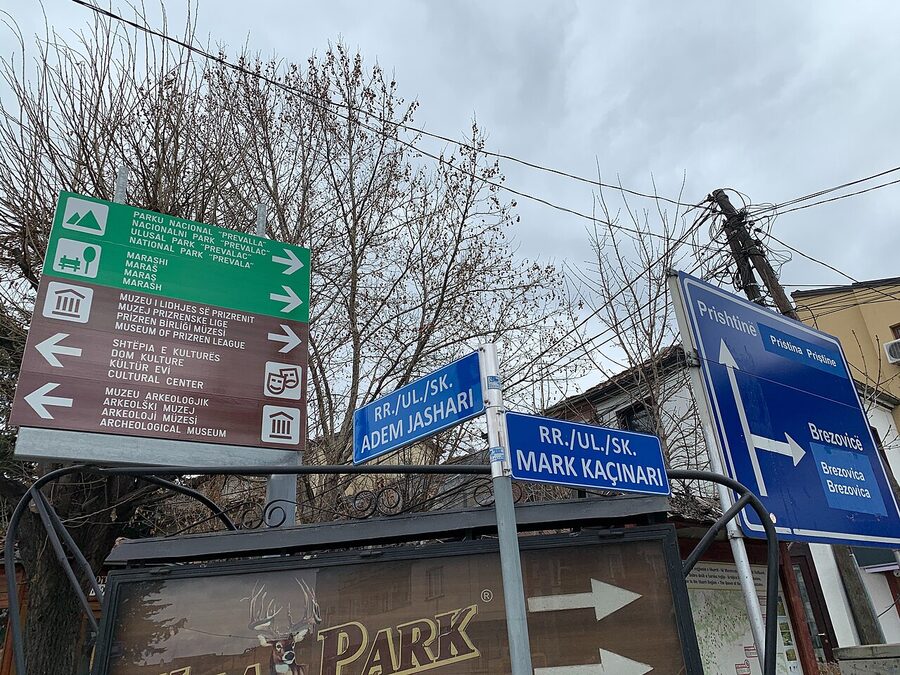
This one almost no travel guide covers, and it’s the one that has changed my own writing more than any single banned word. Every place has at least two names. The one its residents call it. And the one that travelled to you. Sometimes those are the same. Often they aren’t, and the gap between them is where colonial history left a mark that’s still visible.
Bombay is now, officially, Mumbai, and has been since 1995. Burma is now Myanmar, since 1989, though the politics of that change are complicated and many writers still use Burma deliberately. Constantinople has been Istanbul since 1453, but plenty of guidebooks still slide one in for atmosphere. Easter Island has a name in the language of the people who live there, Rapa Nui, which is what the islanders use and what the place is called on island maps. Same with Aotearoa, the Maori name for New Zealand, which is taught alongside the English in schools and printed on the passport. The Inuit territories in northern Canada are not “the Arctic” or “Northern Canada” if you’re inside them, they are Inuit Nunangat, four regions with their own names.
You don’t have to use the local-language name in every sentence. The English reader needs to know what you’re talking about, so a first reference of “Rapa Nui (Easter Island)” is friendly to everyone. The point is the order. Local name first, English-language name in the parenthesis. That small flip puts the people who live there at the centre of the sentence. It also signals to the reader that you’ve done at least the smallest amount of homework, which is, in writing, half the trick.
The same logic applies to the names of foods, neighbourhoods, and dishes. If a noodle shop in Hanoi has a name, write the name. The transliteration is a sentence longer and a hundred times more useful. The same goes for people you mention by first name. If a guide tells you their name is Mahyar, write Mahyar. The autocorrect will fight you on it. Win.
Greetings: when “hello” lands as care, when it lands as performance
I’d suggest learning the local hello. Not because it makes anything easier (you’ll be answered in English most of the time), but because the small effort signals where you stand. A shopkeeper hearing “buenos días” instead of “hi” reads it as a courtesy, not a competence. They will smile, they will switch to English, and the rest of the morning will run smoother. The same goes for “thank you,” for “excuse me,” and for “do you speak English.” Five words, learned the night before.
What I’d watch for is the line where the greeting becomes a performance. If you have one phrase and you trot it out for a video, that is in front of you, not in front of the person you are talking to. If you mispronounce a name three times and then keep going because you’ve decided your version is close enough, that is also performance. The fix here is shorter than the problem. Try the word, mishear yourself, ask “is that right?” and let the person correct you. The exchange almost always becomes warmer, not awkwarder. People notice the asking.
Pronunciation, while we’re here, is not optional. It’s where care lives. Bharati, not Buh-rotty. Saoirse, not Sayer-see. Akwasi, not Aw-ksay. The two minutes of friction at the start of an interaction repays itself for the rest of the conversation. If a hotel clerk’s badge says Yetunde, the answer is to ask Yetunde how she pronounces her name. Most of us would do this in our office, and yet we drop it the moment we cross a border, as if politeness ran on a passport.
Land acknowledgement: what’s meaningful and what isn’t
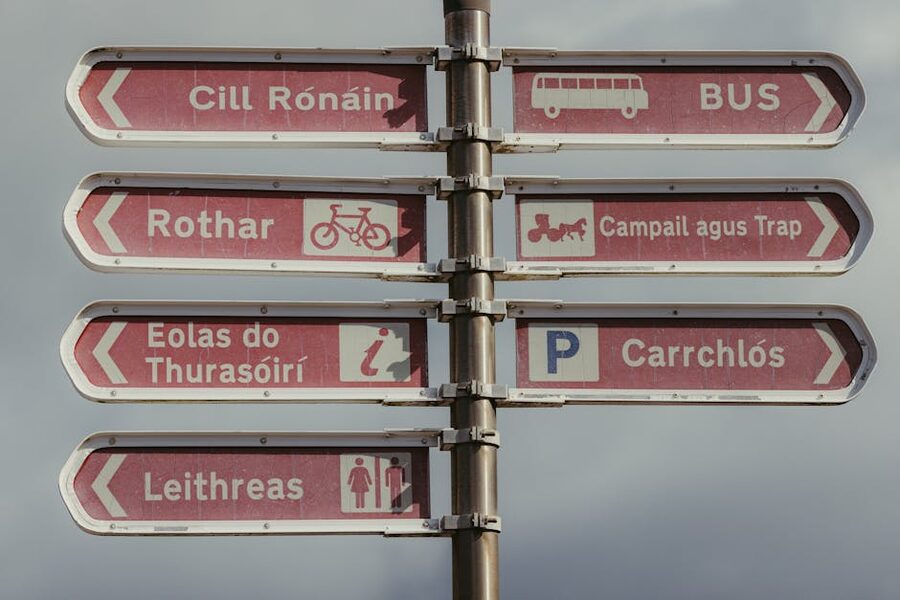
If you’ve been to a museum in Australia, Canada, New Zealand, or parts of the United States in the last decade, you’ll have read or heard a land acknowledgement at the start. “We acknowledge that we are on the unceded land of the X people, and we honour their elders past and present.” It’s a practice that started in genuine reckoning, especially in places where the colonial history is recent and the survivors are still living. It can be deeply meaningful. It can also become a tic, a piece of throat-clearing the institution does once and never thinks about again.
For a traveller, the question is whether you say one yourself, and the more useful question is whether the place you are visiting has one. If you stay at a lodge in northern Canada that is owned by a First Nation, the acknowledgement is in the ownership, not the placard. If you visit a museum in Sydney whose Indigenous gallery is curated by Indigenous people, the acknowledgement has been built into the institution’s hiring. Those are the meaningful versions, and they are easier to spot than the placard versions. The traveller-side question, in my own writing, has settled into something simple: whose hands does the money go through, and is the story I am being told the one the traditional owners would tell? When the answer is yes, I’ll quote the operator’s own land acknowledgement and credit them. When the answer is no, I’ll mention it.
If you want to find out whose land you are on, the Native Land map at native-land.ca is a starting point, run with input from the nations themselves. It’s not perfect, the nations would tell you, but it’s a useful first step before you book a tour or write a sentence. For US writers, the LANDBACK movement has been doing the harder political work behind the words, and reading them is a fast way to understand whether the acknowledgement you read at a hotel was meaningful or decorative.
“Real” and “authentic”
I almost left these two off the list because every travel writer has wrestled with them, but they keep coming up so I’ll be brief. “The real Paris.” “The authentic Bangkok.” If you are in Paris and you eat a croissant in a tourist neighbourhood at a place with chairs out front, you are still in Paris and you are still eating a croissant. The Paris one block over, with the laundromat and the kebab shop, is not more real. It is less photographed.
“Authentic” is doing the same work, with a more aggressive edge. The word implies that there is a true version of the culture and a fake version, and that the visitor’s job is to sniff out the true one. In practice this often pressures local people to perform a frozen version of their own culture for an outsider’s camera. Cultures evolve. Cuisine drifts. Costumes become Sunday-best. A noodle shop with bright lighting, plastic chairs, and a Hello Kitty sticker on the menu is as real as the one with hand-thrown bowls and a wood fire. Reach for “specific” or “long-running” or “the version made by someone who’s been doing it for thirty years.” Those land closer to what you mean and they don’t put anyone in a costume.
A short list of words and what to swap them for
I promised at the top of this article I wouldn’t hand over a banned-word list, and I’m holding to that. What I’ll do instead is offer a few I find myself reaching for when I’m rewriting my own first drafts. Treat this as a starter, not an exam. Most of these are small reframings, not corrections.
- “Discover” / “explore” → “I came across”, “a friend pointed me to”, “I was shown”
- “Untouched” → “quiet”, “uncrowded”, “off the main road”
- “The locals” → the demonym (Chilangos, Antiguans, Hanoians) or “the people I met”
- “Tribe” (for nations) → “people”, “nation”, or the specific name
- “Colonial charm” → “Spanish baroque from 1730”, or whatever it actually is, plus the labour history if you have room
- “Exotic” → describe the thing in detail and the word becomes unnecessary
- “Cheap” → the actual price in the local currency
- “Third world” / “developing” → “lower-income”, or the region
- “Doing a country” → “spending time in”, “travelling to”
- “Hidden gem” → describe what makes the place worth knowing about
- “Off the beaten path” → describe the path
- “Real” / “authentic” → “specific”, “long-running”, “the version made by someone who’s been doing it for thirty years”
If you want to read further, the writers I leaned on hardest while putting this together are worth a follow on their own merits: Meera Dattani at Unpacking Media Bias, Soraya Abdel-Hadi at soraya.earth, Sandra Jackson-Opoku for the precision on what a nation is and isn’t, Marinel de Jesus at Brown Gal Trekker, and Alex Temblador on the costs of “exotic.” A companion piece to this one, on the same idea coming from a different angle, is our piece on how to decolonise and diversify your bookshelf, which suggests where to read writers from the places you’re going to before you get there. If you want the wider frame, our pillar on what sustainable tourism actually means sets out the rest of the practice. And if you’re heading somewhere with an Indigenous-led tourism programme, the sibling piece on travelling mindfully through Indigenous communities picks up the question of language at the threshold of the visit.
A permission slip
One last thing, because this article has been long and the temptation, when you read a piece like this, is to feel you have to nail every word from now on. You won’t. I won’t. Anyone who tells you they will is in a different relationship with their own writing than I am with mine. Last month I caught myself calling a market in Lima “authentic” in a draft and had to take a hammer to the sentence. The week before, I described a guide as “a local,” then realised, on rereading, that I’d had three coffees with him and I knew his name and his daughter’s name. He wasn’t “a local.” He was Carlos.
The practice is the practice. You will slip up, you will catch yourself, you will rewrite, and over a few years the words you reach for will slowly change. I suspect, twenty years from now, there will be a writer publishing the equivalent of this article with five new words on it that you and I are using cheerfully today. That is the deal. We do our best with the language we have, we update it when the people most affected by it ask us to, and we keep going. The bus driver in Morocco was kind to me. He could have been less kind. He gave me the smallest correction and let me sit with it. That’s all this article has been trying to do for the next person who writes about his country.