
If “decolonise your bookshelf” makes you wince a little, I get it. The phrase has been everywhere since 2020, slapped on Instagram tiles and bookstore tote bags until it started to feel less like a request and more like a slogan. A friend told me she had stopped buying books on lists labelled this way, because the lists felt curated for the buyer’s self-image rather than for anyone’s actual reading.
So I want to take the air out of the term right at the start. This is not a moral test. It is a small, useful question: when you look at the books that have shaped how you think about other places, who wrote them? Be honest. If your travel-writing shelf is mostly white men from Britain or America, recounting their adventures in countries that are not theirs, your mental map of the world has a lean to it. You can read better, and you can read more, by widening the bench.
The rest of this is a reading list. I have grouped it by region and by what kind of book it is, with one paragraph on each title explaining why it earns the shelf. There is a shorter section at the end on podcasts and films, and on where to actually buy these books, because where you spend matters too. If you are travelling to one of the regions covered, take the relevant book with you. Reading something written from the inside while you are passing through is one of the few things that genuinely changes how you see a place.
In This Article
- What “decolonise” actually means here
- Why the travel-writing canon ended up the way it did
- The starting list: 20 travel, memoir and non-fiction books to put on the shelf
- 1. An African in Greenland by Tété-Michel Kpomassie
- 2. Looking for Transwonderland: Travels in Nigeria by Noo Saro-Wiwa
- 3. All God’s Children Need Traveling Shoes by Maya Angelou
- 4. Tell My Horse: Voodoo and Life in Haiti and Jamaica by Zora Neale Hurston
- 5. The Negro Motorist Green Book by Victor H. Green
- 6. Afropean: Notes from Black Europe by Johny Pitts
- 7. Maximum City: Bombay Lost and Found by Suketu Mehta
- 8. Black Boy and Richard Wright’s Travel Writings by Richard Wright
- 9. Once Upon A Time in the East by Xiaolu Guo
- 10. Around India in 80 Trains by Monisha Rajesh
- 11. Wanderland by Jini Reddy
- 12. Searching for Zion by Emily Raboteau
- 13. A Stranger’s Pose by Emmanuel Iduma
- 14. Catfish and Mandala by Andrew X. Pham
- 15. The History of Mary Prince by Mary Prince
- 16. Aftershocks by Nadia Owusu
- 17. Meeting Faith by Faith Adiele
- 18. The Yellow House by Sarah M. Broom
- 19. The Far Field by Madhuri Vijay
- 20. An Indigenous Peoples’ History of the United States by Roxanne Dunbar-Ortiz
- Fiction that disrupts the colonial-gaze travel narrative
- Things Fall Apart by Chinua Achebe
- Half of a Yellow Sun by Chimamanda Ngozi Adichie
- The God of Small Things by Arundhati Roy
- Homegoing by Yaa Gyasi
- The Brief Wondrous Life of Oscar Wao by Junot Díaz
- Minor Detail by Adania Shibli
- The Vegetarian by Han Kang
- Convenience Store Woman by Sayaka Murata
- Reading by region
- Africa
- South Asia
- Latin America
- The Pacific and Oceania
- Indigenous North America
- Where to actually buy these books
- Extending the principle: podcasts and films
- Podcasts
- Films and documentaries
- How to actually do this without making a project of it
What “decolonise” actually means here

The phrase comes from the Kenyan novelist Ngũgĩ wa Thiong’o, whose 1986 essay collection Decolonising the Mind argued that the language and stories you grow up with shape what you can imagine. He was writing about giving up English and returning to Gikuyu. Most of us are not going to do that. But the smaller, daily version of his argument is that the books on your shelf are doing some quiet work on you, and you can audit that work.
The travel-writing shelf is the one I want to focus on, because it is where this matters most for anyone planning a trip. Browse the travel section of any English-language bookshop and you will see shelves dominated by accounts of polar ice caps, the Hindu Kush, the Australian outback, Middle America, and a few dozen other “elsewheres”, overwhelmingly told by white British or American writers. The Nigerian author Noo Saro-Wiwa, in a piece for Condé Nast Traveller, put it well: with a few exceptions, “the experiences will more than likely be seen through white eyes.” That framing is not new and it is not unique to travel. Romantic English fiction has spent two centuries having characters drink tea sweetened with sugar from Caribbean plantations and wear muslin from Bengal, while the people growing the sugar and weaving the muslin lived in a Bengal that was, at the same time, ravaged by famine. The dominant story is incomplete. Repeating an incomplete story does not make it whole.
So this is not about reading less. It is about reading wider, and being a bit more deliberate about whose voice you are listening to when you imagine a place you have never been. If that sounds like homework, the books below are good enough that they really do not feel like it.
Why the travel-writing canon ended up the way it did
The short version: until very recently, travel writing was a job that needed a passport, a publisher, and time. All three were unevenly distributed. In the United States, Black Americans drove around with copies of The Negro Motorist Green Book from 1936 to 1966, listing the petrol stations, hotels and restaurants that would actually serve them. Travel writing as a leisure pursuit, while a Black driver in Mississippi was working out where it was safe to stop for the night, is a luxury with a particular shape.
The publishing side ran along the same lines. Until well into the 2000s, “travel writer” was, at the major UK and US trade houses, a fairly closed category. The historian Mia Bay, in her book Traveling Black, traces this directly: travel and the freedom to move have not been freedoms shared equally, and the books that get shelved as “travel” reflect that. None of this is the fault of any individual writer on your existing shelf. It is the shape of the industry that produced the shelf. Which is exactly why the shelf is something you can change.
I think it helps to drop the moral framing here. You are not a worse person for owning Bruce Chatwin, and you do not become a better one by binning him. The point is the absence beside him: the writers who were doing the same work, often in the same decades, and were not handed the same advances and reviews. Add them in. Read them next to each other.
The starting list: 20 travel, memoir and non-fiction books to put on the shelf
These are the ones I would build a shelf around. I have tried to mix the foundational classics, the ones that show up on every list (you have probably heard of half of them and that is fine), with newer titles that haven’t had their decade yet. Each gets a paragraph on why it earns its place.
1. An African in Greenland by Tété-Michel Kpomassie
Kpomassie was a teenager in Togo when he found a book about Greenland in a missionary bookshop and decided that was where he wanted to go. It took him over a decade to get there, working his way north through Africa and Europe in the 1960s, before he finally reached the Arctic and lived among the Inuit. The result is one of the best travel books of the twentieth century, and one almost nobody on a typical “Greenland reading list” has heard of. He notices things a European traveller would not, because he is not measuring what he sees against the same template. The line everyone quotes is his on dog-sledding: “I had never missed my native Africa, for the poetry of movement on the ice froze up the muggy heat of my native tropics.”
2. Looking for Transwonderland: Travels in Nigeria by Noo Saro-Wiwa
Saro-Wiwa is the daughter of the Nigerian writer and Ogoni activist Ken Saro-Wiwa, who was executed by the Abacha regime in 1995. She grew up in Surrey and spent years refusing to go back to Nigeria. Looking for Transwonderland is what happened when she finally did. It is funny, exasperated, fond, and angry in roughly equal measure, and it gives you a Nigeria that is neither the World Bank report nor the Nollywood poster. If you only read one travel book about West Africa, read this one.
3. All God’s Children Need Traveling Shoes by Maya Angelou
The fifth book in Angelou’s autobiographical sequence covers her years living in Accra, Ghana, between 1962 and 1965, as part of the Pan-African community of African American writers and activists who moved there after independence. She runs into Malcolm X in a hotel lobby. She raises a teenage son, badly. She tries to feel at home in the country her ancestors were stolen from and finds that homecoming is more complicated than the word allows. It is one of the best books anyone has written about being from somewhere and not.
4. Tell My Horse: Voodoo and Life in Haiti and Jamaica by Zora Neale Hurston
Hurston is best known as a novelist (Their Eyes Were Watching God) and as the central recovered figure of the Harlem Renaissance. She was also a trained anthropologist. Tell My Horse, published in 1938, is her field report from Jamaica and Haiti, written when most American books on the Caribbean were either tourism puff or missionary handwringing. Her contemporaries did not love it. Her conversational style and her willingness to take voodoo seriously as religious practice rather than Hollywood horror set were both ahead of their time. Read it now and it reads like a model of how to write about a place without flattening it.
5. The Negro Motorist Green Book by Victor H. Green
Not a memoir. Not even, in the conventional sense, a travel book. From 1936 to 1966, Green published an annual directory listing hotels, restaurants, beauty salons and petrol stations in the United States that would actually serve Black travellers. Reading it now is unsettling in a way no contemporary travel guide could be, because it tells you, by negative space, what most of America looked like for most Americans for most of the twentieth century. If you grew up assuming “going on a road trip” was a neutral pleasure, this is the book that revises the assumption.
6. Afropean: Notes from Black Europe by Johny Pitts
Pitts is a Yorkshire-born photographer and writer who spent five years travelling around European cities looking for the African diaspora that British and American writing on Europe usually leaves out. He talks to former Patrice Lumumba University students in Moscow, walks through Cape Verdean shanty towns on the edge of Lisbon, and sits in cafes in Brussels with men who came from the Congo half a century ago. It won the Jhalak Prize in 2020 and it deserved it. If your image of Europe is mostly from English novels, this is the book that fills in what those novels assumed you would not notice.
7. Maximum City: Bombay Lost and Found by Suketu Mehta
Mehta moved to New York from Bombay (now Mumbai) as a child and went back as an adult to spend two and a half years figuring out what the city had become. He follows corrupt cops, Bollywood scriptwriters, slum dwellers, gangsters and beat poets, and the result is one of the few books on an Indian city that does not feel like it was written for somebody else’s curiosity. It is long. It earns the length.
8. Black Boy and Richard Wright’s Travel Writings by Richard Wright
Wright’s 1945 memoir of growing up in Mississippi, then escaping to Chicago, is not usually shelved as a travel book. It should be. The whole shape of it is movement, north out of the South, and his later collection of essays from his life in Paris (collected in Richard Wright’s Travel Writings, edited by Virginia Whatley Smith) is a foundational text for what Black travel writing later became. Wright once wrote that there was more freedom in one square block of Paris than in the entire continental United States. He was probably right at the time.
9. Once Upon A Time in the East by Xiaolu Guo
Guo grew up in a fishing village on the East China Sea, was given away as a baby to grandparents she barely knew, and clawed her way to film school in Beijing in the 1990s. The memoir covers her childhood, her escape, and her adult life as a writer in London. It is a useful corrective to the Western books on China that read like dispatches from a country fair. Guo is writing from the inside, with the affection and the impatience that involves.
10. Around India in 80 Trains by Monisha Rajesh
Rajesh was born in Sheffield to Indian parents, and the book is what happens when she rides 24,855 miles of Indian railway over four months. She gatecrashes weddings, sees the world’s only hospital train in Madhya Pradesh, watches tigers fight, and meets a politician who arranges a tea-tour as a kind of gift. It is a great train book, a great India book, and a great example of how travel writing can be funny without being condescending.
11. Wanderland by Jini Reddy
Reddy was born in London, raised in Montreal by Indian and South African parents, and the book is her attempt to find magic in the British landscape, on her own terms. She visits Lindisfarne, Iona, Glastonbury, and a dozen places in between, meeting tree-huggers and goddess-worshippers, and pushing back, gently, against the idea that the British countryside belongs to a particular kind of British person. She was the first woman of colour shortlisted for the Wainwright Prize for nature writing. Read this one alongside whatever Robert Macfarlane book is on your shelf.
12. Searching for Zion by Emily Raboteau
Raboteau, biracial American, spent ten years travelling for this book. She talks to Rastafarians in Jamaica, African Hebrew Israelites in Israel, Ethiopian Jews in Tel Aviv, Black evangelicals in Ghana, and Hurricane Katrina survivors who relocated to the American South. The thread is the idea of the promised land, what people have meant by Zion, and what they have done in its name. It is part travelogue, part ethnography, part argument with herself. It is also one of the best-written books on this list.
13. A Stranger’s Pose by Emmanuel Iduma
Iduma is a Nigerian writer who travelled overland through a dozen African countries, including Mali, Cameroon, Senegal and Chad, and wrote it up as a series of fragments. It is closer in form to W.G. Sebald than to Bill Bryson, and it is one of the few recent books that takes seriously the idea of a Nigerian travel writer crossing African borders without the frame of European bewilderment. A Stranger’s Pose is also a book about photographs, which Iduma uses as departure points rather than illustrations.
14. Catfish and Mandala by Andrew X. Pham
Pham left Vietnam as a child during the fall of Saigon, grew up in California, and went back as an adult on a bicycle. He pedalled across Vietnam from the Mekong delta to the northern border, and the result is a memoir-on-wheels that does the things very few travel books manage: it is both about the road and about everything that happened before the road. It won the Kiriyama Prize in 1999 and the Whiting Writers’ Award. It is also, simply, a great bike book.
15. The History of Mary Prince by Mary Prince
Published in 1831, this is the first published narrative by a Black woman in Great Britain. Prince was born into slavery in Bermuda, worked in the Turks and Caicos and Antigua, and reached London, where she dictated the book that would help end slavery in the British Empire. It is a travel book in the sense that all enslaved-narrative is a travel book, which is to say its movements were not chosen. It belongs on this shelf because the early modern world that produced today’s travel-writing canon was built on the labour of people whose own travels were unwritten. Prince is the rare voice from inside that period that survived.
16. Aftershocks by Nadia Owusu
Owusu is a Ghanaian-Armenian-American writer whose father was a UN officer, which meant she grew up in Tanzania, Uganda, England, Italy and Ethiopia, then lost him, badly, as a teenager. The memoir is structured around earthquakes, real ones and metaphorical ones, and it is one of the best books I have read on what it actually feels like to be from too many places at once. If you are bored of expat memoirs in which the writer is essentially a tourist with a longer visa, this is the corrective.
17. Meeting Faith by Faith Adiele
Adiele, half Nigerian, half Nordic-American, became Thailand’s first Black Buddhist nun. The book is the field journal of how she did it, including the seventy-two-hour meditation, the snake encounters, and the unfiltered details of monastic life that most western Buddhism writing skips because it spoils the brand. It also deserves a read because of who she has become as a teacher: Adiele has built much of her public work around what she calls a “decolonised travel writing” practice, and this book is a good place to see what that means in actual prose.
18. The Yellow House by Sarah M. Broom
Broom’s memoir won the National Book Award in 2019. It is built around the shotgun house in New Orleans East where she grew up, the youngest of twelve, and what happened to that house and that neighbourhood under the slow violence of municipal neglect and the fast violence of Hurricane Katrina. New Orleans has more travel writing than almost any American city. Almost none of it is from the Black neighbourhoods that make up most of the city. This one is.
19. The Far Field by Madhuri Vijay
This is fiction, but it does the work of the best travel writing. A young, well-off woman from Bangalore travels north into Kashmir to find a man who once visited her childhood home, and what unfolds is one of the more honest novels about what happens when a privileged Indian goes into a militarised Indian region she does not, in any meaningful sense, understand. It won the JCB Prize in 2019. Read it next to whatever generic Kashmir travelogue you have lying around.
20. An Indigenous Peoples’ History of the United States by Roxanne Dunbar-Ortiz
Not a travel book, but the one I would put next to any guidebook to the American West. It is the book that quietly reorganises every state-line, monument and “scenic route” you have ever driven past in the American interior, by reminding you that the country you are driving through is, in legal and historical terms, occupied. If you have spent any time on US road trips, this is the book that makes the road trip feel honest.
Fiction that disrupts the colonial-gaze travel narrative

Travel writing is non-fiction by genre, but the colonial gaze is not. Some of the books that have done the most to dismantle it are novels, and they belong on the same shelf because they shape, at the level of imagination, how we see the places they are set.
Things Fall Apart by Chinua Achebe
Achebe wrote this in 1958 partly as a direct response to Joseph Conrad’s Heart of Darkness, which he later described, in a famous Massachusetts lecture, as a “racist novel”. Things Fall Apart tells the story of a Nigerian Igbo village from the inside, in the period before and during the arrival of British missionaries. It has sold over 20 million copies. It remains the best book to read first if you want to take Africa seriously as a place where things happen because of internal logic, not because Europeans have shown up.
Half of a Yellow Sun by Chimamanda Ngozi Adichie
Adichie’s 2006 novel about the Biafran war is a Nigeria book, but it is also a book about how international news framed a famine. If you have read any war reporting from West Africa, this will recalibrate it.
The God of Small Things by Arundhati Roy
Roy’s 1997 Booker winner does to Kerala what Hurston did to Jamaica: it shows you a place by living inside its rhythms rather than describing it from the outside. Read it before you go anywhere in southern India.
Homegoing by Yaa Gyasi
Gyasi’s debut novel traces two half-sisters and their descendants from eighteenth-century Ghana through the Atlantic slave trade and into twenty-first-century America. It is a useful book for thinking about the geography of the diaspora, especially if you have ever stood at Cape Coast Castle and wondered what to do with what you were feeling.
The Brief Wondrous Life of Oscar Wao by Junot Díaz
Díaz’s 2008 Pulitzer winner is the Dominican Republic novel for anyone who has only seen the country from a beach resort. It will do more for your understanding of the Trujillo dictatorship and its long shadow than any guidebook section.
Minor Detail by Adania Shibli
Shibli’s 2017 novel, translated from Arabic, is a short, devastating book about a 1949 incident in the Negev and a contemporary Palestinian woman’s attempt to research it. It is the kind of book that pairs well with any Israel or West Bank travel reading, especially the kind that frames the region as a contested holiday destination.
The Vegetarian by Han Kang
Han Kang won the Nobel Prize in Literature in 2024. The Vegetarian, translated by Deborah Smith, is the book that brought her to English-language readers. It is also a useful counter to the K-drama version of South Korea that dominates English travel coverage, because it is set in a Seoul that does not exist for tourists.
Convenience Store Woman by Sayaka Murata
Two Japans are worth reading: the one most foreign readers think they know, and the one office workers actually live in. Murata, in her short, mordant 2016 novel, gives you the second. Pair it with whichever Murakami book you already own. The combination is more honest than either book alone.
Reading by region

If you are planning a trip and want one or two books to take, here is the same list re-cut by region. I have added a couple of titles in each that did not make the top twenty but absolutely belong on a regional shelf.
Africa
- Nigeria: Looking for Transwonderland by Noo Saro-Wiwa, Half of a Yellow Sun by Chimamanda Ngozi Adichie, Things Fall Apart by Chinua Achebe.
- Ghana: All God’s Children Need Traveling Shoes by Maya Angelou, Homegoing by Yaa Gyasi.
- Kenya and East Africa: One Day I Will Write About This Place by Binyavanga Wainaina, Decolonising the Mind by Ngũgĩ wa Thiong’o.
- South Africa: A Long Walk to Freedom by Nelson Mandela, Born a Crime by Trevor Noah.
- Pan-African travel: A Stranger’s Pose by Emmanuel Iduma, Hardly Working by Zukiswa Wanner.
- The diaspora: Afropean by Johny Pitts, Searching for Zion by Emily Raboteau.
One genuine local pick that does not get enough play in English-language lists: Mukoma wa Ngugi’s The Rise of the African Novel, an academic but readable history of why the African literary canon you have probably encountered is shorter than it should be.
South Asia
- India (general): Maximum City by Suketu Mehta, Around India in 80 Trains by Monisha Rajesh.
- Kashmir: The Far Field by Madhuri Vijay, Rumours of Spring: A Girlhood in Kashmir by Farah Bashir.
- Kerala and South India: The God of Small Things by Arundhati Roy.
- Pakistan: Granta 112: Pakistan (the issue still holds up; Mohsin Hamid, Daniyal Mueenuddin, Kamila Shamsie, and others), The Reluctant Fundamentalist by Mohsin Hamid.
- Sri Lanka: Anil’s Ghost by Michael Ondaatje, The Seven Moons of Maali Almeida by Shehan Karunatilaka, the 2022 Booker winner.
- Bangladesh: A Golden Age by Tahmima Anam.
- Nepal and the Himalaya: Buddha’s Orphans by Samrat Upadhyay.
If you are heading to India for the first time, take Mehta and Roy. They are not aiming at the same India, and the gap between them is most of the country.
Latin America
- Mexico: Pedro Páramo by Juan Rulfo, The Story of My Teeth by Valeria Luiselli, Faces in the Crowd also by Luiselli.
- Colombia: One Hundred Years of Solitude by Gabriel García Márquez, Fruit of the Drunken Tree by Ingrid Rojas Contreras.
- Argentina: Ficciones by Jorge Luis Borges, The Adventures of China Iron by Gabriela Cabezón Cámara.
- Chile: The House of the Spirits by Isabel Allende, Bonsai by Alejandro Zambra.
- Brazil: The Hour of the Star by Clarice Lispector, Crooked Plow by Itamar Vieira Junior.
- Cuba: Three Trapped Tigers by Guillermo Cabrera Infante, Dirty Havana Trilogy by Pedro Juan Gutiérrez.
- Caribbean (English-language): Praisesong for the Widow by Paule Marshall, A Small Place by Jamaica Kincaid (a Caribbean tourism essay everyone in the travel industry should read once a year), Brother, I’m Dying by Edwidge Danticat.
Buy these in translation editions from publishers who pay translators properly: New Directions, Charco Press, Two Lines Press, And Other Stories.
The Pacific and Oceania
- Hawai’i: From a Native Daughter by Haunani-Kay Trask, the foundational text on tourism and Hawaiian sovereignty. If you are visiting the islands, this is the book.
- Aotearoa and New Zealand (Māori writers): The Bone People by Keri Hulme, Potiki by Patricia Grace, Once Were Warriors by Alan Duff.
- Australia (Indigenous writers): Carpentaria by Alexis Wright, Too Much Lip by Melissa Lucashenko, The Yield by Tara June Winch (the 2020 Miles Franklin winner).
- Samoa: Leaves of the Banyan Tree by Albert Wendt.
- Fiji: Tales of the Tikongs by Epeli Hau’ofa.
- Pacific essays: We Are the Ocean also by Hau’ofa, an essential corrective to the “small islands” framing.
If you are going to Australia or New Zealand, the gap between the books in airport bookshops and the books on this list is the gap between settler national myth and Indigenous reality. Take one of each.
Indigenous North America
- Canada: Five Little Indians by Michelle Good, Birdie by Tracey Lindberg, The Marrow Thieves by Cherie Dimaline (Cree, Anishinaabe, Métis writers).
- United States: There There by Tommy Orange, The Round House by Louise Erdrich, Ceremony by Leslie Marmon Silko, Almanac of the Dead by Leslie Marmon Silko, Heart Berries by Terese Marie Mailhot.
- Non-fiction and history: Braiding Sweetgrass by Robin Wall Kimmerer, An Indigenous Peoples’ History of the United States by Roxanne Dunbar-Ortiz, The Heartbeat of Wounded Knee by David Treuer.
- Memoir: Crazy Brave by Joy Harjo, the former US Poet Laureate (Mvskoke), The Reason You Walk by Wab Kinew (Ojibwe).
For US road-trippers especially, Treuer’s Heartbeat of Wounded Knee is the book to read. It dismantles the “vanishing Indian” narrative that most state tourism boards still quietly run on.
Where to actually buy these books
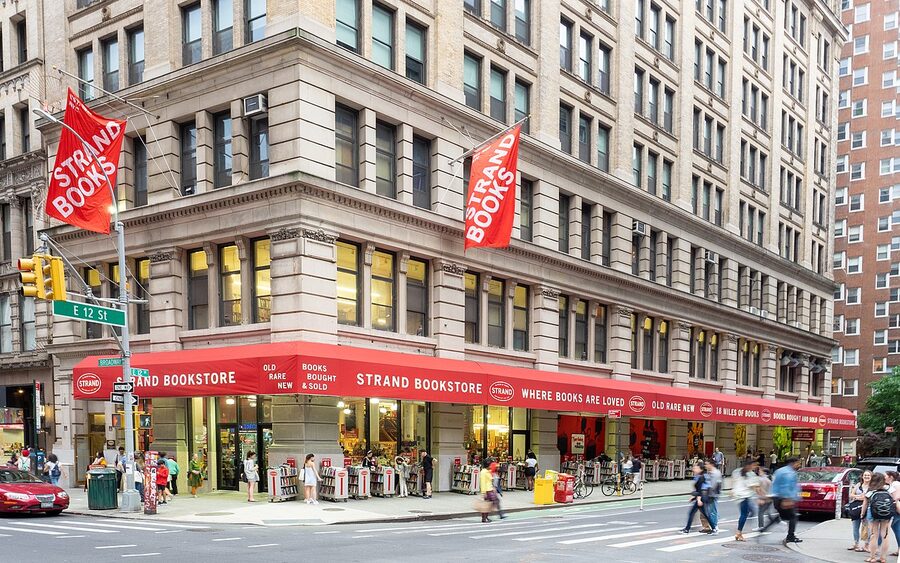
The bookshop you buy from is part of the same question. Amazon has every title here, and yes, you can get any of them on Kindle in two minutes, but the money goes to a Seattle warehouse and not to the kinds of bookshops that actually sustain the writers on this list. The thinking here is the same as the thinking in our piece on souvenir shopping: the bookshop is, in its own way, a souvenir, and where you buy it is part of what you are buying.
Some independent bookshops worth knowing, in cities you might travel to:
- New York: Cafe con Libros (Brooklyn, intersectional feminist) and Bluestockings on the Lower East Side. Both stock most of the list above.
- London: New Beacon Books in Finsbury Park, the UK’s first specialist Black bookshop, founded in 1966. Round Table Books in Brixton, focused on inclusive children’s and adult titles. Also Daunt Books for the travel writing section, which is unusually deep on non-Anglo voices.
- Paris: La Librairie Présence Africaine in the Latin Quarter, the historic publisher of Senghor and Césaire, with a bookshop attached.
- Mexico City: U-Tópica in Roma Norte, queer feminist with a heavy translated-fiction list. Cafebrería El Péndulo, several locations, for Spanish-language Latin American fiction.
- Nairobi: Cheche Books in Kilimani, run by activist Onyango Oloo, the closest thing to an East African political bookshop in English. Soma Nami Books, Kenyan-owned, focused on African writing.
- Cape Town: Clarke’s Bookshop on Long Street, second-hand and antiquarian Africana, in business since 1956. The Book Lounge in Roeland Street, which programmes the best author events in the city.
- Lagos: Roving Heights and Patabah Books for the Nigerian fiction shelf you cannot reliably get outside the country.
- Delhi: Bahri Sons in Khan Market, family-run since 1965, the place to ask for the harder-to-find South Asian small presses.
- Singapore: Wardah Books in Bussorah Street, focused on Muslim and Southeast Asian writing in English. Worth the trip even if you do not buy anything.
- Buenos Aires: Eterna Cadencia in Palermo, an indie publisher and bookshop in one. Heavy on Latin American fiction in translation.
- Auckland: Time Out Bookstore in Mount Eden, a long-time supporter of Māori and Pasifika writing.
If you are not travelling, Bookshop.org in the US and UK splits revenue with independent bookshops and is a good Amazon alternative. Paperbacks & Frybread, an Indigenous-owned online store based in the US, has the best curated Indigenous-author shelf I have come across. Amplify Bookstore, founded by Black women in the UK, ships internationally.
The point is not that buying from any of these is automatically virtuous. The point is that small bookshops, especially those owned by people from the communities they serve, are a much more direct line between your money and the writers on this shelf than a global retailer is. The same logic applies to the rest of how we travel: where you spend matters more than the label on the spending.
Extending the principle: podcasts and films

Books are the deepest medium for this kind of work but they are not the only one. A few honest recommendations.
Podcasts
- Code Switch (NPR). Race-and-culture reporting that is also, often, very good travel reporting in disguise. The episodes on Hawai’i and on the Green Book are good places to start.
- Black Travel Across America. Long-form interviews with Black writers, photographers and tour operators who actually live the work.
- Rough Translation (NPR). Stories from outside the US that are not framed for US audiences. The episode on Nigerian football fandom is a small classic.
- All My Relations. Hosted by Matika Wilbur (Swinomish, Tulalip) and Adrienne Keene (Cherokee), this is the Indigenous-issues podcast I recommend most often. Smart, generous, opinionated.
- The Stoop. Two Black women, Hana Baba and Leila Day, having long conversations across the African diaspora. Smart and funny.
Films and documentaries
- Atlantics (2019), Mati Diop. A Senegalese ghost-story-love-story-immigration drama that won the Grand Prix at Cannes. Senegal as Senegalese cinema sees it.
- Smoke Signals (1998) and Reservation Dogs (2021 to 2023). The films and series that showed mainstream American audiences contemporary Native life as something other than feathered tragedy. Sterlin Harjo’s Reservation Dogs in particular is the best thing about a place I have seen on television in years.
- Honeyland (2019). Macedonian. Nominated for two Oscars and a strong corrective to “Balkan exoticism” tourism.
- Driving While Black (2020) by Ric Burns. The travel histories the country generally does not teach.
- Once Were Warriors (1994) and Whale Rider (2002), New Zealand. Adapted from the Māori novels above.
- Get Out, Nope, Sinners. Jordan Peele and Ryan Coogler are not making travel films but their movies are some of the sharpest contemporary American work on race, place, and the geography of being watched.
How to actually do this without making a project of it
One pattern I have noticed in people who genuinely change what they read: they stop trying to “decolonise” anything and just start swapping. The next travel book you would have bought, swap it for one on this list. The next novel set in a country you have visited, read by a writer from there. The next film night, pick from the list above instead of whatever Netflix is pushing.
That is it. The lists exist to make the swap easy, not to be reading homework. After a year or two, your shelf has shifted. You did not have to declare anything or take down a single book you already love. The shape of what you know about other places has changed, in small ways and useful ones, because the list of voices you have spent time with has changed.
The same logic applies to a lot of how we think about travelling thoughtfully. If you have read our pieces on what sustainable tourism actually means or on spotting greenwashing in the travel industry, the same principle keeps showing up: small, consistent shifts in where your attention goes, and where your money lands, do most of the work. There is no badge for finishing.
If you only do one thing after reading this, get a copy of Kpomassie or Saro-Wiwa. They are the books I would put first into anyone’s hands. The rest of the shelf will follow.

.jpg)
