The first time I heard a dive operator turn a paying customer away, we were on a wooden longtail in the Gulf of Thailand, motoring out to a reef about forty minutes off Koh Tao. The customer, an Australian guy who I’d guess was about 25, had pulled a tube of sunscreen out of his dry bag and started slathering it on his shoulders. The skipper, who hadn’t said a word the whole boat ride, looked at the bottle, said something quietly to the dive guide, and then the dive guide walked over and asked the guy whether he had a different sunscreen with him. He didn’t. The guide handed him a small tube of mineral sunscreen from the boat’s communal bag, asked him to wash off what he’d already applied with a freshwater rinse, and explained that the operator’s policy was no oxybenzone within five miles of their reef. The guy was annoyed for about three minutes, then he was fine. We dropped in twenty minutes later. It was the first dive of about two hundred I’ve done since then where I actively thought about what I was bringing into the water with me on my body, not just in my BCD pockets.
That moment changed how I dive. I’d had the certification cards for years, I’d done the PADI environmental modules, I’d nodded along at every Project AWARE briefing about touching nothing and taking nothing. But the abstract version of “be a responsible diver” never quite landed the same way as a skipper, in his mid-fifties, with a face like leather, quietly refusing to motor an oxybenzone bottle over his reef. The rule wasn’t on a poster. It wasn’t on the operator’s website. It was just the way they ran the boat. And it cost them, that day, because the customer was visibly considering whether to ask for a refund and try one of the cheaper operators back at the pier instead.
I’ve thought about that boat a lot in the years since. Most of what I’ve learned about diving with less harm has come from operators like that one, who have unwritten rules they enforce with a shrug rather than a lecture. What I want to do here is pass on five of the things I’ve watched good operators care about, in roughly the order they tend to come up on a real dive day. None of this is original to me. It’s a synthesis of what I’ve been told by people whose whole lives are tangled up in the reefs they take divers to see. If you’re new to diving, or coming back to it after a few years, I think it’s worth knowing what those people actually care about, because their version of “ethical” is more practical and less performative than what gets posted online about it.
In This Article
- Tip 1: Get serious about reef-safe sunscreen, including reading the label twice
- Tip 2: Look-don’t-touch is mostly a buoyancy problem
- Tip 3: Vet the operator before you book, not after you arrive
- Tip 4: An “encounter” with marine life means the animal can leave
- Tip 5: Where the money goes is the dive itself, sometimes
Tip 1: Get serious about reef-safe sunscreen, including reading the label twice
This is the tip that gets the most lip service and the most quiet dishonesty. Most divers I know own a tube of “reef-safe” sunscreen and assume the label settles the question. The reality is that “reef-safe” is not a regulated term in most countries. A brand can put it on a bottle that contains chemicals known to harm coral, and almost nobody can stop them. The Hawaii ban that came into force in 2021, and the Palau ban from 2020, only cover a specific shortlist of ingredients. Plenty of formulations sail through that shortlist on a technicality and are still bad news for a reef.
The four ingredients I’d avoid, even if a label calls itself “reef-safe”: oxybenzone (also listed as benzophenone-3), octinoxate (ethylhexyl methoxycinnamate), octocrylene, and 4-methylbenzylidene camphor. The first two are what the Hawaii law specifically bans. The other two haven’t made every legal list yet but show up in the same toxicology studies, and operators in Palau, Bonaire, and parts of the Mexican Caribbean are increasingly asking divers to skip them too. If the bottle has any of these in the active-ingredient panel, it’s probably going to bleach coral if enough of it ends up in the water column. Studies cited by the National Park Service in the Florida Keys put the harm threshold for oxybenzone at parts-per-trillion levels, which is a useful way of saying “the amount that comes off a single diver matters”.
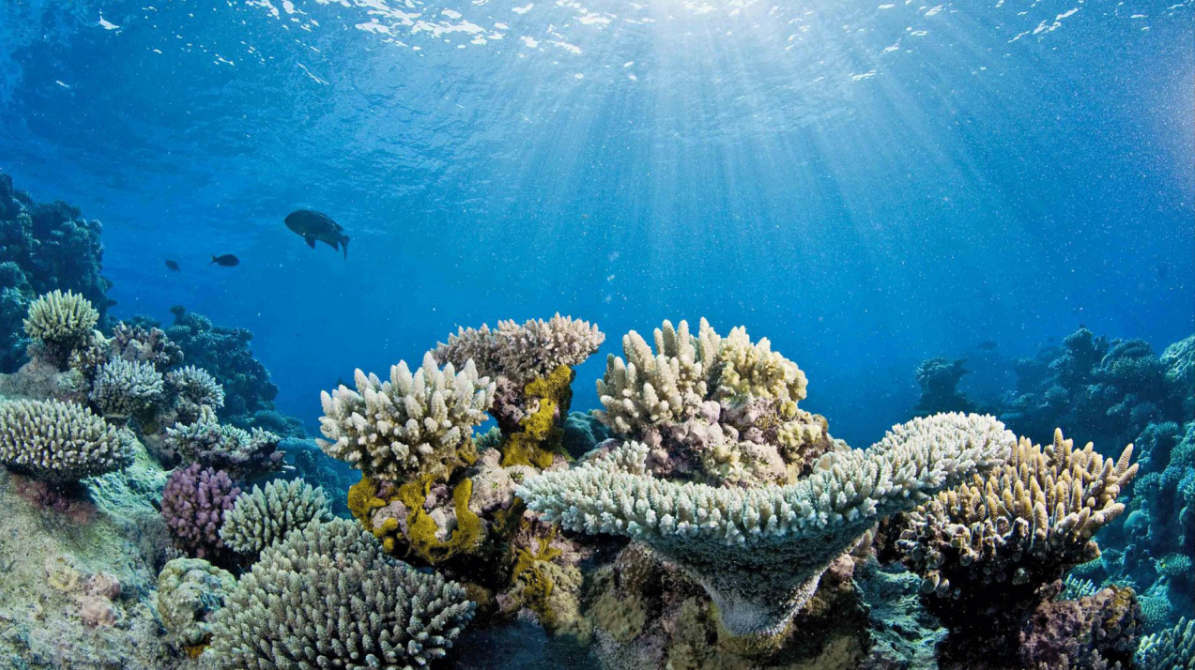
What I look for instead: a mineral sunscreen with non-nano zinc oxide as the only active ingredient, ideally with the SPF coming from that single mineral and nothing else. “Non-nano” matters because nano-sized zinc particles can still be ingested by coral polyps and filter feeders. The bottle will usually say “non-nano” if the manufacturer has gone to the trouble of using larger particles. If it doesn’t say non-nano, I’d assume the particles are small. Brands I’ve used and trusted: Stream2Sea, Raw Elements, Thinksport, Badger, and All Good. I’m not on commission with any of them, and there are surely others, but those five tend to come up on the boats I’ve been on. None of them rub in invisibly. You will look slightly white. That’s the trade.
The other thing I’ve learned, the hard way, is to apply sunscreen at least 30 minutes before getting wet, and ideally on land before walking down to the boat. The window matters. A sunscreen that’s had time to bind to your skin sheds less into the water than one that’s still sitting on the surface in a glossy film. I tend to put it on at breakfast, top up exposed bits at the dive shop, and not reapply between dives unless I’m out of the water for more than an hour. If I’m doing back-to-back dives with a short surface interval, I just rash-guard up and skip the second application entirely. A long-sleeve UV-protective shirt is, in my view, the single biggest harm-reduction move you can make. It cuts the amount of sunscreen you need by about 70 percent, and it also keeps you warmer on the surface interval.
Two more thoughts that don’t fit neatly anywhere. First, sprays are worse than lotions. About a third of the spray ends up on the deck or in the air, and from there a fair chunk of it ends up in the water without ever touching skin. I’d skip aerosol sunscreens around dive boats entirely. Second, the dive operators I trust most usually have a small bag of mineral sunscreen on the boat for guests who didn’t know. Some charge a small fee for it, some don’t. If you ever find yourself on a boat where the briefing mentions reef-safe sunscreen but there’s no backup tube available, that’s a small flag, not a deal-breaker but worth noting. The operators who really care tend to keep a backup, because they’ve learned that “I forgot” is the most common reason divers show up with the wrong stuff. Our pillar guide on single-use swaps and plastic-free packing covers a few specific brands of mineral sunscreen that ship in metal tins instead of plastic tubes, which is the next layer down if you’ve already nailed the chemistry.
Tip 2: Look-don’t-touch is mostly a buoyancy problem
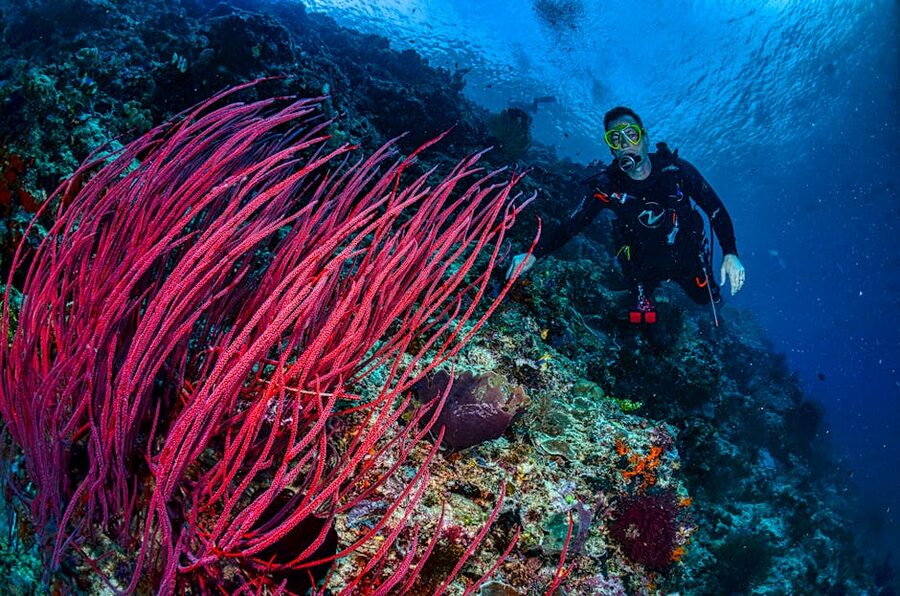
“Don’t touch the coral” is the first thing every diver hears and the easiest rule to break by accident. Most reef damage from divers isn’t caused by people deliberately grabbing a coral head for a selfie. It’s caused by people who can’t hold their position in the water column, who are heavier than they planned to be at depth, who finish a dive at 3 bar and suddenly bob to the surface, or who reach out and grab the nearest sponge to steady themselves when a current hits. The look-don’t-touch rule is really a buoyancy rule wearing a different shirt.
I’m not a buoyancy nerd, and I’m not going to lecture anyone about the perfect trim. What I will say is that the gap between the diver who never touches the reef and the diver who taps it three times a dive isn’t talent. It’s practice and weighting. If you’re newly certified, or you’ve been certified for a while but haven’t dived in a year, the kindest thing you can do for the reef is spend the first dive of a trip in a sandy patch or an over-deep area with no coral nearby, and just sort yourself out. I’ve seen good operators schedule a “checkout dive” or a “refresher” specifically for this reason. They’ll claim it’s about checking your skills, but really they’re giving you a place to fail at neutral buoyancy without snapping a sea fan.
The two things I tweak before every trip: weight and trim. Weight first. The weight you needed in your wetsuit two years ago is probably wrong now. Wetsuits compress over time, your body composition changes, and you might be diving in a different salinity. I do a weight check on the surface at the start of every trip: with an empty BCD, holding a normal breath, I should float at eye level, and on full exhale I should sink slowly. If I’m sinking like a stone or bobbing up, I’m wrong. Trim second. Most rented BCDs put weight too low. If your legs sink and your head rides high, you’ll end up kicking down at the reef instead of along it, and your fin tips will keep clipping things. Moving 2 to 3 kg from belt or pockets to trim pockets on the back, if your BCD has them, fixes the angle for most people.
The Coral Reef Alliance has done some of the better research I’ve read on diver damage to reefs. One study they cite found that the majority of contact between divers and corals comes from the same handful of diver behaviours: descending too fast and bumping the bottom, ascending under a ledge and head-butting the underside, sculling fins to maintain position rather than maintaining position with breath, and the universal sin of holding the camera in one hand and the reef in the other. Of those, the camera one is the worst, because cameras encourage divers to hover for minutes at the same spot, and minutes is plenty of time to bash a coral head you didn’t notice was right behind you.
If you take a camera underwater and you’re not yet rock-solid on buoyancy, my friendly suggestion would be to put the camera away for the first day of any new trip and use that day to remember how to be still in the water. The photos you’ll take on day three, when you’re properly trimmed and breathing slowly, will be better than the photos you’d take on day one anyway, and the reef gets a day of grace. Same with gloves. I’m in the camp that thinks gloves should stay off in the tropics, because gloves make it psychologically easier to grab things you shouldn’t be grabbing. A few destinations require gloves for legal or thermal reasons, but on a warm-water reef, a no-glove policy from your operator is a positive sign rather than a hassle.
One last thing on this tip, because it’s worth saying out loud: some marine life will swim up to you and basically request a touch. Cleaner wrasse, friendly groupers in places that have habituated divers, the occasional curious turtle. The temptation to reach out is real. The reason we don’t is that even a non-aggressive touch can rub off a fish’s slime coat, which is its primary defense against bacterial infection. A “harmless” pat is not actually harmless to the fish. It’s a hard rule to keep when something with eyes the size of saucers is hovering 30 cm from your mask, but it’s the right one.
Tip 3: Vet the operator before you book, not after you arrive
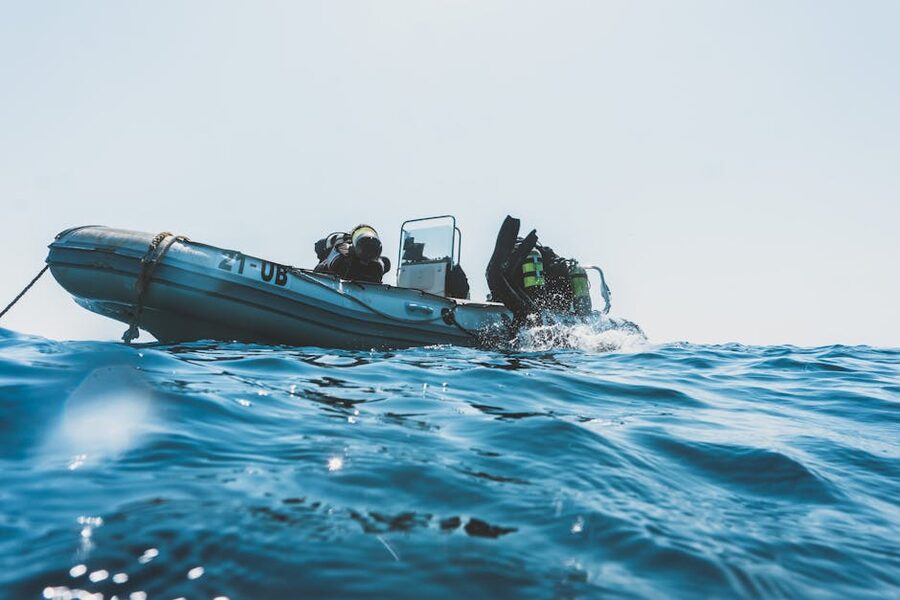
The operator decides almost everything about your dive day. Where you go, how many people are in the water with you, whether the boat anchors or moors, whether there’s a briefing or not, whether the guide turns the boat away from a site that’s been overdived this season. You can be the best-behaved diver in the world and still cause damage if your operator’s whole business model is incompatible with the reef they take you to. So a fair amount of the work of being an ethical diver happens before you’re anywhere near a dive boat, in the booking phase.
The certifications I look for, in rough order of how much weight I give them: Green Fins (run by The Reef-World Foundation in partnership with the UN Environment Programme), PADI Eco Center with an active environmental project, SSI Blue Oceans, and the PADI Green Star award. Green Fins is the one I trust most because it requires an annual on-site assessment, has a public scoring database, and doesn’t only audit the operator on the day of the visit. The Reef-World Foundation publishes the scores; you can look up the operator before you book. PADI Eco Center is meaningful when the operator can point to a specific project (a coral nursery, a marine debris program, a citizen science partnership) rather than just having paid for the badge. SSI Blue Oceans is newer and less stringent in my experience, but better than nothing. The PADI Green Star award is essentially marketing, useful as a soft signal that the operator is at least thinking about it, but I wouldn’t book on that alone.
The non-certification signs I weigh just as heavily: guide-to-diver ratio, group size cap, mooring vs anchoring, and briefing depth. A ratio of 1:4 is good, 1:6 is acceptable, 1:8 makes me uneasy, and 1:10 is the sort of thing you see at high-volume Caribbean cattle-boat operations and I’d skip. Group size matters for slightly different reasons than ratio: a 1:8 ratio with two groups of 8 in the water at the same site is 16 divers on the same coral, and that’s too many for almost any reef. The good operators I know cap their dive sites at one group at a time, even when it costs them a customer.
Anchoring versus mooring is the question I ask least often and probably should ask first. If a reef has permanent mooring buoys (most well-managed dive sites do), the boat should tie to the buoy and not drop an anchor. Anchors on coral cause the kind of damage that takes decades to recover. If an operator’s website talks about “our boats” but never mentions mooring, or if you’re already on the boat and you watch them drop a hook into the reef itself, that’s a clear signal you’ve picked the wrong outfit. It’s also a fair reason to politely raise the question on the boat. The good operators won’t be defensive; the bad ones will.
The briefing tells you a lot. A surface briefing that runs three minutes and says “follow the guide, don’t touch the coral, have fun” is a briefing that doesn’t really care. A briefing that runs eight to fifteen minutes, names specific creatures or features at the site, mentions the marine park’s rules, talks about the previous day’s conditions, and asks if anyone has questions, is the briefing of an operator who has thought about what they’re doing. I’ve started judging operators almost entirely on their first briefing of a trip, and it’s been a reliable signal.
If you want to dig further, our piece on how to avoid greenwashing in tourism has a more general framework for telling marketing-speak from real practice. The same principles apply to dive operators. The shorthand version: prefer specific, datable, named projects over vague claims. “We support marine conservation” tells you nothing. “We’ve replanted 1,800 coral fragments at our nursery off the south reef since 2019, in partnership with [named NGO]” tells you something.
Tip 4: An “encounter” with marine life means the animal can leave
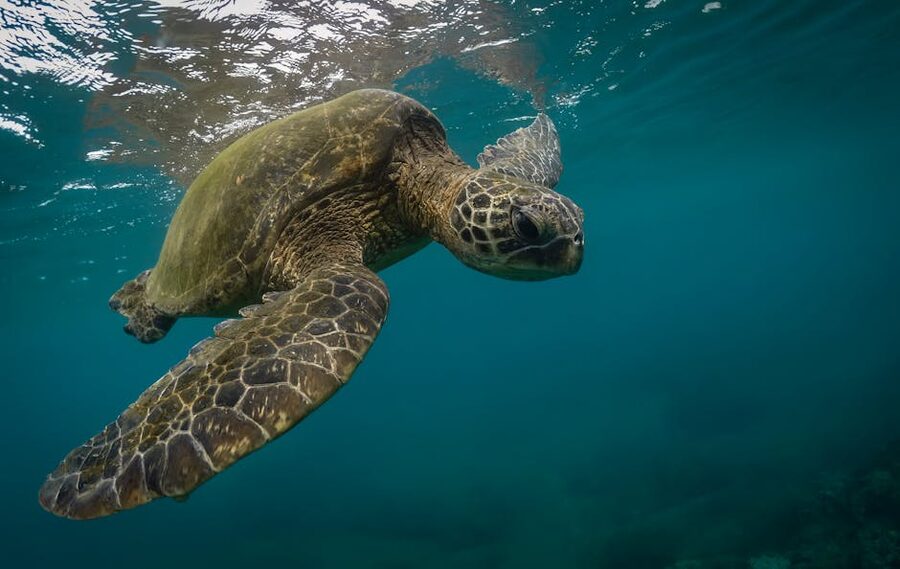
Of all the underwater experiences sold as ethical, marine animal encounters are the trickiest to navigate. The basic rule I try to apply is this: a real encounter is one where the animal could leave at any time and choose to anyway. If the animal can’t leave, or if it has been conditioned to stay through feeding, or if there are crew members in the water actively herding it toward the divers, it’s not an encounter. It’s a captive interaction with extra steps.
The clearest examples of the wrong end of this spectrum: shark feeding dives where chum or fish parts are used to draw sharks to the divers, turtle “rides” where guides actively grab turtles and pose with them for tourists, dolphin swims at facilities that hold semi-captive dolphins, manta ray feeding stations at certain sites in the Maldives where rays are conditioned to a specific lagoon by handlers throwing food. Some of those are illegal in some countries and legal in others. Even where they’re legal, they change the animal’s behaviour in ways that aren’t reversible, and they create a dependency on the next boat showing up. I won’t book any of them, and I tend to view operators that offer them as having compromised on something they shouldn’t have.
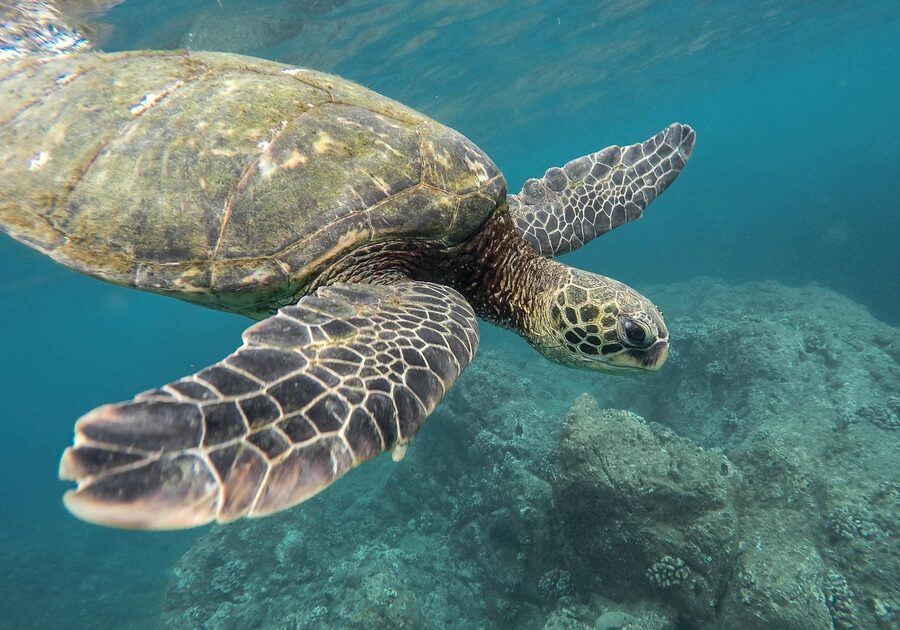
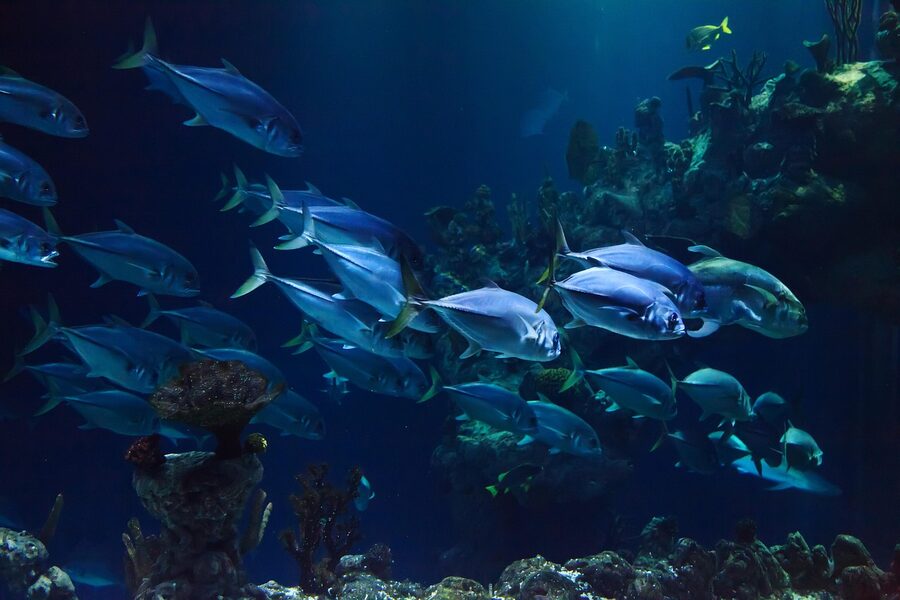
The cleaner end of the spectrum: shark dives where the operator goes to known habitat (the cleaning stations, the seamounts, the oceanic gathering points) and waits, with no chumming, no feeding, no caging. Whale shark season at specific places like Donsol in the Philippines or the southern Maldives, where local rules cap the number of swimmers per shark and forbid touching. Manta cleaning stations like the ones at Hanifaru Bay in the Maldives or Manta Point in Komodo, where the rays come to be cleaned by wrasse and the divers stay still on the bottom and watch. None of those guarantee an animal will appear. Some days, you fly home without seeing the thing. That’s the price of an honest encounter.
What I’d ask an operator before booking any animal-focused dive: Do you feed or chum? If yes, I’m out. What’s your distance protocol? Most marine parks have a minimum distance, often three to five metres for whale sharks and rays, and a strict no-touch rule. The operator should know it without checking. How many divers do you put on the animal at one time? Hanifaru Bay caps swimmers per ray to keep the ray from being mobbed; some unregulated sites in other countries don’t. What do you do if a guest tries to chase the animal? The honest answer is “we end the dive and we don’t take that diver out again”, and you should listen for that answer specifically.
The other piece of this is what we do with our own behaviour in the water. If a turtle approaches you, the right thing is to stay still and let it decide what to do. If you start swimming after it, you’ve made the encounter about you, and the turtle will either flee or (worse) become habituated to humans, which makes it more vulnerable to the divers and snorkellers who come after you. Same goes for nudibranchs, octopuses, every reef fish you’ve ever loved. The encounter is theirs to grant. Our job is to be slow, quiet, and willing to leave with no photo if that’s how it shakes out.
One last note, which connects to a piece we’ve done elsewhere. The way we frame these encounters in our heads, and in the words we use to describe them afterwards, matters too. Calling a shark a “monster” or describing a manta as “majestic” both have their own problems, in opposite directions. Our guide to mindful travel language has more on this; the short version is that the language we use after the dive has consequences for how everyone else thinks about the animals, and it’s worth being a little more careful with it than the dive-shop sticker on your camera housing might encourage.
Tip 5: Where the money goes is the dive itself, sometimes
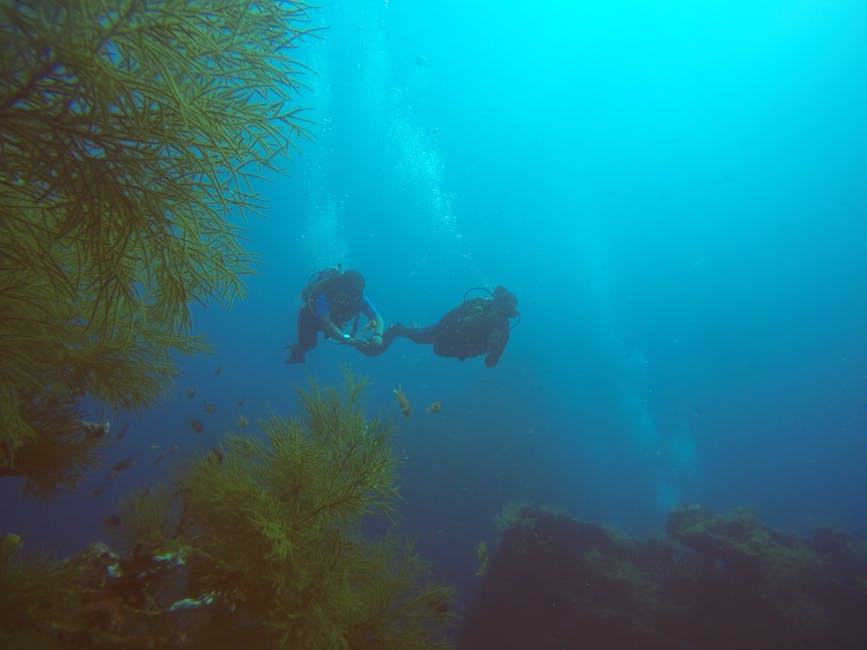
This last tip is the one that takes the longest to learn. Most of the visible decisions a diver makes (the sunscreen, the buoyancy, the no-touch rule) happen in or near the water. The largest decision a diver makes happens a month before any of that, when you book and pay. Where your dive money lands is the single biggest lever you have on whether your trip improves the reef or quietly drains it. And the difference between the two is often invisible from the operator’s website.
The pattern I look for: locally owned, locally staffed, paying marine park fees that go to actual park management. Locally owned is the easiest to verify if you read the “About” page carefully. A shop owned by someone who has lived on the island for 15 years, who employs guides from the local community, who has a name attached to the business, is usually willing to tell you exactly that. A shop that has a generic stock-photo “About” page with no names and a corporate-sounding parent company is often a chain where the bulk of the profit leaves the country at the end of the season. Both kinds exist in every popular dive destination. The locally owned ones tend to charge slightly more per dive and tip the local economy more on every dollar you spend.
Marine park fees are the next layer down. Most well-managed reef areas have a daily or weekly fee that goes (in theory) to the management body that runs the park. Bonaire’s marine park fee, which is around US$45 a year for divers, is the textbook case where the fee is well-collected, well-spent, and pays for the rangers and the moorings. The Maldives, Galapagos, and a number of Caribbean parks have similar models. When a fee is collected on the boat, ask what it covers; a good operator will know the numbers. When a fee is included in the dive price without being itemised, I’d usually trust the operator if the rest of their signals are solid, and I’d ask for the breakdown if I had any reason to doubt them. A fee that gets quietly skimmed at the operator level instead of going to the park is the kind of thing you can sometimes spot only by asking the rangers directly, which I’ve done once or twice on long trips.
The harder thing to vet is the staffing question. The number of dive operations in popular destinations that fly in foreign instructors on tourist visas, employ them at low wages, and rotate them out every six months is high. Those operations are extracting money from the local economy and from their staff at the same time. A shop where the dive guides are local, named, and recurring (you’ll see the same names on TripAdvisor reviews from three years apart) is usually a shop where the money stays local. A shop where the guides are all instructors from somewhere else, who change every season, is often the opposite. There’s nothing inherently wrong with foreign instructors, many of the best dive professionals I know are expats who’ve put down real roots in a community, but the pattern of seasonal rotation through visas is the marker.
If you want to go further, you can dive with operators whose business model is built around conservation funding. Coral Vita in the Bahamas, Coral Restoration Foundation in the Florida Keys, Reef Doctor in Madagascar, and a handful of similar outfits sell volunteer-dive weeks where the dive fees pay for nursery work and outplanting. You’re not just being a low-impact tourist; you’re paying for the labour of restoring what previous decades of mass tourism damaged. Our ocean conservation guide goes deeper on the mechanics of those programs and how to find them, and we’ve got more coming on coral reef restoration specifically.
The ethical dive isn’t really about being virtuous in the water. It’s about choosing where to put your money and then behaving well when you get there. The five tips above are roughly in the order they tend to come up in real time, but the order of importance, if I had to rank them, would put operator vetting and money flow at the top, with sunscreen, buoyancy, and animal protocol following because those are downstream of the operator you picked. The skipper who turned that customer away in the Gulf of Thailand wasn’t doing it to make a point. He was doing it because his livelihood depended on a reef that worked, and he understood, faster than any of his customers, that a reef that worked required the customers to give up some convenience. Most of what’s worth knowing about diving with less harm came, for me, from sitting on boats with people like him and watching how they ran their day.
If you want a couple more places to start: our broader guide to what sustainable tourism actually means sets the framing for the wider trip, and the ocean conservation traveller’s guide picks up the thread of where dive money can go beyond the dive boat.