

The first time I floated over a bleached reef, in the Maldives in 2019, I remember feeling something specific and unhelpful. Snorkel mask on, three feet of water above a patch of staghorn coral that had gone the colour of old bone, the only sound my own breathing through the tube. The thought that arrived was not noble. It was something closer to well, this is over, then. And then, faintly underneath: is there anything I can actually do about this besides feel bad?
If you are reading this with the same question in mind, the answer is yes. Not as much as you would like, probably. Not enough to fix it on its own. But there are a small number of organisations that have been doing the patient, unglamorous work of growing corals in nurseries, transplanting fragments back onto reefs, and tracking which ones survive the next bleaching event. And several of them genuinely accept travellers as part of the work, either at a tour-and-tee-shirt level or at a strap-on-a-tank-and-help-me-tie-this-fragment level.
What follows is nine of them. I have tried to stick to organisations that exist, are still operating in 2026, and have a real way for someone passing through to plug in. Some of the famous names that you might expect, like Reef Doctor in Madagascar, paused their volunteer programmes in the last few years and have not restarted them. I have left those off. The list is shorter than it could be, on purpose.
A note before we go in. Coral restoration is not a fix on its own. It buys time. The corals planted in 2019 in the Florida Keys still bleached in 2023, like everything else, and the staff at most of these places will tell you that openly if you ask. The point is to keep genetic material alive, work out which corals survive heat stress, and have something to outplant when the water cools enough for new colonies to take. It is gardening on a long horizon, not surgery. Going in with that frame helps.
In This Article
- What “volunteering” actually looks like in 2026
- 1. Coral Restoration Foundation, Florida Keys
- 2. Reef Renewal Foundation Bonaire
- 3. Perry Institute for Marine Science, Bahamas
- 4. Coral Vita, Grand Bahama
- 5. Coral Gardeners, Mo’orea and Fiji
- 6. Mars Coral Reef Restoration, Sulawesi
- 7. SECORE International, Caribbean network
- 8. Reefscapers, Maldives
- 9. Citizens of the Great Barrier Reef
- What to skip, and how to vet what’s left
- If you are choosing one
What “volunteering” actually looks like in 2026
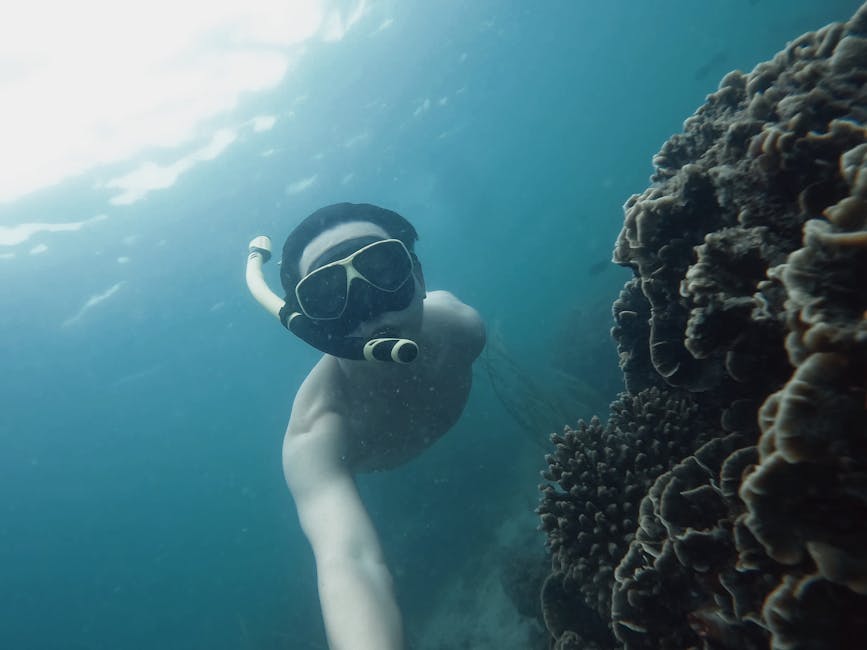
Three rough tiers, in order of effort.
The day visit. A few hours at a coral farm or nursery, often with a tour, sometimes with a single supervised dive or snorkel. Twenty-five to a hundred-and-fifty US dollars in most places. Good if you have a half-day in port, you are not a diver, or you want to bring kids. The work you do is small. The money goes somewhere useful.
The course. A formal training, usually over one to four days, that ends with you being qualified to do specific restoration tasks under a project’s protocols. PADI runs several of these, and most are tied to a partner dive shop in a particular country. Two hundred to six hundred US dollars depending on whether you already have your Open Water. After this, you can come back any year you like and slot in.
The long volunteer placement. One to twelve weeks living at a project base or partner resort, usually with diving every day, lectures on coral identification, manual labour at the nursery, data collection, and the rest of it. Eight hundred to four thousand US dollars depending on accommodation and whether you arrive certified. If you are between jobs, in a gap year, or have a sabbatical to spend, this is where the actual hands-on conservation work happens.
You can also support most of these orgs without going anywhere, through a coral adoption or a one-off donation. I cover that as well, since the people most likely to read this are not in a position to fly somewhere new this year, and the orgs need money more than they need bodies in the water. Our piece on supporting locals from home goes into that further if you want the wider frame.
1. Coral Restoration Foundation, Florida Keys
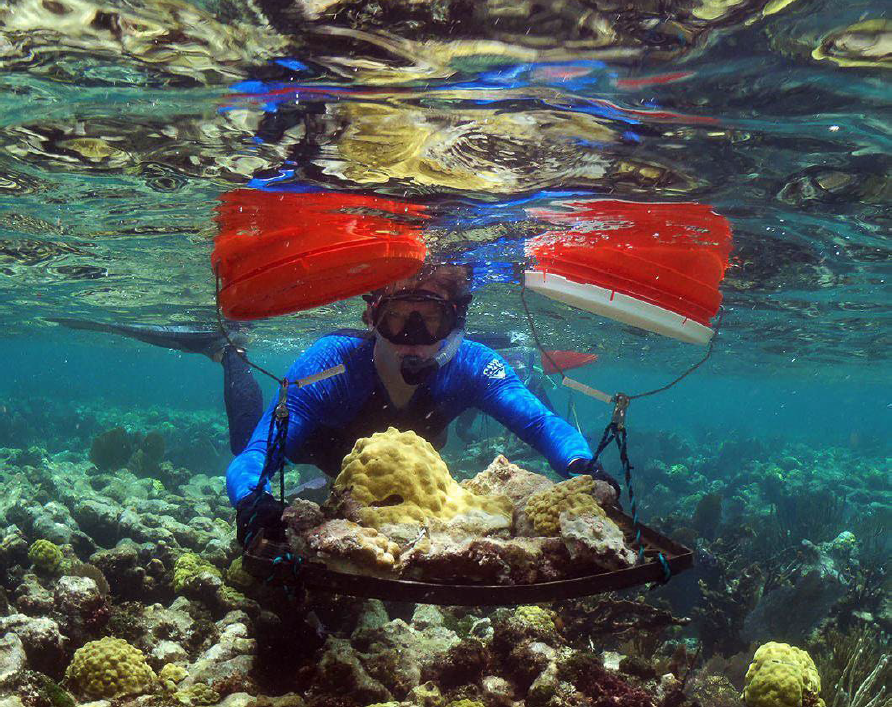
If you have read one article on coral restoration before this one, it probably had CRF in it. There is a reason. They are the largest reef restoration non-profit in the world, they have been outplanting in the Florida Keys since 2007, and they invented the Coral Tree, which is the PVC-and-fibreglass structure now used in coral nurseries around the Caribbean. You will recognise it from photos: a vertical pole with horizontal arms, dozens of small fragments dangling like Christmas tree ornaments, hanging in twenty feet of clear blue water off Tavernier.
For travellers, CRF runs hands-on dive and snorkel programmes out of partner operators in Key Largo and Tavernier. Island Ventures runs Coral Restoration Dive trips for around 125 US dollars in tank fees plus a 50 dollar donation that goes directly to CRF. You spend the morning either at the offshore nursery clipping fragments off the trees, or at a reef site like Carysfort or Molasses, gluing those fragments to bare rock with two-part epoxy that sets underwater. Captain Hook’s in Marathon does a similar day for around 99 dollars. For non-divers, the CRF Exploration Center in Key Largo runs talks, has interactive exhibits, and lets you build land-based components of the Coral Trees that go out to the nurseries later.
What to expect honestly. The water is not always clear. The corals you plant will probably get hit by the next bleaching event, because the Florida Keys had its worst summer on record in 2023 and there is no reason to think 2026 will be kinder. CRF staff are open about this. The point is the genetic library, the survival research, and the slow build-up of heat-tolerant corals that can go in when conditions allow. You are joining a long bet.
More: coralrestoration.org
2. Reef Renewal Foundation Bonaire
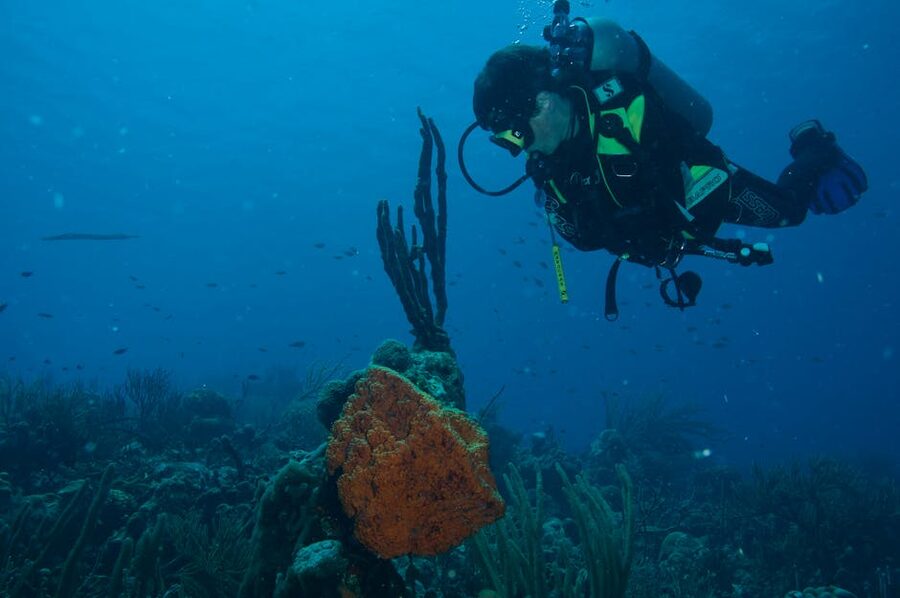
Bonaire’s reefs are some of the healthiest in the Caribbean, partly because the island’s been a marine park since 1979, partly because there is no agricultural runoff, and partly because Reef Renewal has been quietly outplanting corals there for over a decade. Since 2013 they have put more than 40,000 fragments back onto the reef. Some of those colonies are now spawning on their own, which is the nearest thing to a win you can hope for in this work.
The route in for travellers is the PADI Reef Renewal Diver distinctive specialty, run with partner dive shops on the island. To take it you need to be at least 15, certified to Open Water level, and willing to spend a couple of days on theory and supervised work in the nursery. The course ends with you contributing to actual outplanting and nursery maintenance dives, not a simulation. Pricing varies by partner shop, but you are looking at somewhere between 250 and 400 US dollars on top of normal dive package costs at places like Buddy Dive or Dive Friends Bonaire. Many divers staying in Bonaire for a week tag this on as a single course inside a longer trip.
The work itself is meditative. You spend a lot of time hovering still in the water column, cleaning algae off nursery trees with a toothbrush, untangling staghorn fragments that have grown into their own neighbours, then carefully transporting them to the outplanting site. It is the closest thing to underwater gardening you will ever do. If you are not a diver yet but would like to be, learning to dive in Bonaire and adding the Reef Renewal speciality at the end of your trip is one of the more useful arcs you can choose for a holiday.
More: reefrenewalbonaire.org
3. Perry Institute for Marine Science, Bahamas
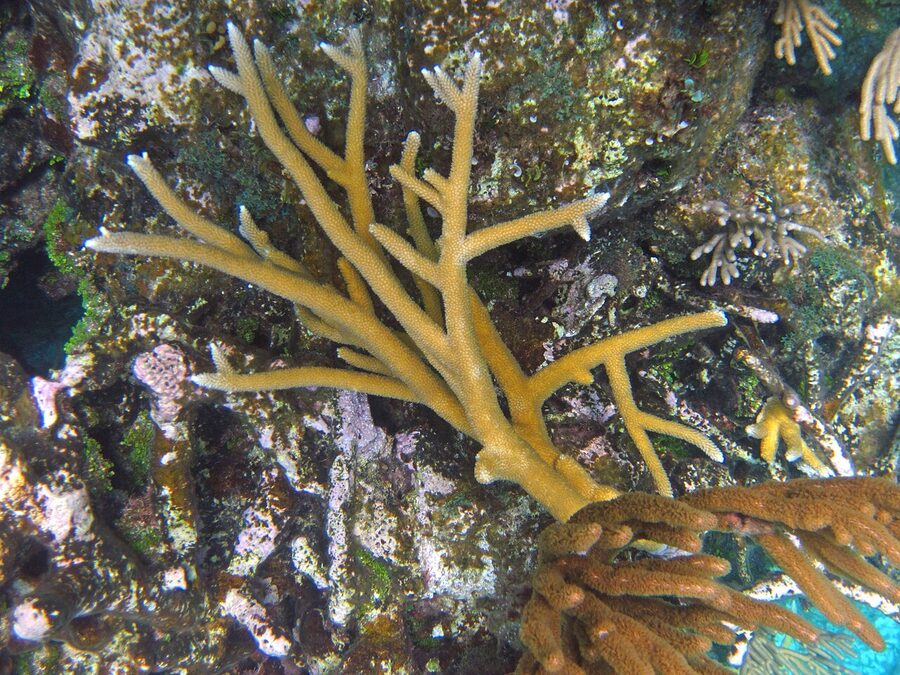
The Perry Institute runs the Reef Rescue Network across the Bahamas and the wider Caribbean, with partner dive shops in the Exumas, Eleuthera, New Providence, Abacos, and increasingly elsewhere. Their flagship public programme is the PADI Reef Rescue Diver speciality, a one-day course that gets you trained on coral nursery work and outplanting in a single afternoon if you already have your Open Water. The theory manual is 35.99 US dollars and you can do it at home before you arrive. The in-water portion happens at one of the network’s coral nurseries, with a partner shop like Stuart Cove’s on New Providence.
What I like about the Perry Institute is that they are scientists first, not a tour operator with a science angle. The coral fragments you handle are part of an ongoing research programme mapping which Caribbean species are most resilient to bleaching, which is the question that decides what gets outplanted next. The Reef Rescue Network now has more than fifty partner sites across the region, which means you can take the speciality once and then volunteer at multiple sites on later trips. They also offer a PADI Instructor Development Course with a conservation focus, if you are at the stage where you are turning a hobby into work.
More: perryinstitute.org/reef-rescue-network
4. Coral Vita, Grand Bahama
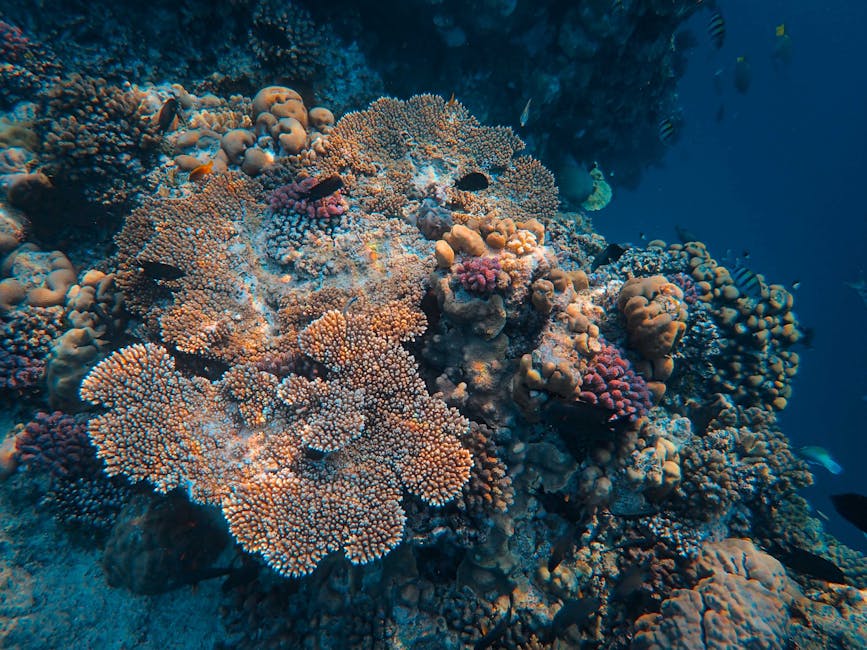
Coral Vita won the Earthshot Prize in 2021, which got them a lot of attention they have mostly used well. Their farm is on Grand Bahama, near Freeport, and the model is land-based: corals grown on shore in tanks under controlled conditions, then transplanted out to reefs once they are big enough. The advantage of growing on land is speed. They can produce a coral fifty per cent faster than the same fragment would grow on a Coral Tree, and they can stress-test fragments for heat tolerance before planting them out, picking the survivors first.
For travellers, the appeal is how accessible they are. They run public farm tours daily, 25 US dollars for adults, 20 dollars for under-12s, free for the under-fives. The tour runs about an hour, with a fifteen-minute talk and then a walk through the tanks while a marine biologist points out brain coral, staghorn, and a couple of species I had never heard of. If you are on a cruise stop in Freeport, this is one of the few shore excursions where the money goes somewhere defensible.
If you want to do more, they have an adopt-a-coral programme. Forty US dollars sponsors a single fragment, naming included. The adoption income goes back into the farm, and last year that one programme alone brought in over 60,000 dollars. It is small as restoration goes. But it is also one of the more direct ways a non-diver can put money on a specific coral with a name and a tank number, and that has its own kind of force. If you have kids who are old enough to read the digital adoption certificate, it works well as a way to make the abstract problem concrete for them.
More: coralvita.co
5. Coral Gardeners, Mo’orea and Fiji
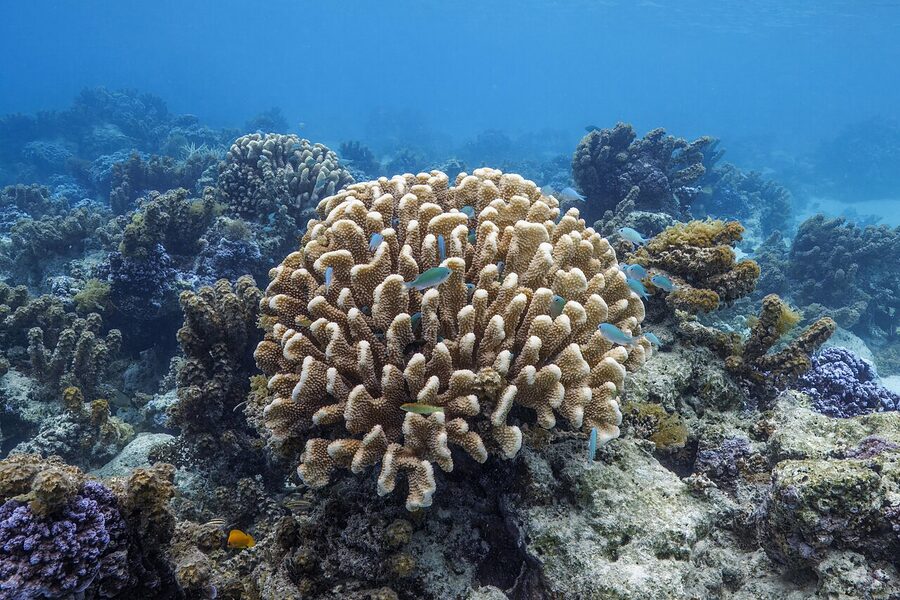
Coral Gardeners started in 2017 on Mo’orea, the high volcanic island next to Tahiti, when a young Polynesian surfer named Titouan watched his home reef bleach and decided to do something about it. The organisation is now one of the more visible coral restoration outfits in the Pacific, with a second site that opened in Fiji in 2023, more than 100,000 corals outplanted across eleven reefs, and a growing list of brand partners I am personally a bit uneven on. Some of the marketing skews toward influencer territory. The science underneath is solid.
For visitors, the way in is the centre on Mo’orea. You can book a half-day reef visit where you snorkel out with one of the gardeners to see the nursery and the outplanted reef, learn about which species they are propagating, and get a sense of how the work fits into the wider local context. They are particular about volunteering at the nursery itself, which is by application and skewed toward people with marine biology backgrounds, but the public tours are open and well-organised. Mo’orea is also a forty-minute ferry from Tahiti, so you can do this as a day trip from Pape’ete.
The remote way in is the adopt-a-coral programme. A small fragment runs around 30 US dollars, and you get a digital card, a name on your fragment, and email updates with photos as your coral grows in the nursery before being outplanted. It is gimmicky in the best sense: the gimmick gets people who would never otherwise think about reefs to think about a particular reef, on a particular island, with a particular caretaker. As of last year their survival rate after outplanting was reported at 82 per cent, which is excellent, although that figure is from before the next bleaching cycle.
More: coralgardeners.org
6. Mars Coral Reef Restoration, Sulawesi
Mars, the chocolate company, is responsible for one of the more interesting coral restoration projects on Earth. The MARRS programme, which stands for Mars Assisted Reef Restoration System, has been running in the Spermonde Archipelago off Makassar in South Sulawesi since 2008. Their approach is different from the Coral Tree model. They build hexagonal steel frames called Reef Stars, coat them in sand, tie coral fragments to the points, and lower them onto degraded reef in a connected web. The web stops loose rubble shifting, the fragments fuse, and within three to five years you have a self-sustaining reef where there used to be coral cubble.
The numbers are large. As of late 2024 the team and partners had installed more than 90,000 Reef Stars and planted over 1.3 million coral fragments across 72 reef sites in twelve countries. The flagship site, Pulau Bontosua, was where I first read about this work years ago, and it is now one of the most-photographed restored reefs in Indonesia.
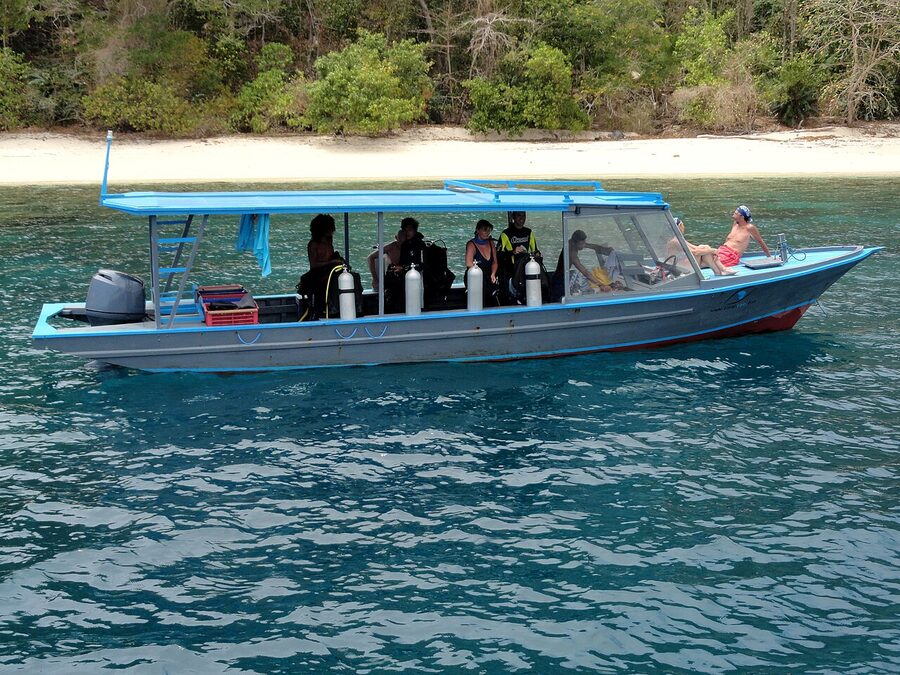
For travellers, participation runs through the Mars Ambassador programme and a network of partner dive operators around Bontosua and Hoga Island. You can dive on the existing Reef Star sites with most operators in Makassar and South Sulawesi, but the active building dives, where divers help tie fragments and place stars, are organised in periodic batches called Big Builds. The 2023 Big Build placed 30,000 corals in four days with 100 volunteers; another is being scheduled. Watch the website. If you are an experienced diver going to Indonesia anyway, this is one of the more genuinely active volunteer arcs available, in the sense that the work would not happen without divers like you turning up and contributing 20-tank weeks of labour.
More: buildingcoral.com
7. SECORE International, Caribbean network
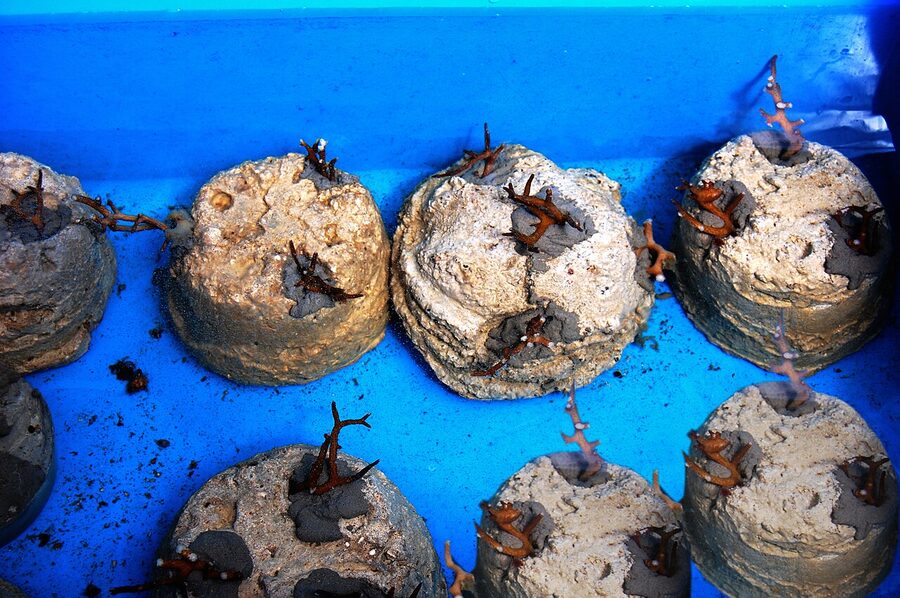
SECORE stands for SExual COral REproduction, which is a name only a scientist could love. They are not a place you go on holiday. They are a network of coral biologists working on something specific and unusual: collecting coral spawn during the few annual mass spawning nights, fertilising the eggs in floating pools, settling the larvae onto seeded substrates, and outplanting genetically diverse new corals. Most other restoration uses fragmentation, which makes clones. SECORE makes new individuals, which is what you need if you want a reef to evolve heat tolerance over time.
Travellers do not really volunteer with SECORE in the same way as elsewhere. You can sometimes shadow their workshops in Curacao, the Dominican Republic, Mexico, and the Bahamas, but those are tied to local partners and timed to specific spawning events between August and October. What you can do, and what they actually need, is fund the work. Their Adopt a Spawn programme attaches your name to a specific reproductive event in a specific place, and the money goes directly toward the floating pools and sample analysis costs. There is no name-your-coral souvenir element. The receipt is the science.
I am putting them on the list partly because they sit at the part of restoration nobody Instagrams: the genetics. If your interest in coral leans toward the long view, the question of whether reefs can evolve their way through this century, this is the org doing the most useful work on that question. The 2023 SECORE-bred corals outplanted in Curacao mostly survived the Caribbean heatwave that summer, which is exactly the kind of result that justifies the approach.
More: secore.org
8. Reefscapers, Maldives
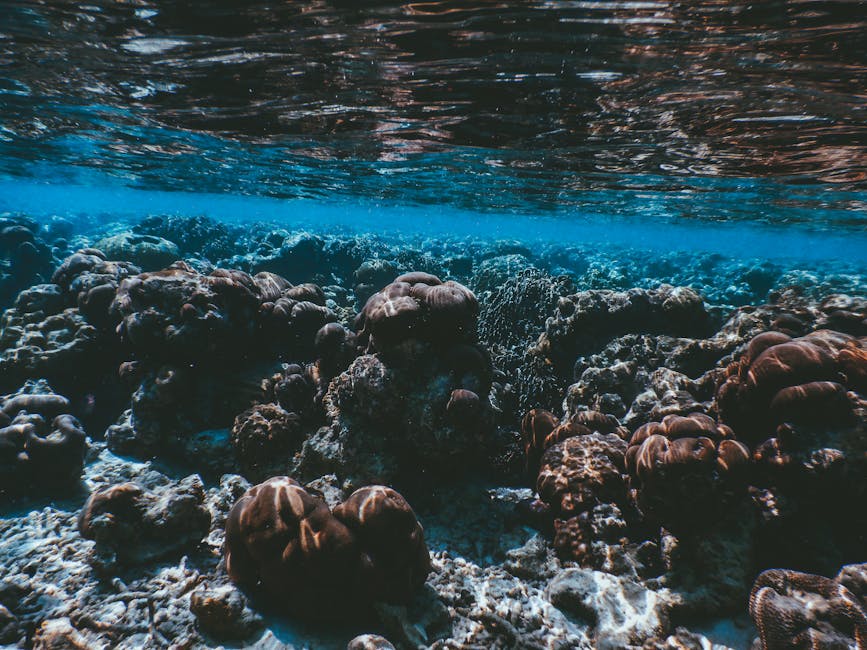
The Maldives are an obvious place to do reef restoration because the country is essentially a system of reefs with some hotels balanced on top of it. Reefscapers, run by the Marine Savers team and largely based out of Four Seasons Resorts and Sheraton properties, operates one of the longer-running coral frame programmes in the Indian Ocean. Their frames are simpler than Reef Stars: powder-coated steel hexagons or rectangles, with coral fragments tied on with cable ties, lowered into shallow water just off the resort house reefs.
The framing is honest about what this is. It is restoration tied to luxury tourism, and the people most likely to interact with it are guests at high-end resorts. That is also why it has worked. The same staff have been working on the same reefs for over fifteen years now, the data is good, and the resorts foot most of the cost. Marine Savers has produced more than 8,000 individual frames since 2005, which is a sustained pace nobody outside Florida or Bonaire matches.
The route in for visitors. If you stay at Four Seasons Landaa Giraavaru or Kuda Huraa, or at Sheraton Maldives Full Moon, the marine biology team will run reef tours, take you out to see the active frames, and let you sponsor a frame for around 200 to 400 US dollars depending on size, with your name engraved on it and a year of email updates including photos as the corals grow. They also run multi-week resident volunteer placements via Marine Savers, which sit in that 1,500 to 3,000 dollar range depending on resort and duration. You eat at the resort, dive twice a day, and spend the rest of your time on the boat or in the lab.
What to know. The water is gorgeous, the fish are gorgeous, and the work is real. Just be clear-eyed that the model is funded by tourists who can afford 800-dollar-a-night villas, and the trade-off, if you go for that, is that your trip’s carbon footprint to get to the Maldives is large. There is no clean answer to that. It is something to weigh. Our piece on being a sustainable traveller during a slow-motion crisis covers some of those trade-offs.
More: reefscapers.com
9. Citizens of the Great Barrier Reef
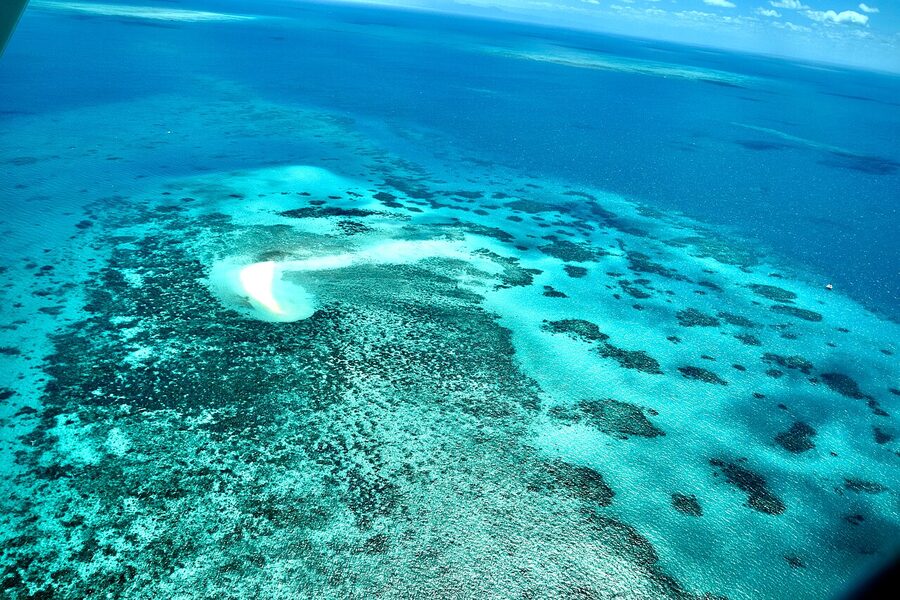
The last one on the list is here because not everyone reading this can fly to the Pacific, and one of the most useful things a person who cares about reefs can do in 2026 is sit at home with a laptop. Citizens of the Great Barrier Reef runs the Great Reef Census, a citizen-science programme that has surveyed nearly a quarter of the entire Great Barrier Reef since 2020.
It works like this. Boats and divers across northern Queensland take photos of reefs at fixed points each year, generally in the September-to-November window. Last year that produced over 43,000 reef images. Those images need someone to look at them, identify the major coral types, count what is bleached, and feed the result back to scientists planning interventions. There are far more images than there are scientists. That is where you come in.
You sign up for free at greatreefcensus.org, get a brief tutorial on how to identify the major coral functional groups, and then sit and tag photos at your own pace. The platform tracks your contribution. Volunteers from over 70 countries have collectively analysed 160,000 images so far. There is also a Census volunteer pathway if you can get to Queensland in person, where you can join the in-water survey teams as a snorkeller or diver, but the from-home tagging is genuinely useful in itself. I have done a few hundred photos over a few rainy weekends. It scratches the itch.
If you are a teacher, the Census also has classroom modules. If you are a developer, they accept open-source contributions on the image-handling tools. There are several roles for someone whose only travel this year is a commute. That feels worth saying.
More: greatreefcensus.org
What to skip, and how to vet what’s left
Two warnings, briefly.
The first is the volunteer-tourism aggregator sites. Volunteer World, IVHQ, GoEco, Projects Abroad, Volunteering Solutions, GVI, and the rest. These are not, themselves, coral restoration organisations. They are middlemen who sell two-week and four-week placements at partner sites, usually with a substantial markup, and the actual conservation work is being done by a smaller local NGO underneath. Some of those underneath orgs are excellent. Some are not. The aggregator’s price covers food, accommodation, and the platform fee, with whatever is left going to the local partner. Before booking through one, do ten minutes of research on who the underneath partner actually is. If you cannot find a name, that is a flag. If the partner has its own functional website with named scientific staff and published research, the placement is probably real. If the only information is on the aggregator site, be careful.
The second is the photo-heavy, vague Instagram coral non-profits. Some are real and quietly doing good work. A growing number are essentially marketing operations attached to a few coral fragments. Vetting them takes the same approach as vetting any conservation outfit: look at our piece on how to spot and avoid greenwashing in tourism, ask who the lead scientist is and where they have published, and check whether the org has a 990 form filed in the US or its national equivalent. Real non-profits have a paper trail. The ones that do not, tend to evaporate within a couple of years.
And one more, which sits on the line. Resort coral nurseries. A growing number of upmarket dive resorts now have a “house coral nursery” that you can visit and outplant a fragment from. Some of these are real research collaborations with universities or with one of the orgs above. Some are PR. The way to tell them apart is whether the resort can name the partner organisation, the lead scientist, and the publication record. If the answer is “we have a marine biologist on staff and they do their best,” it is probably the PR version. Worth knowing what you are buying.
If you are choosing one
Some rough matching, since I get asked.
If you are a non-diver going to Florida or the Bahamas anyway, do the Coral Restoration Foundation Exploration Centre or a Coral Vita farm tour. Either is a good half-day.
If you are a certified diver and you want one course you can keep using on later trips, the PADI Reef Renewal Diver speciality in Bonaire or the Reef Rescue Diver speciality with Perry Institute partners are the two most portable.
If you are an experienced diver looking for a serious week or two of hands-on work, watch the Mars Big Build schedule, or do a Reefscapers volunteer placement in the Maldives, depending on whether you want intensity or comfort.
If you are not travelling this year and you want to do something useful, donate to SECORE, sponsor a coral with Coral Gardeners or Coral Vita, or spend a few hours tagging reef photos for the Great Reef Census. None of these requires a flight.
And if you are reading this with the same feeling I had on that bleached Maldivian patch in 2019, the snorkel and the small voice and the question, the answer is that there are a lot of people working on this, the work is real, and the work needs you, in whatever form you can give it. It is the same answer ocean scientists have been giving for thirty years, and it is still the right one. Our complete guide to ocean conservation as a traveller covers the wider terrain if you want to keep going from here.
The reef I floated over in 2019 has had several hot summers since then. Some of its corals are gone. Some have spawned and seeded new ones. There are people in a small boat, somewhere off Makassar or Mo’orea or Key Largo, tying a fragment to a frame at this exact moment. You can be one of them, on whatever scale fits your life.
_(San_Salvador_Island,_Bahamas)_1_(15513633663).jpg)
_with_blue_damselfish_(Pomacentrus_pavo)_Moorea.jpg)
.jpg)

_05.jpg)