The first time I watched whales properly, the engine had been off for forty minutes. We were ten or so miles out from Hervey Bay, the boat sitting heavy in a slow swell, and a humpback had decided we were less interesting than the bait fish under us. She rolled, exhaled a wet boom that travelled through the hull, and went back to whatever a humpback does when she has a calf to keep alive. Nobody spoke. The captain had cut the motor not because we asked but because she had crossed our bow and the rules around here mean you stop and wait. It was nothing like the boat I’d been on years before in another country, where the skipper kept gunning the throttle to chase a pod for the GoPro crowd. Same animals, totally different feeling. That’s the difference this article is about.
Wildlife travel sits on a thin line. Done one way, it funds the people protecting these animals and gives them a reason to stay protected. Done the other way, it’s just a zoo with better lighting. The 21 trips below are ones where the animal’s well-being came first, either because the operator’s protocols are tight or because the science demands it. Some are bucket-list famous. Some you’ve probably never heard of. I’ve done some of them, friends I trust have done others, and a handful are on my own list for the next few years. Wherever I haven’t been, I’ve tried to be honest about it.
One quick note before we start. Distance, captivity, and where the money goes are the three questions worth asking before you book anything wildlife-related. If an operator dodges any of them, that’s your answer. The same logic shapes a lot of what I wrote in the sustainable tourism pillar and the ocean conservation guide. Worth a skim if you want the framework before the trips.
In This Article
- 1. Mountain gorillas in Bwindi, Uganda
- 2. Black rhinos at Lewa Conservancy, Kenya
- 3. Bengal tigers at Pench or Kanha, India
- 4. Snow leopards in Hemis, Ladakh
- 5. Lemurs in Andasibe-Mantadia, Madagascar
- 6. Wolves with a naturalist guide, Lamar Valley, Yellowstone
- 7. Galapagos giant tortoises, Santa Cruz highlands
- 8. Fishing cat survey volunteering, West Bengal
- 9. Sloths at Jaguar Rescue Center, Costa Rica
- 10. Komodo dragons, Komodo National Park
- 11. Pantanal jaguars, Brazil
- 12. Whale sharks at Donsol, Philippines
- 13. Cetacean photo-ID volunteering, Hebrides
- 14. Humpback whale calving, Silver Bank, Dominican Republic
- 15. Mantis shrimp on a muck dive, Lembeh Strait
- 16. Manta ray night dive at Kona, Hawaii
- 17. Leatherback turtle nesting, KwaZulu-Natal
- 18. Puffins on Skomer Island, Wales
- 19. Sandhill crane migration, Platte River, Nebraska
- 20. Andean condors, Colca Canyon, Peru
- 21. Royal albatross, Taiaroa Head, New Zealand
- How I’d think about the next trip
1. Mountain gorillas in Bwindi, Uganda
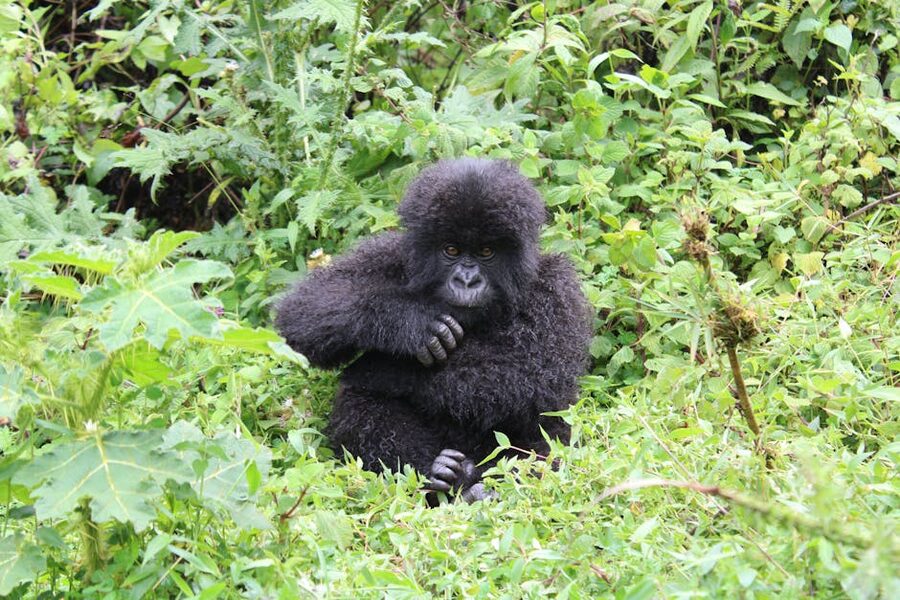
Eight of you, one ranger, two trackers, an hour with a habituated family group. Permits cost USD 800 in Uganda right now, USD 1,500 across the border in Rwanda, and the price is the protection. That money pays the rangers and gives the local communities around Bwindi Impenetrable Forest a financial reason to keep poachers out. Gorilla numbers have actually grown this century, which is rare news in conservation, and the permit system is the reason. You’ll trek anywhere from 30 minutes to six hours uphill in thick mud to find them, masks on, seven metres back, no flash photography. If a silverback bluff-charges you, the rangers tell you to crouch and look down, not run. Worth knowing in advance.
What to watch for: anyone offering to get you closer than the rules allow. Anyone selling sub-$500 permits is selling something else. Anyone showing up sick should pull out, gorillas catch our respiratory infections and they don’t recover well.
2. Black rhinos at Lewa Conservancy, Kenya
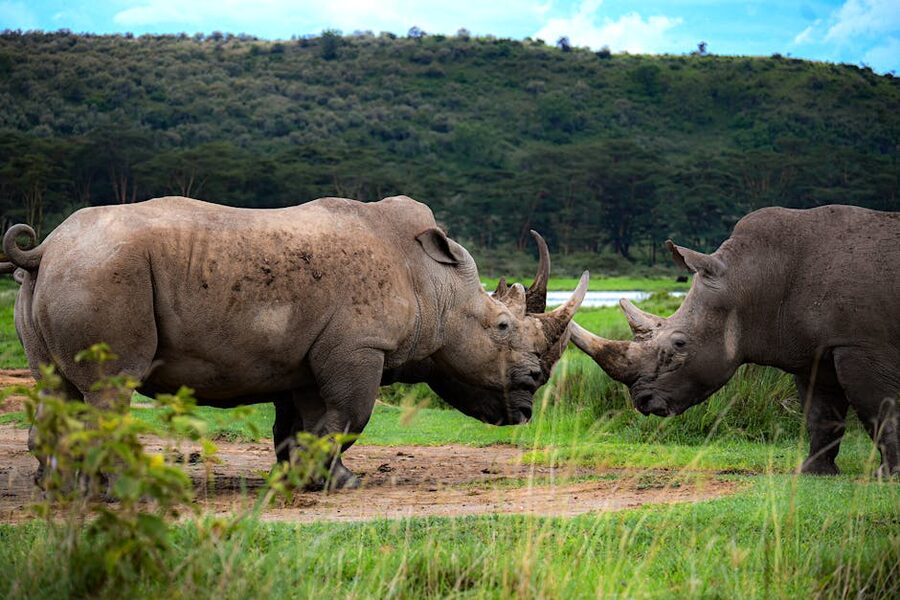
The Lewa Wildlife Conservancy in northern Kenya is one of the few places where you can see black rhinos that aren’t behind a fence in any meaningful sense. Lewa runs as a private conservancy with 24-hour anti-poaching patrols, and the rhino population there has gone from a handful in the late 1980s to over 80 today. Game drives are limited, vehicle numbers per sighting are capped, and a chunk of the rates funds the patrol units. If you’re already going on safari in Kenya and you care about rhinos, Lewa is the place to spend a couple of days.
What to watch for: cheaper safari outfits that promise rhino sightings in unspecified parks. Rhinos are darted and tracked across most of the continent now and the better operators tell you exactly how that works.
3. Bengal tigers at Pench or Kanha, India
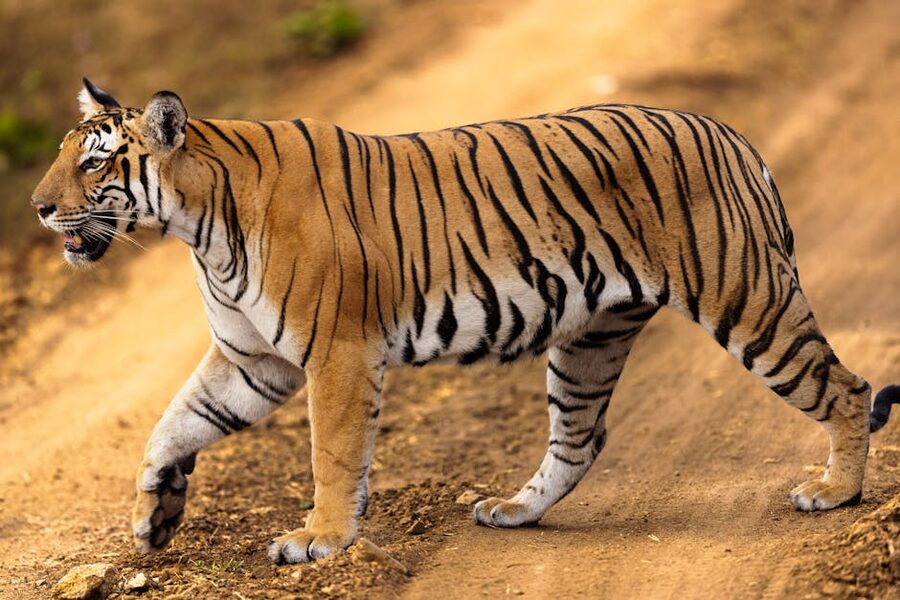
Ranthambore gets all the press for tigers and the SUV traffic in the famous zones now reflects that. If you’re flexible, head south to Pench or Kanha in Madhya Pradesh instead. Same Bengal tigers, far fewer jeeps, much stricter park-entry quotas, and the buffer-zone communities around Kanha have been part of the conservation arrangement for decades. Three or four early morning safaris over five days, and a few hours of just sitting at a waterhole with a thermos, gives you a real chance and a much quieter trip. Sightings are not guaranteed and a guide who promises one is lying to you.
What to watch for: vehicles cutting tigers off, drivers calling each other on radios to converge on a sighting. Walk away from operators who do this. The good ones in Madhya Pradesh have a reputation for politely refusing customers who ask them to break the rules.
4. Snow leopards in Hemis, Ladakh
This is a hard trip and I’d say so to anyone considering it. Hemis National Park sits between 3,000 and 6,000 metres in the Indian Himalayas, and you’ll spend nine or ten days hiking and glassing slopes from camp with a local spotter. Sightings happen, often at distance through a scope, and that distance is the point. The Snow Leopard Conservancy India Trust trains and pays the local Ladakhi spotters, who are usually people whose grandparents would have killed leopards for taking their goats. Now those same families have a financial reason to protect them. If you go, go in February or March when the cats come down lower for prey, and accept that you might see only tracks and scat.
What to watch for: anyone promising guaranteed sightings. Snow leopards are called the ghost of the mountains for a reason.
5. Lemurs in Andasibe-Mantadia, Madagascar
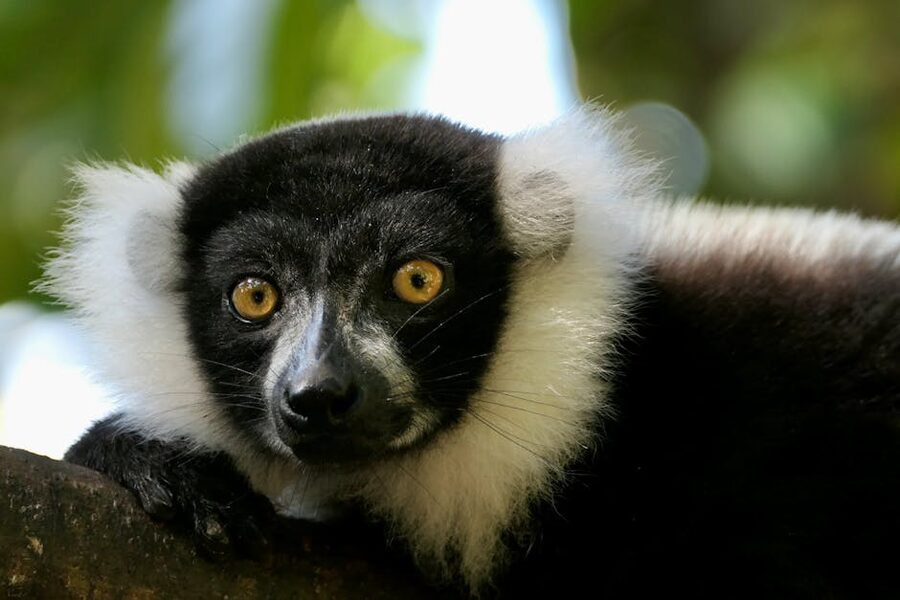
The eastern rainforests of Madagascar are the easiest place to see indri, the largest of the lemurs, and the loudest. The morning calls carry several kilometres through the canopy and once you’ve heard them you don’t forget. Andasibe-Mantadia is a three-hour drive east of Antananarivo, the local guides are organised through a community association called Mitsinjo that funds reforestation in the corridor outside the park, and a half-day walk costs around 50,000 ariary plus tip. Indri are critically endangered. Fewer than 10,000 are left and the lowland rainforest they need is going fast.
What to watch for: any tour offering captive lemur “encounters” near hotels. Madagascar has a real problem with hotel-pet lemurs that should be in the forest. Walk past those.
6. Wolves with a naturalist guide, Lamar Valley, Yellowstone
The Lamar Valley in Yellowstone is one of the very few places on earth where you can watch wild wolf packs from public roads. The trick is showing up at first light in winter with a guide who knows the packs by sight, has a spotting scope worth a few thousand dollars, and is in radio contact with the other naturalists. You’ll be standing at a turn-out in zero-degree wind for an hour, and it’ll be the best wildlife morning of your year. Yellowstone Forever and a few smaller outfits run multi-day trips with guides who genuinely know individual wolves’ history. The Park Service rules require staying back 100 yards from wolves, and the good guides treat that as a floor not a ceiling.
What to watch for: drone operators (illegal in the park). Howling-night tours that promise close encounters. Real wolves don’t perform.
7. Galapagos giant tortoises, Santa Cruz highlands
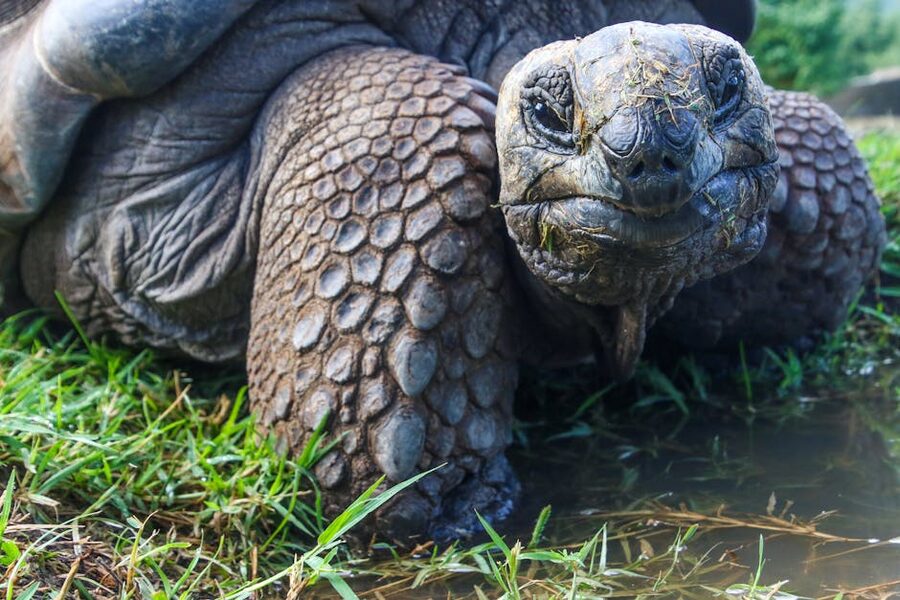
You don’t need to fly out to a remote island to see the famous tortoises. Several private reserves in the Santa Cruz highlands, El Chato is the best known, charge a small entry fee that goes to the landowner who is voluntarily keeping the highland forest intact for tortoise migration corridors. Tortoises move seasonally between the highlands and the lowlands and a working farm leaving a wedge of forest open is a pretty direct piece of conservation. You walk the trails on foot, the tortoises are wild, and if one parks itself across the path you wait for it to move.
What to watch for: anyone telling you to sit on a tortoise or pose riding one. Yes, this still happens, and yes, walk away.
8. Fishing cat survey volunteering, West Bengal
Most people have never heard of the fishing cat. It’s a small wetland predator about twice the size of a house cat, semi-aquatic, and quietly going extinct in the Indo-Gangetic plain because the wetlands it needs are being drained and built on. The Fishing Cat Project, working with researchers in West Bengal and parts of the Sundarbans buffer zones, occasionally takes volunteer hands on camera-trap surveys and household interview rounds in villages where fishing cats and people overlap. You’re not there to see a cat. You’re there to help count them. That’s the trip. If a sighting is going to be the thing that makes or breaks your week, this isn’t your trip.
What to watch for: scams marketing “fishing cat tours” as eco-experiences. The real research access goes through the project itself or universities partnering with it, not through tour operators.
9. Sloths at Jaguar Rescue Center, Costa Rica
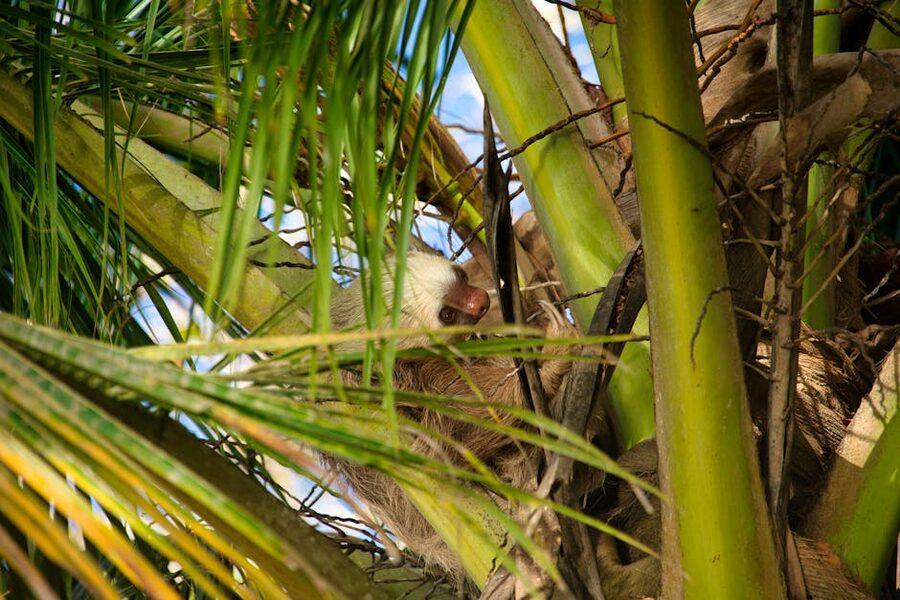
The Jaguar Rescue Center near Puerto Viejo on Costa Rica’s Caribbean coast is what an actual wildlife sanctuary looks like, and it’s a useful counterweight to the roadside places that dress up captivity as conservation. Most of the residents are recovering from injuries, electrocution on power lines is the big one for sloths, or were confiscated from the illegal pet trade. Tour costs are modest, a guide walks you through the histories of individual animals, and the goal is always release where possible. You don’t get to hold a sloth. You shouldn’t want to.
What to watch for: any sloth photo experience on a beach or in a hotel lobby. Sloths are stressed by handling and their heart rates spike. There are no exceptions to this.
10. Komodo dragons, Komodo National Park
The dragons themselves don’t need much from us. They’re apex predators on five small Indonesian islands and they’ve been doing fine for several million years. The protocol matters because they’re dangerous, and because the park rangers carry forked staffs and walk between you and the animal at all times. Stick to the official Komodo and Rinca trails, hire a park ranger as a guide (this is mandatory anyway), and don’t bring any food in your daypack. Sneaking in a banana to lure one in is the kind of thing that gets a tourist killed every few years. The dragons remember sources of food.
What to watch for: liveaboard dive boats that “include” Komodo as a stop and skip the rangers. Don’t.
11. Pantanal jaguars, Brazil
The Pantanal is the world’s largest tropical wetland and the best place on the planet to see jaguars in the wild. The way you do it matters. Some operators in Porto Jofre have used bait, played radios, and crowded sightings with multiple boats. The better outfits work in the Taiama Reserve further north, use biologist guides, cap one boat per sighting, and stick to a wide-distance protocol. You’ll get fewer guaranteed sightings on paper. You’ll get the actual experience of seeing a wild jaguar that hasn’t been habituated to human presence, hunting caiman the way a wild jaguar should.
What to watch for: any operator promising “guaranteed jaguar”. They’re either baiting or lying. Both are reasons to book elsewhere.
12. Whale sharks at Donsol, Philippines
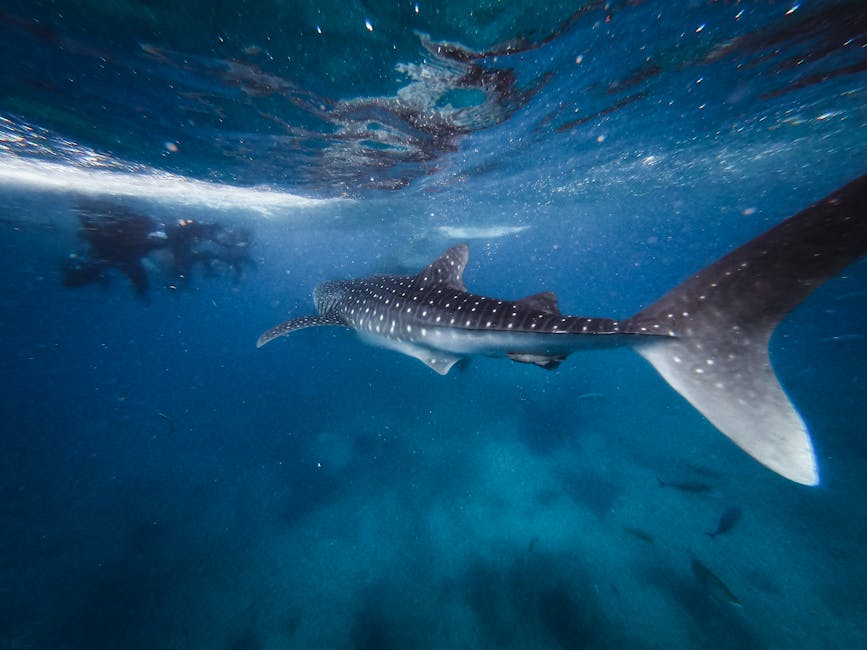
If it were me, I’d skip Oslob, even though it comes up first in search results and it’s the easier option. Whale sharks at Oslob are fed daily, they congregate, the swim-up is guaranteed, and the whole arrangement is a functional zoo with the cage missing. The animals’ migration patterns are disrupted, they get scarred from boat propellers, and the local economic case has been hashed out in the literature for years now. Donsol on the southern tip of Luzon is the alternative, and it’s the right one. Whale sharks pass through seasonally between February and May, the local Butanding Interaction Officers run the swim-ups with strict protocols, no touching, no flash, no chasing, and the operator pool is local. Sightings aren’t guaranteed. That’s why it works.
What to watch for: any “whale shark experience” that runs year-round, anywhere. They’re seasonal animals.
13. Cetacean photo-ID volunteering, Hebrides
The Hebridean Whale and Dolphin Trust, based on the Isle of Mull, runs short citizen-science trips most summers where paying volunteers spend a week on a research catamaran helping photo-ID minke whales, common dolphins, and harbour porpoises off Scotland’s west coast. You’re crew, not passenger. You take shifts on watch, you log behavioural data, and the photos you take of dorsal fins go into a long-running database. Trip cost runs around GBP 1,400 to 1,700 a week including bunk and meals, which sounds steep until you remember it’s the operating budget of a marine NGO. The trips fill up fast.
What to watch for: there’s nothing predatory here, but go in expecting Atlantic weather. People underestimate how cold and wet the Hebrides are even in July.
14. Humpback whale calving, Silver Bank, Dominican Republic
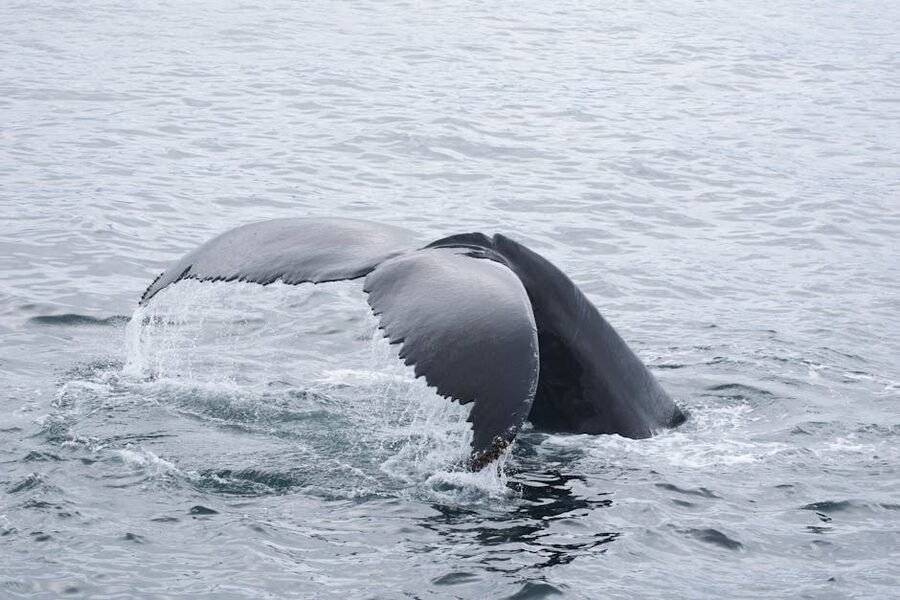
Each winter several thousand North Atlantic humpbacks gather on the Silver Bank, a shallow reef plateau about 80 miles north of the Dominican Republic, to mate and calve. A handful of permitted liveaboards take guests in for week-long soft-in-water encounters between January and April. Soft-in-water means you slip off a tender and float quietly. No fins kicking, no swimming toward the whale, no sound, and the whale either comes to look at you or keeps doing what it was doing. The Dominican Republic has had a marine sanctuary protecting Silver Bank since 1986, only three boats are licensed, and the protocol is enforced by the boat captains as much as by the government.
What to watch for: anything described as “swim with whales” elsewhere in the Caribbean during humpback season. The licensing is specific and the off-licence operators are exactly who you’d assume they are.
15. Mantis shrimp on a muck dive, Lembeh Strait
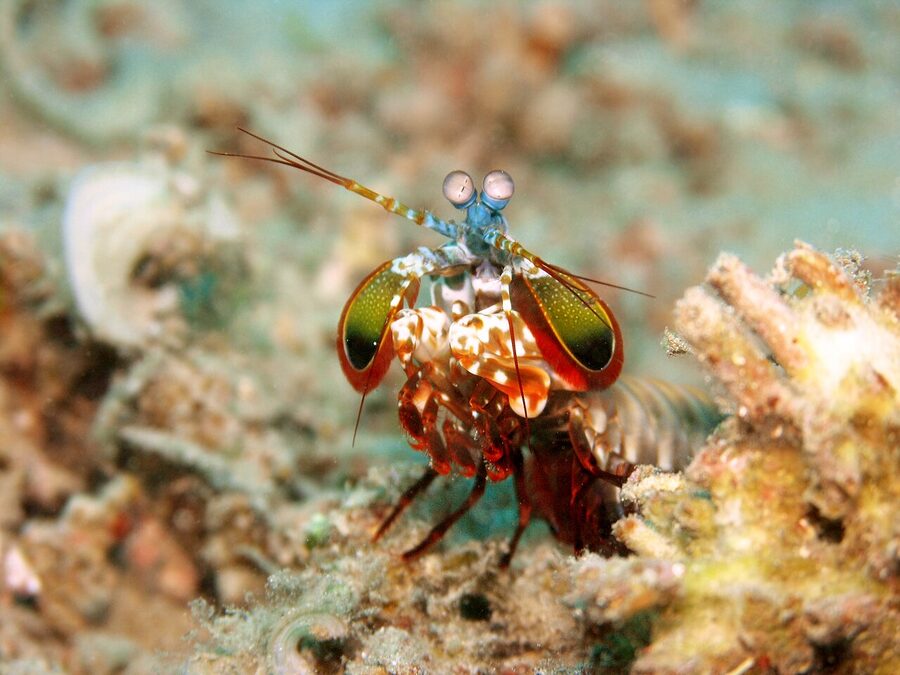
This one is for divers, and it’s the most under-appreciated wildlife experience I’ve ever been on. Lembeh Strait in north Sulawesi, Indonesia, has black volcanic sand, terrible visibility by Caribbean standards, and an absolutely outrageous concentration of small weird animals. Peacock mantis shrimp, with their hammer-fast strikes that can shatter aquarium glass, are a regular sighting on a 20-metre muck dive. So are mimic octopus, frogfish, blue-ringed octopus, and pygmy seahorses smaller than your thumbnail. The operators here, mostly Indonesian-owned, run small groups with guides who can spot a hairy frogfish from three metres. You don’t touch anything, you don’t even get close enough to disturb the substrate. That’s the discipline.
What to watch for: divers using strobes too aggressively. Repeated flashing on small animals is genuinely harmful and a good guide will pull you up if you’re doing it.
16. Manta ray night dive at Kona, Hawaii
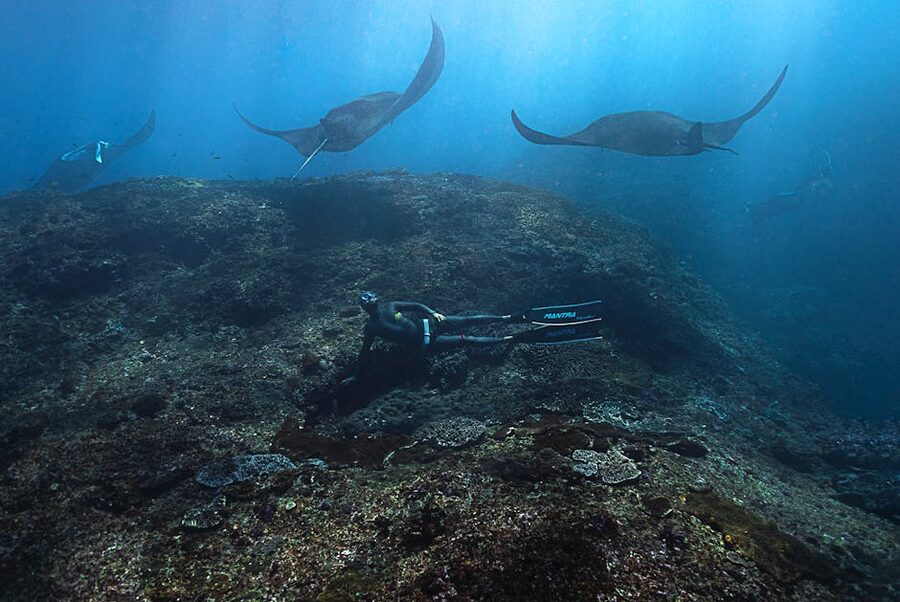
The night manta dive on the Big Island of Hawaii is honest about what it is. Operators set bright lights on the seafloor about 30 feet down, plankton swarms to the lights, and reef manta rays come in to feed. The mantas are wild. They’re not fed directly. The lights attract the food they were already going to eat. They circle the divers in slow somersault loops, sometimes for an hour. Most of the licensed Kona operators have signed onto a code of conduct that limits boat numbers per site, requires divers to stay flat on the bottom, and bans touching. The non-signatories are the ones to skip. Manta Pacific Research Foundation publishes the list.
What to watch for: operators that don’t ask if you’ve been certified to dive at night. They should be checking your card.
17. Leatherback turtle nesting, KwaZulu-Natal
Between November and February, leatherback and loggerhead sea turtles come ashore to nest on the iSimangaliso Wetland Park beaches in northern KwaZulu-Natal, South Africa. The turtle-tracking tours are run by trained monitors in red headlamps, you walk slowly along the dune line, and if a female is hauling out you stop and stay back, full stop. The tours have been operating with the same tight protocols since the 1960s and the data has informed leatherback science across the South Atlantic. There’s a similar set-up at Tortuguero in Costa Rica.
What to watch for: anyone using white headlamps. The light disorients hatchlings and they head inland instead of to the sea. If your guide pulls one out, find a different guide.
18. Puffins on Skomer Island, Wales
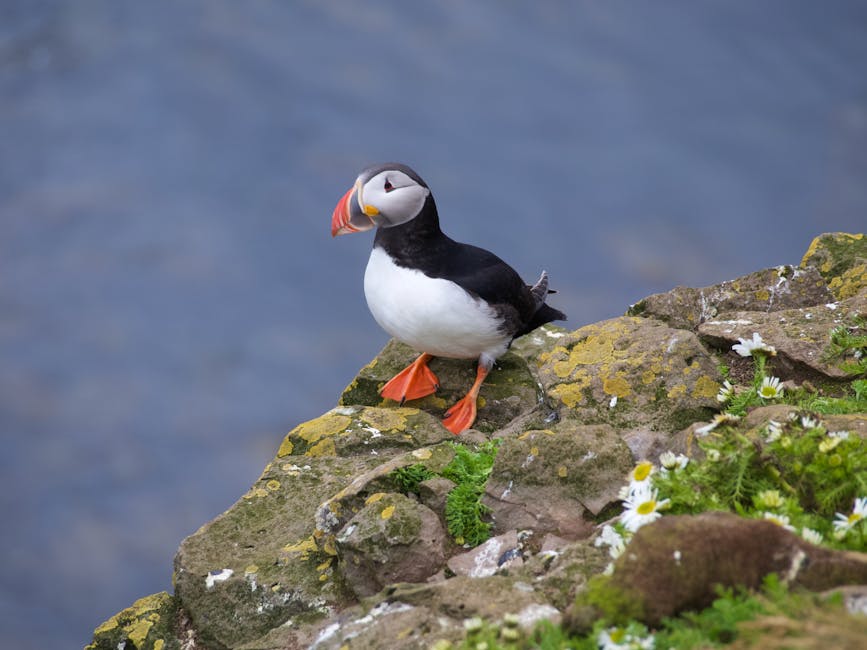
Skomer is a 30-minute boat hop off the Pembrokeshire coast, the island’s daily visitor cap is 250 people, and from late April to late July you can sit a few feet from breeding Atlantic puffins as they come and go from their burrows with sand eels in their beaks. The wardens collect a small landing fee and the money funds the Wildlife Trust of South and West Wales. The puffins are habituated to humans because they nest in the open and have been doing so for generations, but the boundary rule is firm. You don’t approach, you let them walk to you, and you don’t sit on burrows. The whole thing feels a bit like sharing a coffee with a thousand small business owners.
What to watch for: book the Lockley Lodge boat tickets in advance, ideally several weeks ahead in spring. They sell out, and people who turn up unbooked are turned away.
19. Sandhill crane migration, Platte River, Nebraska
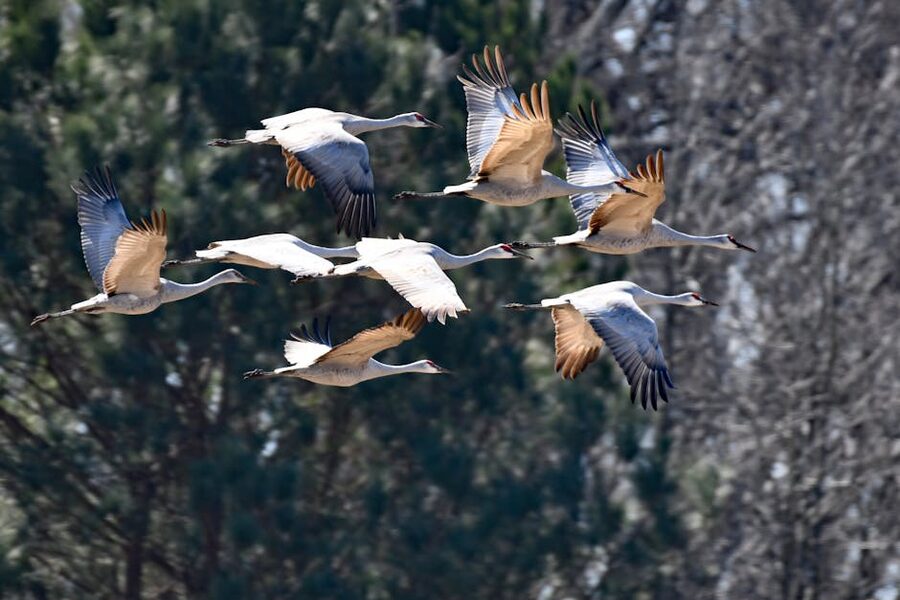
For about six weeks every spring, somewhere between half a million and 700,000 sandhill cranes funnel into a 50-mile stretch of the Platte River in central Nebraska before continuing north. It’s one of the largest migration events on earth and most people have never heard of it. The Crane Trust and the Rowe Sanctuary run dawn and dusk blinds, you sit silently in a wooden hide on the river bank, the cranes come in by the thousand to roost on the sandbars, and the volume of the calling is something you have to hear to understand. Tickets are around USD 50 to USD 70, and the entire operation funds river-channel restoration, which is the actual conservation work behind the migration.
What to watch for: weather. March in Nebraska is bracing. Layer up.
20. Andean condors, Colca Canyon, Peru
Mirador Cruz del Cóndor, on the rim of Colca Canyon four hours by road from Arequipa, is where Andean condors ride the morning thermals out of the canyon. Wingspans up to ten feet, distance close enough that you’ll feel the air move, and you don’t need to chase anything because the birds are riding the warming air and they pass overhead on their own schedule. Show up around 8am, stay through 10am or so, and the local Cabanaconde communities collect a small fee that funds rural schools and the boletotouristico that maintains the lookout sites. There are condor-feeding operations elsewhere in Peru that I would actively avoid. This isn’t one of them.
What to watch for: bus tours that race in for ten minutes and leave. Hire a local guide for the morning instead.
21. Royal albatross, Taiaroa Head, New Zealand
The Royal Albatross Centre at Taiaroa Head, on the tip of the Otago Peninsula 30 minutes from Dunedin, is the only mainland breeding colony of northern royal albatross in the world. About 30 breeding pairs return each year, the chicks fledge after roughly 240 days, and you watch through one-way glass from a hide built up the slope. Tour fees fund the Department of Conservation’s albatross monitoring program and predator-trapping on the headland, which is the difference between this colony existing or not. Northern royals can have a wingspan over three metres and they appear like aircraft. No other word fits.
What to watch for: peak fledging windows are September to October. Off-season tours still run and you’ll see adults, but the pre-fledging months are the spectacle.
How I’d think about the next trip
The 21 above are just the trips I happen to know well enough to write about. There are dozens more with the same pattern. The questions to ask are the same every time. Are the animals wild, free to leave, and seen at distances they choose? Is the operator local, and does a meaningful share of what you pay stay with the people in the place? Does the activity exist because of the animals, or do the animals exist because of the activity? That third one is the giveaway. If you flip the relationship and the animal becomes the product, walk away.
If you want more on the framework, the greenwashing piece covers operator vetting in more detail, the Indigenous communities guide is worth reading before any trip where local guides are running the show, and the mindful language piece goes into how we describe these trips after we get home, which matters more than people think.
One last thing. The best wildlife trips are quiet ones. The boats with the engines off, the trails where you wait for the indri to call, the blinds on the Platte where 700,000 cranes settle in for the night and you don’t speak. People keep asking me what makes a wildlife encounter feel different from the captive version, and the answer always seems to come back to the same thing. The animal had somewhere else to be, and chose to stop. You weren’t the centre of the moment. You were the witness. Pick one of the 21. Go with the right operator. Sit and wait.